How Youth Martial Arts in New Berlin Shapes Positive Role Models
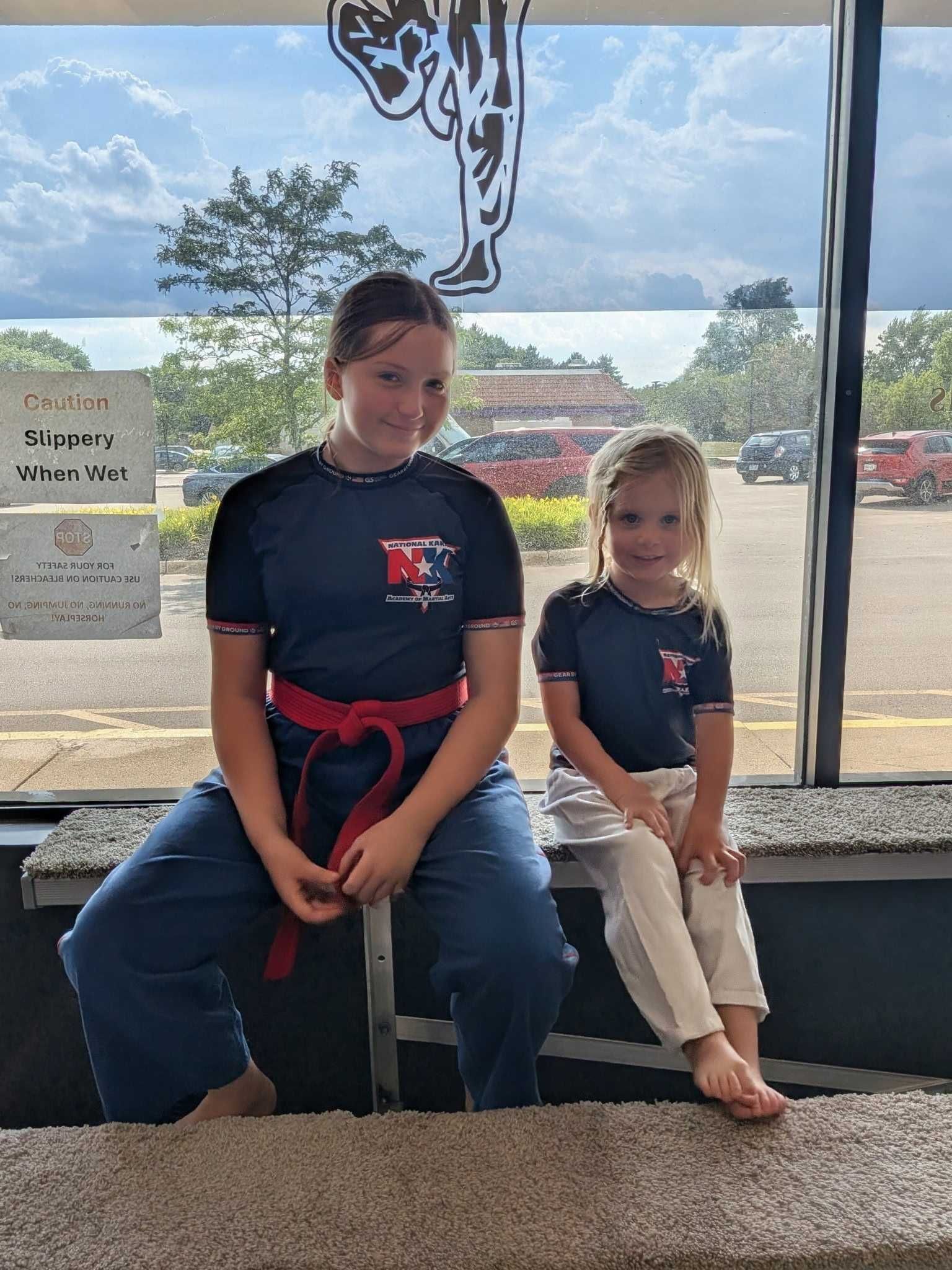
Youth Martial Arts can turn everyday moments like lining up, partnering up, and trying again into real leadership practice.
When parents look for Youth Martial Arts, the goal is usually bigger than learning punches and kicks. You want your child to feel confident, stay respectful, and make good decisions when nobody is watching. We get that, and we build our Youth Martial Arts in New Berlin around the idea that character is trained the same way technique is: through repetition, feedback, and a consistent standard.
Positive role models are not “perfect kids.” In our experience, role-model behavior is easier to spot than people think. It looks like waiting your turn without melting down, listening the first time, helping a newer student, and staying calm when something feels hard. Youth martial arts gives kids a place to practice those behaviors on purpose, in a structured setting, with coaches who care about more than just athletic performance.
What “positive role model” really means for kids
A role model is someone other kids can safely copy. That sounds simple, but it’s actually a useful definition because it keeps us grounded in actions, not slogans. In class, we talk about being the kind of teammate you would want to have. That includes how you speak, how you respond to correction, and how you handle frustration when you miss a target or forget a step.
Here are role-model behaviors we look for and intentionally coach during Youth Martial Arts training:
• Respectful communication, including eye contact, listening, and appropriate volume when speaking
• Self-control when excited, disappointed, or distracted, especially during partner drills
• Perseverance, like re-trying a skill after a mistake without blaming others
• Responsibility with physical skills, meaning techniques are used only in the right context
• Encouragement, such as cheering effort and welcoming new students into the group
• Humility, including winning without bragging and learning without excuses
The best part is that none of these require a child to be the loudest, strongest, or most athletic. A shy student who shows up consistently and keeps trying is practicing leadership, too.
Why New Berlin families choose Youth Martial Arts
New Berlin parents are busy, and kids are busy too. After-school hours can either feel chaotic or purposeful, and many families want an activity that offers both movement and structure. Youth Martial Arts in New Berlin can be that “anchor” in the week: a predictable routine where kids know what’s expected, what comes next, and how to measure progress.
We also hear the same practical concerns from families, and we plan around them:
You want real supervision, not a free-for-all. You want your child active, but you also want safety and controlled contact. You want confidence-building without turning kids into show-offs. And you want a place where your child can be new at something without getting embarrassed for it.
Youth Karate in New Berlin is a popular starting point for this reason. Karate’s structure supports clear basics, repeatable drills, and step-by-step skill building, which makes it easier for kids to stay focused and feel successful early.
How a typical class quietly teaches character
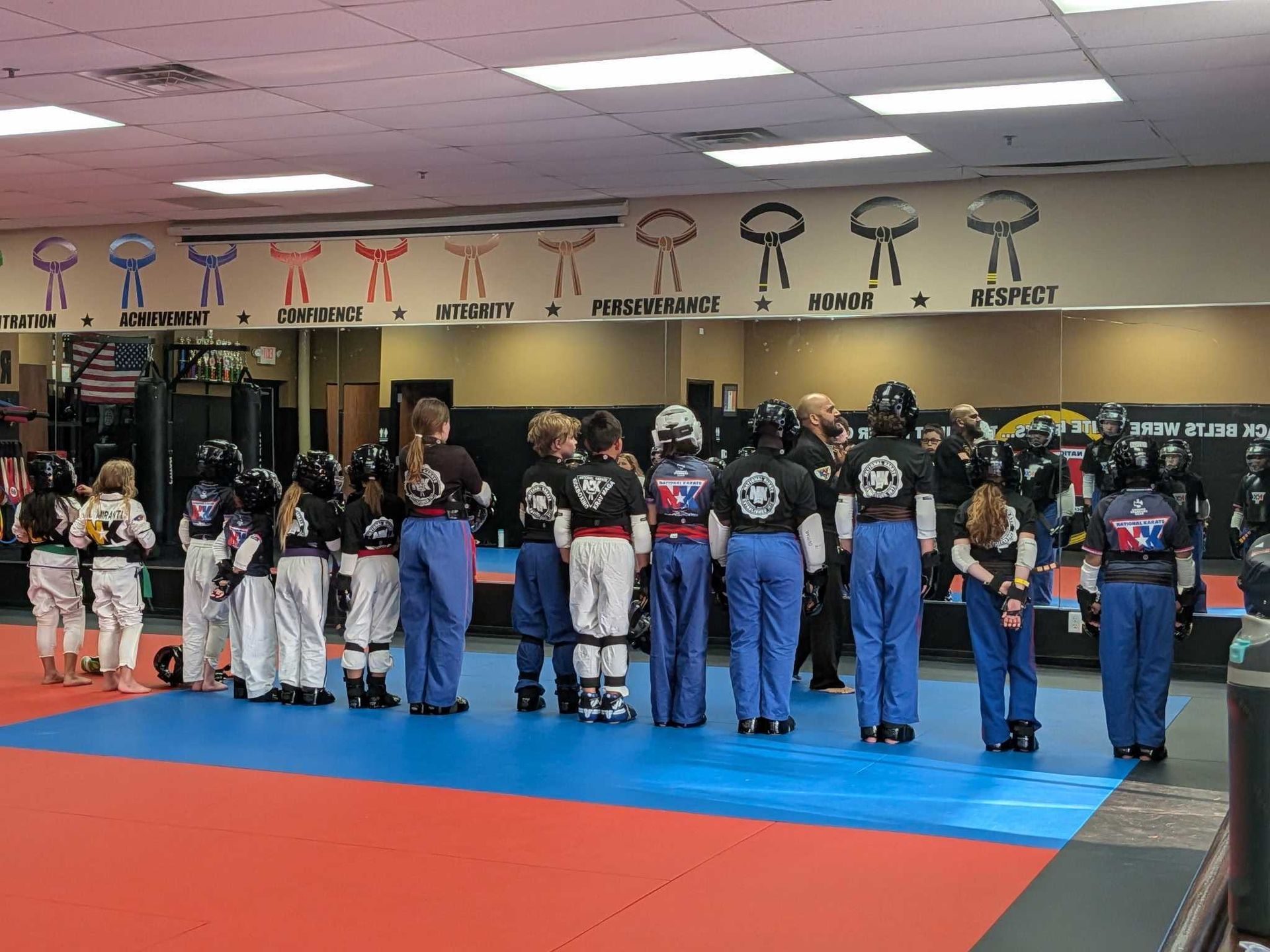
Youth Martial Arts classes have a rhythm. That rhythm is not accidental, because consistency is one of the best tools we have for helping kids build self-control. When kids know the routine, they spend less energy guessing what comes next and more energy practicing good choices inside that routine.
Warm-ups that build focus, not just fitness
Yes, warm-ups build strength, flexibility, balance, and coordination. Medical literature has reported improvements in fitness measures for children ages 4 to 13 who participate in martial arts, including aerobic capacity, muscular endurance, flexibility, balance, and lower body fat percentage. Those changes matter, especially for growing bodies that need healthy movement patterns.
But warm-ups also teach focus. Kids learn to start on time, follow multi-step instructions, and match the group’s pace. Those are “school skills,” but trained through movement, which is often easier for kids than sitting still and trying harder.
Partner drills that build empathy and communication
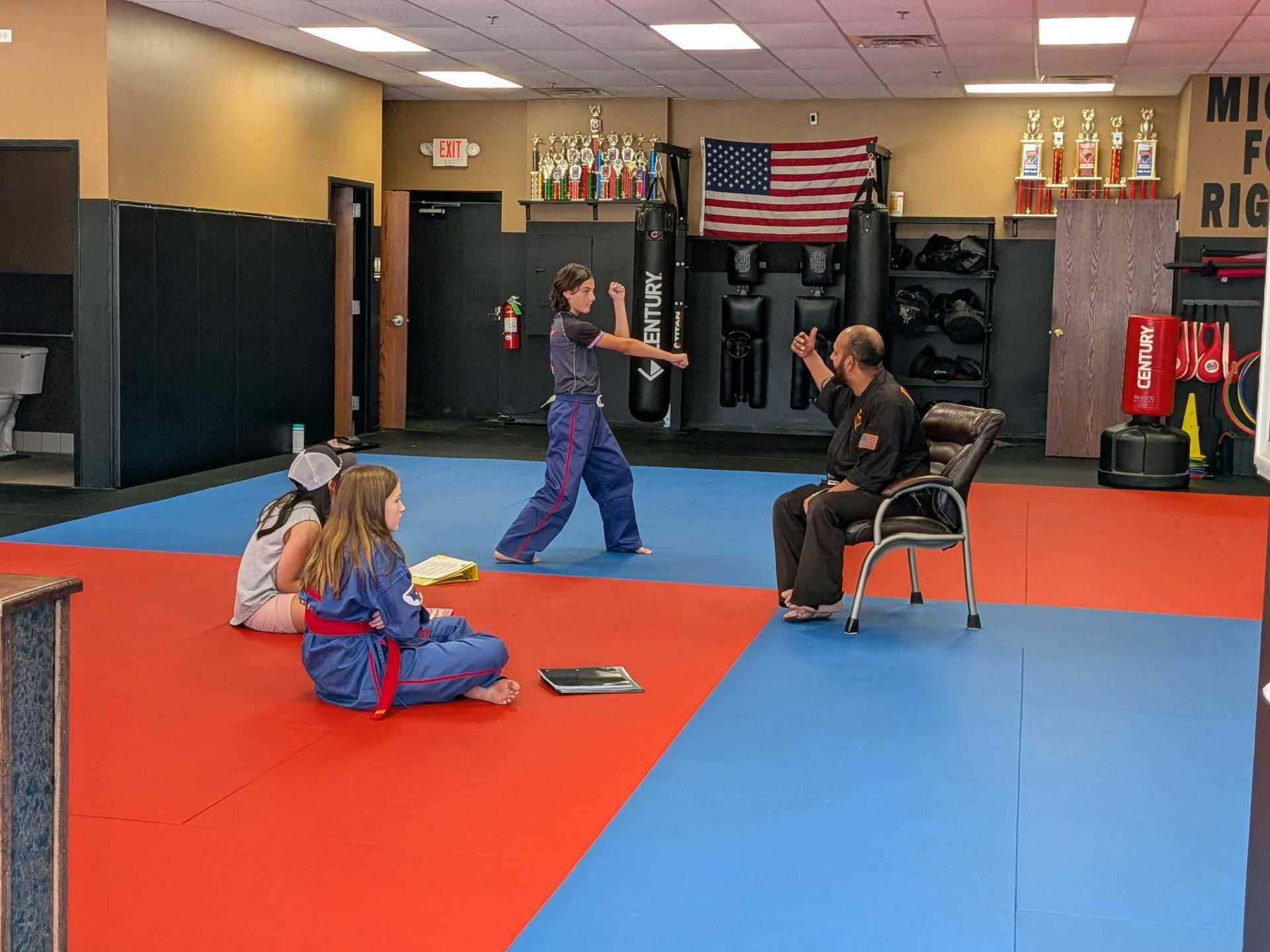
Partner work is where role models are made. A good partner doesn’t rush, doesn’t mock mistakes, and doesn’t treat the drill like a competition. Instead, we coach students to be predictable and safe, to give space, and to communicate clearly.
Over time, this helps children practice cooperation and empathy in a very practical way. If you swing too hard, your partner can’t learn. If you don’t pay attention, you can bump into someone. Kids begin to see how their choices affect other people, and that’s a major part of social-emotional growth.
Corrections that train resilience
In martial arts, correction is constant. That’s not harsh, it’s normal. A small adjustment to stance, guard position, or breathing can change everything.
We teach kids to accept coaching without taking it personally. That habit, calmly receiving feedback and trying again, is a life skill. Research on youth martial arts has linked participation with mindfulness, reduced stress, improved self-control, and fewer bullying-related behaviors, although outcomes depend on program quality and context. We don’t treat that as a guarantee. We treat it as a reminder that how we teach matters.
Belt progression is not the goal, it’s the framework
Rank systems can be motivating, but we never want kids to think a belt automatically equals character. In our program, advancement reflects a mix of technical development and behavior: effort, consistency, focus, and respectful conduct. It’s common for a student to improve in one area first. Some kids gain coordination quickly but struggle with patience. Others listen beautifully but need time to build confidence.
We like that martial arts allows for incremental goals. Instead of one huge “be better” goal, kids can focus on smaller steps: better stance, stronger balance, remembering a sequence, keeping hands up, speaking clearly, or staying composed during a challenge. Those small wins add up to real confidence because the child can point to what changed.
What research says, and what responsible schools should never promise
Youth Martial Arts is widely discussed now as a youth wellness activity because it blends physical training with psychosocial development. Studies and reviews have reported improvements in fitness, self-control, stress management, attention, resilience, and self-efficacy. At the same time, evidence across martial arts interventions is still methodologically varied, and results are not uniform.
That matters for you as a parent. It means you should be skeptical of big, sweeping promises. Martial arts is not magic, and it’s not a shortcut for parenting, counseling, or school support. What we can responsibly say is this: well-designed Youth Martial Arts in New Berlin gives children repeated, real-time practice with emotional regulation, goal setting, respectful communication, and prosocial conduct. Those skills can transfer to daily life, especially when training is consistent and families reinforce the same expectations at home.
How we keep youth training safe, age-appropriate, and controlled
Safety is not a footnote. It’s a system. Families often ask whether martial arts is safe for kids, and the honest answer is: it can be, when contact is controlled, instructors supervise closely, training is age-appropriate, and protective equipment is used when needed. Injury risk rises as contact rises, so responsible programs explain the difference between non-contact drills, pad work, controlled partner drills, and sparring.
In our Youth Martial Arts program, we focus on progressive skill building. That means we don’t throw kids into high-intensity partner work before they understand boundaries, distance, and control. We teach kids what “light contact” means if and when it is introduced, and we set clear rules about stopping immediately when an instructor calls time.
If a child ever has a suspected concussion, we take it seriously. Standard pediatric guidance is that a child with a suspected concussion should not return to activity until evaluated and medically cleared with a supervised return-to-play process. We also communicate with parents so you are never left guessing about what happened in class.
A contact-level explainer for parents
“Martial arts” is a broad term, so it helps to know what your child is actually doing in class. Our youth curriculum generally moves through these levels as readiness allows:
1. Non-contact basics like stance, footwork, balance drills, and technique practice in the air
2. Target training such as kicking shields and focus pads to build accuracy and control
3. Controlled partner drills focused on timing and distance, with supervision and clear rules
4. Optional sparring for students who are ready, with required protective gear and structured rounds
Not every child wants competition, and that’s fine. Youth Karate in New Berlin can be a confidence and character activity without tournaments ever being part of the plan.
How Martial Arts habits show up in real life
Parents often tell us they notice changes outside the studio first. Not “my child became a different person overnight,” but smaller, believable things. A student tries homework a second time instead of slamming the pencil down. A child takes a breath during an argument with a sibling. A kid who used to freeze in front of groups speaks louder when asked to answer a question.
These are the everyday signs of role-model development: more composure, better recovery after mistakes, and a growing ability to manage energy instead of being managed by it. Youth Martial Arts in New Berlin becomes a weekly rehearsal for handling pressure in a healthy way.
Questions to ask before your child starts
Parents deserve clarity. If you are considering Youth Martial Arts, here are questions we welcome because they lead to better experiences:
• How are kids grouped by age and experience so beginners feel supported?
• What parts of class are non-contact, and when does partner work begin?
• Is sparring required, optional, or reserved for specific classes?
• What protective equipment is used, and how do instructors enforce control?
• How is progress measured besides rank, including focus, effort, and cooperation?
• Can parents observe class, and what should you look for during instruction?
Good questions help us match the right starting point to your child’s readiness. That’s especially important for kids who are shy, highly energetic, or returning to structured activities after a rough school year.
What a first class feels like (so your child isn’t walking in blind)
The first day matters, mostly because new environments can feel big to kids. We keep the beginner experience straightforward. You’ll arrive a little early, meet our team, and get basic guidance on where to sit, where to store shoes and gear, and what your child will do first. Kids typically start with simple movements that are easy to copy, then build into drills that let us see attention span, coordination, and comfort with the group.
Your child does not need to be athletic to start Youth Martial Arts. We expect beginners to be beginners. What we care about is effort and willingness to learn. Everything else grows from there.
Take the Next Step
Building positive role models is not about “toughening kids up.” It’s about giving your child consistent practice with respect, self-control, and responsible confidence, in a place where coaches correct kindly and standards stay clear. That’s the heartbeat of our Youth Martial Arts in New Berlin.
When you are ready, Wisconsin National Karate Kickboxing & Krav Maga is here to help you choose a starting point that fits your child’s age, personality, and goals, and to answer the safety and structure questions that matter most.
Take your interest in karate beyond the page and put your skills into practice at Wisconsin National Karate Kickboxing & Krav Maga.