How Youth Karate in New Berlin Strengthens Focus and Reduces Stress

Youth Karate gives kids a place to practice attention and calm on purpose, not just hope it shows up at school.
Parents ask us about focus and stress all the time, and it makes sense. Kids in New Berlin juggle long school days, homework, activities, screens, and social pressure, often all in the same afternoon. Youth Karate can be a practical, structured way to help your child practice concentration and self-control in a setting that feels positive and active.
We also want to be careful with promises. Martial arts are not a magic switch, and karate is not a substitute for medical or mental-health care. What we can say, based on how classes work and what research suggests, is that a well-run youth karate program can give kids repeated opportunities to listen, regulate energy, recover from mistakes, and reset their mindset.
If you are looking for Youth Karate in New Berlin because your child seems scattered, stressed, or just needs a better after-school routine, youth martial arts can be a strong option, especially for beginners who want clear structure and steady progress.
Why Youth Karate naturally trains focus
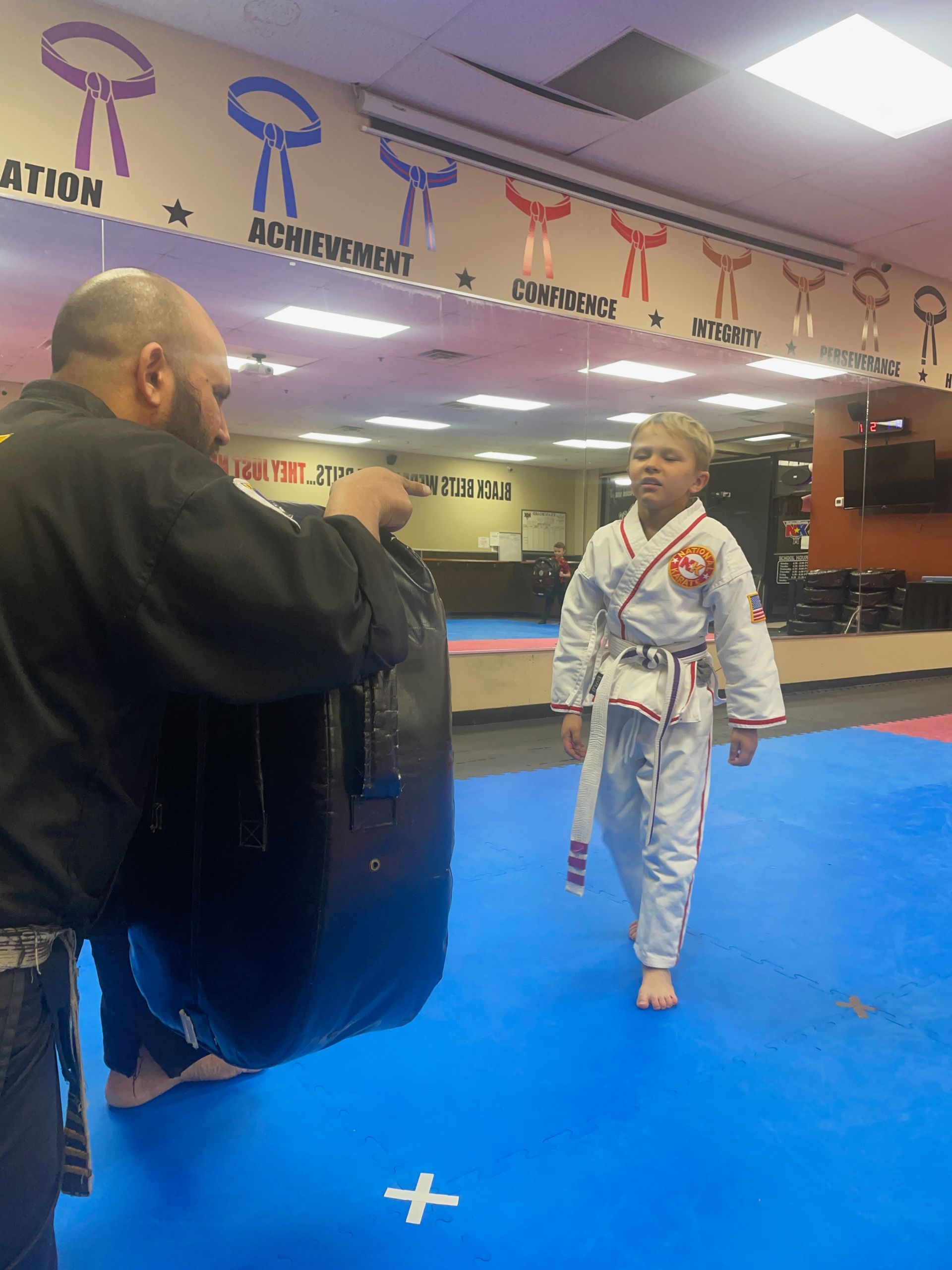
Focus is built into karate in a way that feels concrete to kids. Instead of being told to “pay attention” in the abstract, your child has a job to do right now, with immediate feedback. In our Youth Karate classes, attention is tied to something visible: a stance, a block, a combination, a form, or a partner drill.
Listening and following multi-step directions
A typical class asks kids to listen for a short instruction, watch a demonstration, and perform the movement safely. That sequence happens again and again. Over time, kids get more comfortable holding steps in their minds, waiting for the cue, and finishing the task before jumping to the next thing.
Memory, sequencing, and “doing it in order”
Karate uses patterns and combinations, and those patterns are basically a focus workout. Kids learn that details matter: which foot is forward, where the hands are, which direction the hips turn. Remembering sequences can support executive-function skills like working memory and task completion, especially when instructors teach in age-appropriate chunks.
Balance and body control as attention practice
It is hard to stay unfocused while trying to keep balance in a stance or land a controlled kick. Karate makes attention physical. Kids feel it when their posture slips or their guard drops, and correcting that becomes part of the learning process.
Partner awareness and respectful timing
Even in non-contact or light-contact drills, kids learn to pay attention to space, distance, and timing. They also learn to stop when told to stop, which is a big deal for impulse control. Good martial arts training is not about chaos. It is about control.
How Youth Karate may help children manage stress
When parents say “stress,” it can mean a lot of things: after-school meltdowns, frustration with homework, worries about social situations, or the feeling of always being behind. Youth Karate does not “treat” stress like therapy would, but it can help kids practice habits that support calmer responses.
Movement as a healthy reset after school
Physical activity can give kids a clean break between school and home. Instead of carrying the day straight into the evening, class becomes a transition point. Kids move, sweat a little, and focus on something that is not a screen or a grade.
Breathing, repetition, and predictable routines
Karate classes often include a familiar structure: warm-up, basics, drills, forms, and cool-down. Predictable routines can feel grounding for kids who get overwhelmed by constant change. Repetition also helps children feel capable, which can reduce the everyday stress that comes from feeling lost or behind.
Safe “challenge” with a clear off switch
A good class challenges kids, but it also teaches them how to stop, reset, and try again. That try-again loop matters. Instead of learning that mistakes equal failure, kids learn that mistakes are part of progress. That mindset can carry over to schoolwork and friendships.
Belonging and social confidence
Youth Martial Arts in New Berlin can be a welcoming group environment without the pressure some kids feel in team sports. Kids train together, learn together, and improve together. That sense of belonging can support emotional well-being, especially for children who are shy or hesitant in new settings.
What the research says (and what it does not)
We like evidence, and we also like honesty about evidence. Research on martial arts and combat-sport programs for children is encouraging overall, but karate-specific studies are still limited, and results vary based on how programs are run.
Encouraging findings from combat-sport interventions
A 2025 systematic review looking at Olympic combat-sport interventions included 12 studies with 436 children. Across these studies, researchers reported improvements in areas like communication, social-emotional functioning, and executive function, with occasional improvements in self-esteem and stress-management skills. That lines up with what many families hope to build: better self-control, better coping, and a healthier way to handle challenges.
Karate-specific research is promising but still preliminary
A recent scoping review focused on karate in particular and reported improvements that included resilience, self-efficacy, stress, self-confidence, attention, and academic performance. At the same time, the review emphasized limitations such as small sample sizes, inconsistent methods, and heavy reliance on self-reported outcomes. In plain terms, the signal is positive, but the science is not “case closed.”
Mixed results remind us that program design matters
A large, multi-country school study of a one-year karate program found a small improvement in academic achievement and conduct problems, but no significant improvement in several measures of inattention, emotional symptoms, peer problems, or prosocial behavior. That is a useful reminder: results are not universal, and it matters how karate is taught, how often kids attend, and what the classroom environment is like.
An important note for parents
If your child has persistent anxiety, attention struggles that interfere with daily life, sleep disruption, or behavior concerns, we recommend talking with a pediatrician or qualified mental-health professional. Youth Karate can be a supportive activity, but it should complement professional care when care is needed.
What a safe, supportive Youth Karate program should look like
Parents do not just want benefits. You also want to know your child is safe and respected. A youth program is more likely to support focus and stress management when the environment is structured, supervised, and age-appropriate.
Here is a practical checklist you can use when thinking about Youth Karate in New Berlin:
• Age-appropriate grouping so kids train with peers at similar developmental levels, not just similar height
• Clear contact rules so beginners learn control first and intensity builds gradually, if at all
• Positive coaching that corrects behavior and technique without using intimidation or shame
• Consistent class routines so kids know what to expect and can settle into the structure
• Instructor supervision that keeps lines organized, partner drills controlled, and distractions handled quickly
• A clean, organized training space where equipment, spacing, and traffic flow reduce the chance of accidents
We build our youth classes around discipline, respect, and personal progress. That means kids learn boundaries. It also means we take safety seriously, including how we structure drills and how we teach kids to use control.
What you can expect in the first few weeks
The first few weeks matter because that is when your child decides whether this feels like “their thing.” Beginners do not need to be athletic. They need a starting point and a patient structure.
Week 1: learning the rhythm
Most kids start by learning how class works: where to stand, how to line up, how to respond to instructions, and how to move safely around others. Focus improvement at this stage often looks simple: less wandering, more listening, fewer interruptions.
Weeks 2 to 4: skill building and confidence
Once kids learn basic stances, punches, blocks, and kicks, confidence often rises. Your child can feel progress in their body, not just on paper. You might notice better follow-through at home, or a little more willingness to try hard things without melting down.
After a month: habits begin to stick
With consistent attendance, kids tend to understand expectations and respond faster to coaching. This is where many parents notice small but meaningful changes: fewer big reactions to small frustrations, more self-correction, and a better ability to “reset” after a mistake.
Helping Karate habits carry over into home and school
One of the most useful ways to think about Youth Karate is that it teaches a process. That process can transfer to daily life if you name it and reinforce it at home.
A simple “karate carryover” approach looks like this:
1. Pause before reacting, even for two seconds
2. Take one steady breath and relax the shoulders
3. Break the task into the next smallest step
4. Finish that step before jumping to the next
5. Try again if the first attempt is messy
That is basically how kids learn techniques in class, and it is also how kids can learn to handle homework, chores, and stressful moments without spiraling.
Common questions from New Berlin parents
Can Youth Karate really improve my child’s focus?
It can help, because class requires listening, remembering sequences, controlling impulses, and completing multi-step tasks. Research on combat-sport programs has reported improvements in executive function, but outcomes vary, and karate-specific research is still developing.
Does Youth Karate help with stress or anxiety?
Youth Karate may support stress management through exercise, routine, breathing, and achievable goals. If anxiety is persistent or disruptive, we recommend professional guidance alongside activities like martial arts.
Is Karate safe for young children?
Safety depends on how class is taught: supervision, spacing, contact limits, and clear rules. We emphasize control, beginner-friendly progressions, and age-appropriate structure.
Will Karate make my child aggressive?
A well-run program teaches self-control, respect, and boundaries. Kids practice techniques in a supervised setting with rules and coaching, which is very different from encouraging fighting.
Does my child need to be athletic before starting?
No. Most children begin without special fitness or coordination. Consistency and a good learning environment matter more than “natural talent.”
How often should my child attend?
Consistency usually helps more than occasional drop-ins. A manageable schedule is the best starting point, then you can adjust based on your child’s energy, recovery, and enthusiasm.
Will Youth Karate improve school performance?
Some studies suggest small academic or conduct benefits, while other measures show little change. We avoid promising better grades. What we aim to build are habits that support learning: focus, persistence, and confidence with challenges.
Take the Next Step
If you want an after-school activity that is active, structured, and built around real practice of attention and self-control, Youth Karate is worth exploring in person. The right fit is not about pushing kids harder, it is about giving kids a steady place to practice focus, confidence, and calm one class at a time.
When you train with Wisconsin National Karate Kickboxing & Krav Maga in New Berlin, you get a youth program designed around age-appropriate coaching, clear structure, and a supportive atmosphere where beginners can settle in and grow. If you are curious, we invite you to look at the class schedule, visit the website, and see what a first week could look like for your family.
Ready to train? Join a martial arts class at Wisconsin National Karate Kickboxing & Krav Maga today.