Why Youth Karate in New Berlin Promotes Boundaries and Self-Respect
Youth Karate is one of the clearest ways to teach kids where the line is and how to hold it calmly.
Parents often look for Youth Karate because they want more than a workout. You want your child to listen the first time, handle big emotions without melting down, and feel confident enough to say “no” when something feels wrong. In other words, you want boundaries, and you want self-respect that doesn’t depend on being the loudest kid in the room.
In our Youth Karate program, we treat boundaries as a skill set, not a personality trait. We practice it the way we practice a stance or a block, with repetition, coaching, and clear expectations. That’s also why Youth Karate in New Berlin can be such a practical fit for families who want structure after school and steady progress week after week.
Below, we’ll break down how we teach boundaries on the mat, how self-respect grows through training, and what you can expect when your child starts Youth Martial Arts in New Berlin with us.
What Youth Karate teaches beyond kicks and punches
Karate looks physical on the surface, but good training is just as mental. Yes, your child will learn techniques, but the deeper goal is learning how to make safe decisions under pressure. That matters in everyday moments, like dealing with a pushy friend, a rude comment, or a classmate who won’t stop invading personal space.
In class, we teach that skill and power come with responsibility. The lesson is simple: techniques are tools, not threats. We reinforce that karate is never for intimidating people, getting even, or showing off. It’s for fitness, discipline, and self-defense when it’s truly necessary.
Youth Karate also gives kids something concrete to lean on. When a child knows the rules, knows the routine, and knows what “good effort” looks like, self-control becomes less mysterious. It becomes doable.
How Martial Arts help kids understand boundaries in real life
Boundaries are easier to learn when they are practiced consistently. In Youth Karate, we build “boundary habits” into the structure of class so kids don’t just hear the message once and forget it. It’s repeated in small, realistic ways, and it adds up.
Boundaries start with consent and controlled contact
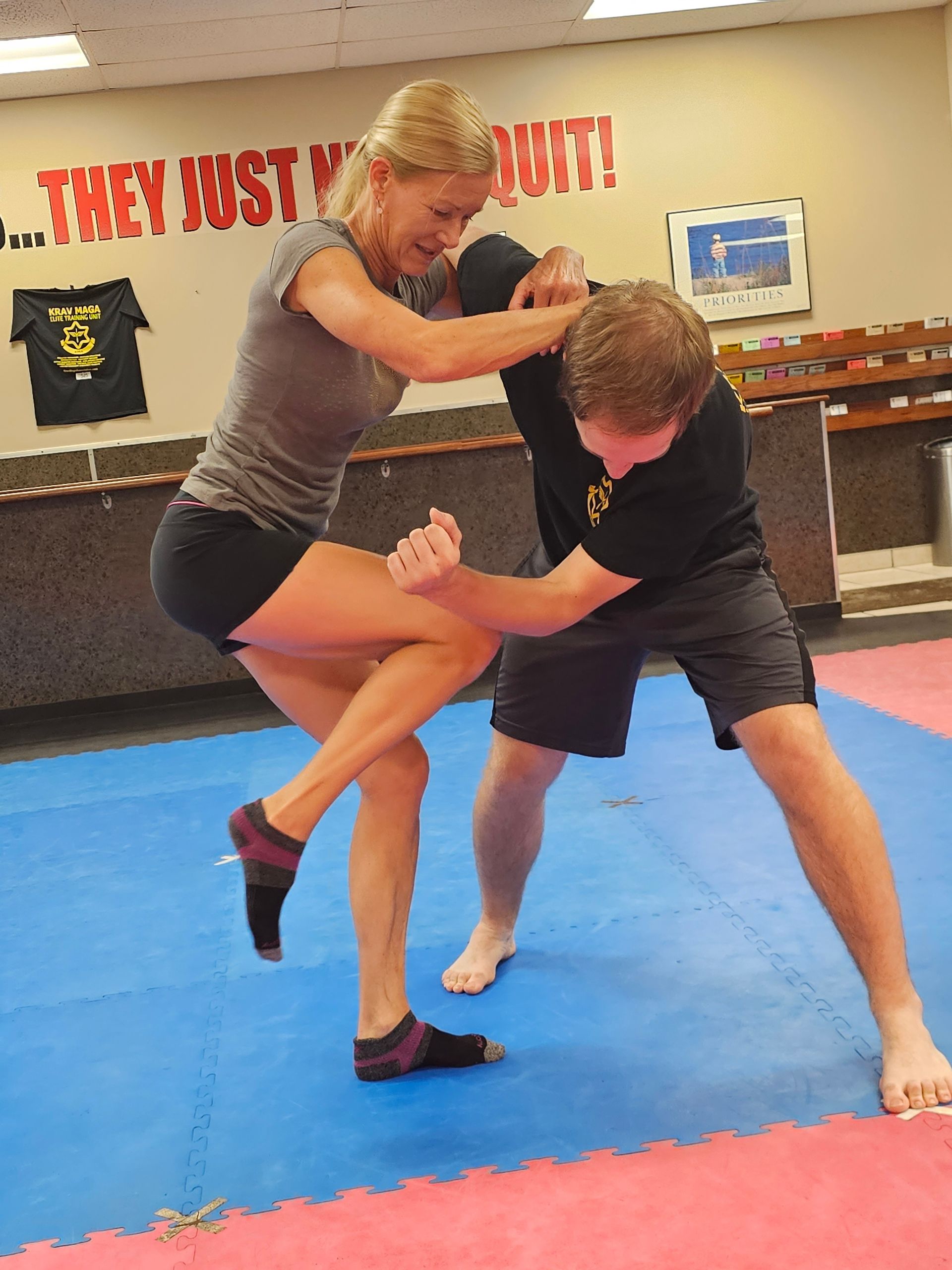
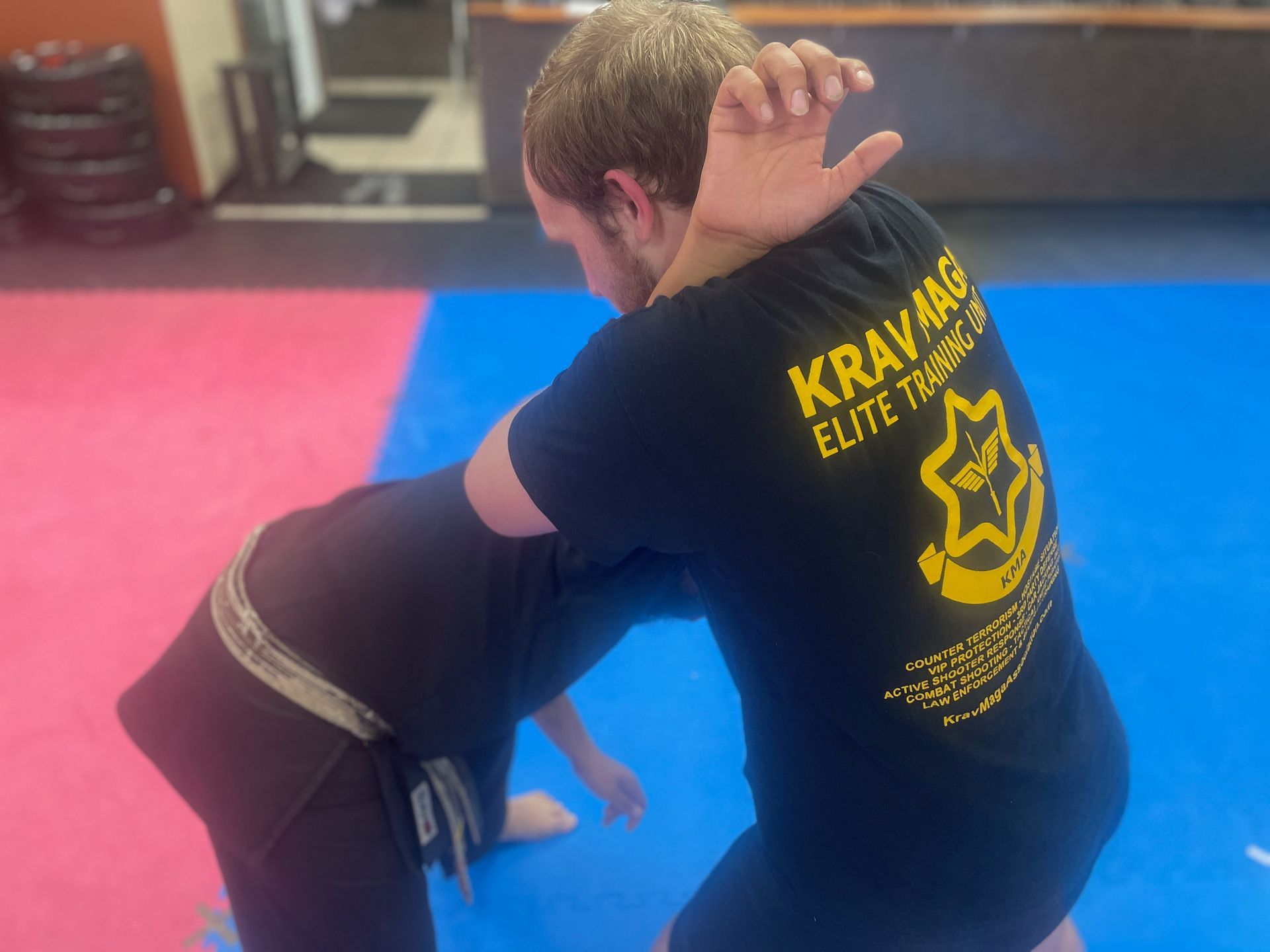
Even in beginner drills, we treat contact as something that must be appropriate and controlled. Partner training is where boundaries get real, because kids have to manage energy, distance, and respect, not just memorization.
We coach students to:
- Follow partner-training protocols before making contact, including waiting for direction and using the right level of control
- Keep hands, feet, and bodies under control, even when moving fast or feeling excited
- Respect personal space and physical limits, including stepping back when a partner needs room
- Stop immediately when an instructor gives a safety command, no arguing, no “one more time”
- Understand the difference between self-defense and retaliation, because those are not the same thing
That last point matters more than most parents expect. A child who can tell the difference between “I need to get safe” and “I want to get even” is building a form of self-respect that shows up everywhere.
Kids learn that “no” can be calm, clear, and practiced
When we talk about boundaries, we’re not just talking about physical contact. We’re also talking about language. Many kids either freeze or explode when they feel uncomfortable. We want a third option: calm clarity.
We practice simple, age-appropriate phrases that kids can actually remember:
1. Stop.
2. Back up.
3. I don’t like that.
4. I’m leaving.
5. I need help.
Those are short on purpose. Under stress, fewer words work better.
Why self-respect is different from aggression
One of the most common concerns parents have about Youth Karate is whether it will make a child more aggressive. It’s a fair question. If a program celebrates domination, kids will copy that. Our approach is the opposite: we treat self-control as a core skill.
Self-respect is not “I can beat you.” Self-respect is “I don’t need to prove myself by hurting you.” When kids experience that shift, confidence becomes steadier and less reactive. Your child learns that strength includes restraint, and that being capable doesn’t mean being confrontational.
In class, we regularly connect effort with identity in a healthy way. Instead of “I’m tough,” the message becomes “I can keep trying,” “I can stay calm,” and “I can make a safe choice.” That’s the kind of confidence parents can actually see at home, in school, and in friendships.
How we create a safe learning environment in Youth Karate
Safety is not a poster on the wall. It’s the tone of the room, the pace of drills, and how corrections are delivered. Especially for kids, the emotional environment matters almost as much as the physical one. If a child feels embarrassed, rushed, or singled out, learning shuts down fast.
We keep our training positive and structured. We correct mistakes without humiliation, and we treat mistakes as part of the process. That might sound small, but it’s one of the most direct paths to self-respect. Kids learn that making an error doesn’t mean “I’m bad,” it means “I’m learning.”
We also emphasize basics that reduce injuries and bad habits:
- Age-appropriate warmups and mobility work
- Clear rules about spacing, lining up, and taking turns
- Controlled drills with instructor direction on intensity
- Consistent reminders about awareness, posture, and balance
- A culture of stopping immediately when instructed
If your child is shy, highly energetic, or somewhere in between, that structure helps. Kids don’t have to guess what to do next. They can relax into the routine and focus on improving.
Progression makes self-respect tangible, not abstract
Self-respect is often talked about like a feeling. In Youth Karate, we treat it like something your child earns through actions: showing up, listening, practicing, and trying again after mistakes. That’s important because kids are surrounded by confidence based on popularity or image. Training gives a different equation: confidence equals effort plus consistency.
Belt progression helps with this when it’s handled responsibly. Belts should never be used as a way to rank human value. In our classes, belts represent responsibility. As students advance, expectations rise, not just for technique, but for attitude and behavior.
A student’s growth might look like:
- Week one: learning how to stand still, listen, and keep hands to themselves
- Month one: following instructions with fewer reminders and bouncing back from corrections
- Ongoing training: developing focus during sequences and staying composed when challenged
- Advancing ranks: demonstrating leadership through respect, not through bossiness
That is self-respect you can actually measure. Not perfectly, not every day, but steadily.
The focus and fitness benefits parents notice first
Youth Karate is a mind-body activity, and that combination is part of why it sticks. Kids aren’t just running in circles. They’re asked to remember sequences, coordinate limbs, manage breathing, and keep track of space. That’s a lot of information, in a good way.
Over time, many families notice improvements in areas like:
- Concentration during structured tasks, because class requires listening and follow-through
- Coordination and balance, especially as kicking and footwork improve
- Physical stamina and strength, built gradually through regular practice
- Emotional control, because students learn to reset after frustration
- Respect at home, when the habits from class start showing up in daily routines
We keep expectations realistic. Youth Karate in New Berlin can support these areas, but we never treat any outcome as automatic. Every child is different, and progress is rarely a straight line.
How boundaries develop differently by age
A five-year-old and a fifteen-year-old need different coaching. That’s obvious in hindsight, but it matters a lot in martial arts because “discipline” cannot be one-size-fits-all.
Younger kids: rules and routine first
With younger students, boundaries start with the basics: listening, taking turns, keeping hands and feet controlled, and stopping on command. We keep drills short enough to hold attention, but structured enough to build habits.
Elementary age: responsibility and self-control
As kids grow, we add more partner work, more sequence memory, and more discussion of appropriate choices. This is where “don’t hit” becomes “use your skills responsibly.” Kids begin to connect behavior with consequences in a clearer way.
Teens: decision-making and self-respect under pressure
Teens benefit from training that treats them like emerging adults. We focus on composure, respectful communication, and decision-making. A teen who can set boundaries without performing toughness is building real maturity.
A practical self-defense framework that keeps kids safe
Parents want self-defense, but most parents also want their child to avoid fights. We agree. Responsible self-defense begins long before physical techniques.
Here’s the framework we teach and revisit often:
1. Notice potential risk early, including discomfort and boundary pushing.
2. Use clear verbal boundaries to create a moment of control.
3. Create distance, because distance is safety.
4. Leave when possible, even if it feels awkward.
5. Seek a trusted adult or emergency help as appropriate.
6. Use physical techniques only when necessary and appropriate.
Youth Martial Arts in New Berlin should never be about turning kids into fighters. It should be about giving kids options, including the option to walk away.
What parents should look for when you observe a class
If you’re considering Youth Karate, the first class tells you a lot. You can feel the culture in the first ten minutes: Is it chaotic, or organized? Are kids corrected respectfully, or shamed? Are safety rules clear, or implied?
When you watch our classes, pay attention to practical details like:
- Whether instructions are calm and specific, not yelled or vague
- Whether contact and spacing are managed carefully by the instructor
- Whether beginners are included instead of being ignored
- Whether corrections focus on effort and behavior, not embarrassment
- Whether students are reminded to stop immediately and follow safety cues
- Whether the environment feels positive, structured, and clean
You’re not just choosing an activity. You’re choosing an atmosphere your child will spend hours in.
Common questions about starting Youth Karate in New Berlin
Is Youth Karate safe?
Any physical activity has risk, but safety improves when classes are age-appropriate and well supervised. We control contact, teach stopping on command, and keep drills structured. You should also share any relevant medical concerns before your child participates.
Does my child need to be athletic?
No. We teach students of different ages and skill levels, and we build fundamentals progressively. Many children who don’t love team sports thrive in Youth Karate because improvement is personal and paced.
Is competition required?
Competition can be optional depending on your goals. Many families focus on attendance, rank progression, and personal growth without competing.
How quickly will my child gain confidence?
There’s no honest timeline. Confidence usually develops through repeated practice, achievable goals, and learning how to recover from mistakes without quitting. That’s part of the point.
Can Youth Karate help with bullying?
Training can support stronger posture, awareness, boundary-setting, and help-seeking. Bullying still requires adult involvement and clear reporting, and we encourage families to take that seriously.
What to expect in our New Berlin youth classes
Most youth classes follow a rhythm that helps kids settle in quickly. We start with a warmup, then move into fundamentals like stances, blocks, and strikes. After that, students practice combinations or age-appropriate drills that build timing and control. Depending on the day and level, we may include partner work with clear rules, plus a cooldown or review at the end.
Your child doesn’t need to show up perfect. Beginners are expected to be beginners. The main goal for day one is simple: participate, listen, and leave feeling proud that you tried something new.
If you want logistical specifics like current times and age groupings, the class schedule page on the website is the best place to confirm details before you visit.
Take the Next Step
Building boundaries and self-respect is not about a single lecture or one good week. It comes from a steady environment where expectations are clear, corrections are respectful, and progress is earned. That’s what we aim to deliver in every Youth Karate class in New Berlin.
When you’re ready for a program that treats confidence as calm capability, and treats self-defense as responsible decision-making, Wisconsin National Karate Kickboxing & Krav Maga is here to help you get started with a clear plan and supportive coaching.
Move from reading to training to join a Karate, Kickboxing, or Krav Maga class at Wisconsin National Karate Kickboxing & Krav Maga today.