How Karate Classes in New Berlin Improve Coordination and Balance
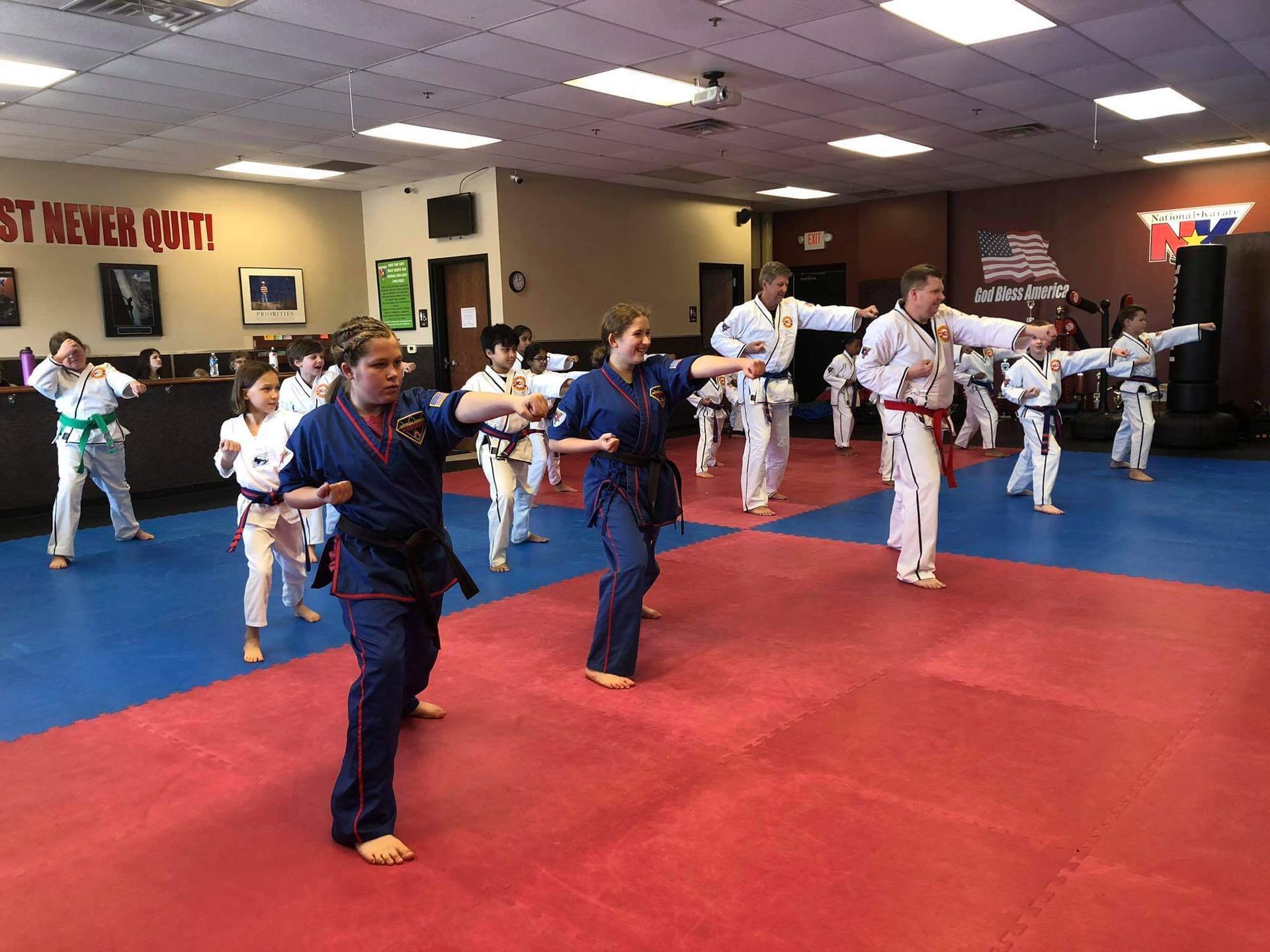
Better balance is not a mystery skill, it is something you can train on purpose in every class.
If you have ever watched a student hold a strong stance, pivot cleanly, and snap a controlled kick without wobbling, you have seen coordination and balance working together in real time. Karate is one of the clearest ways to build those skills because every movement asks your body to organize itself: feet grounded, hips aligned, eyes focused, breathing steady.
In New Berlin, we see the same pattern again and again. Students start with “busy feet” and uneven posture, then gradually move with more control, even outside the dojo. That is not luck. It is what happens when training is structured, consistent, and built around drills that challenge stability in safe, progressive steps.
This matters for kids and adults for different reasons. For kids, coordination supports confidence in sports, recess, and everyday play. For adults, balance is tied to joint health, athletic performance, and staying capable as life gets hectic. Our job is to teach you the skills and give you the repetitions that make improvement feel real and measurable.
Why coordination and balance matter more than most people think
Balance is not just “not falling over.” It is your body’s ability to keep your center of gravity under control while you stand still, move forward, change direction, or absorb force. Coordination is how well your brain and body communicate to time those movements. Put together, those skills influence everything from how you walk up icy Wisconsin steps to how quickly you can react when you are surprised.
A lot of modern life chips away at these abilities. More sitting, more screens, less free movement. We work with plenty of families who want an activity that does not just burn energy, but rebuilds body awareness. Martial arts does that naturally because it requires attention to posture, spacing, and timing, class after class.
There is also a local reality we cannot ignore. Waukesha County youth obesity rates hover around the mid teens in recent health reporting, and many parents are searching for structured movement that feels fun and purposeful. A program that steadily develops balance and coordination can be a practical part of that solution, especially when it is consistent enough to become a weekly routine.
How Karate builds balance from the ground up
Stances train stability like a moving workout
Stances look simple until you hold one correctly. When you sink into a front stance, horse stance, or back stance, you are training your legs, core, and hips to stabilize your body. That stability is what makes everything else possible. If your foundation is shaky, your techniques will be shaky too.
In our classes, we coach stance details in a way students can actually understand: where the weight sits, how the knee tracks, how the hips square, how the spine stays tall. Over time, those cues turn into habits. You stop thinking “Where do my feet go?” and start moving with control automatically.
Stances also teach controlled transitions, which is where balance really develops. It is one thing to stand still. It is another to shift smoothly into a new position without popping up, twisting awkwardly, or losing posture.
Kicks improve single-leg balance and body control
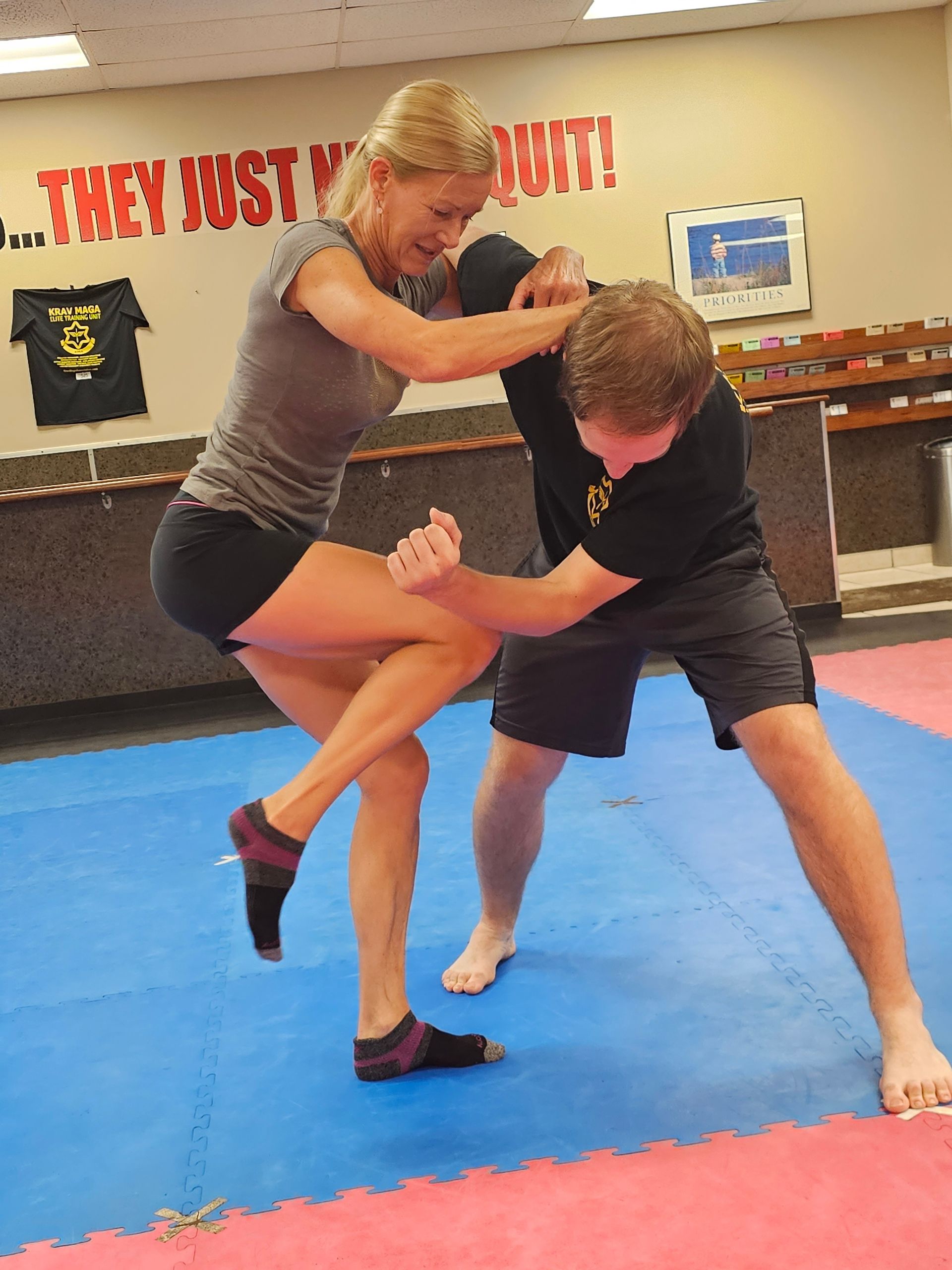
Every kick is a balance drill disguised as a technique. The moment your foot leaves the floor, you are working on single-leg stability, ankle strength, and core engagement. And because Karate emphasizes clean mechanics, you learn to lift, extend, and retract under control instead of swinging wildly.
We do not rush kicks. We teach them progressively: chamber first, then extension, then recoil, then placement. That sequence matters because it trains your body to stay organized in the air and return to a stable base. When students struggle, it is usually not “weak legs.” It is a coordination gap: the hips, core, and standing foot are not communicating yet. Our instructors correct that with small adjustments that add up.
As your technique sharpens, you will often notice balance improvements in daily life. Students tell us they trip less, feel steadier on stairs, and move with more confidence during sports or workouts.
Kata and forms develop timing, rhythm, and spatial awareness
Kata, or forms, are one of the most underrated coordination tools. A form asks you to sequence moves in order, at the correct speed, with precise direction changes. That is coordination training, plain and simple. Your brain must remember patterns, your eyes must track turning points, and your body must keep posture while transitioning.
Forms also develop rhythm. When a student learns to move with consistent tempo and controlled breathing, techniques become smoother and balance improves. It is not flashy, but it is powerful. You can see it in the way a student turns: less stumble, more glide.
And because forms repeat, you get measurable progress. The first time through, students are thinking hard. After weeks of practice, the same form becomes cleaner, calmer, and more stable. That is what skill-building looks like when it is done right.
The science behind the scenes: proprioception and the vestibular system
Balance and coordination are not just muscles, they are systems. Two key pieces are proprioception and the vestibular system.
Proprioception is your body’s ability to sense where it is in space. When you close your eyes and still know where your hands are, that is proprioception. Karate drills, especially stances, footwork patterns, and controlled kicks, challenge proprioception constantly. You learn to feel alignment rather than guess.
The vestibular system lives in the inner ear and helps you manage balance during head movement and direction changes. Think pivots, turns, and quick stance shifts. When you practice those movements regularly, your body gets better at staying stable even when your head and torso move quickly.
We coach these elements without making class feel like a biology lecture. You just experience it: at first, turns feel awkward. Later, they feel natural. Your nervous system adapts through repetition.
Our hybrid training approach and why it helps coordination faster
In our New Berlin program, we use a hybrid approach that blends elements from Tae Kwon Do, Karate, and other self-defense styles. The benefit is practical: you get traditional structure and forms training, plus real-world movement drills that demand athletic coordination.
Hybrid training also means we can meet different learning styles. Some students thrive on the precision of forms. Some need partner drills to make coordination “click.” Some want a fitness challenge that still teaches technical control. By layering these approaches, we help you build balance in more than one context, which usually makes the improvement stick.
We keep classes structured and progressive. That is important. Coordination improves fastest when the goal is clear, the drill is repeatable, and feedback is immediate. When you train that way, you do not just sweat, you learn.
What you will do in class to improve balance and coordination
Here are a few training elements we rely on because they consistently work:
• Footwork patterns that teach you to step, slide, and pivot without crossing your feet or overreaching, so your base stays strong.
• Stance holds and stance walks that build leg endurance and core stability while reinforcing posture and alignment.
• Controlled kicking drills that emphasize chamber and recoil, helping you stay steady on one leg and return to balance cleanly.
• Partner distance drills that teach timing and spacing, so you can move with purpose instead of reacting late.
• Forms practice with coaching on turns and transitions, which is where many students gain the biggest coordination improvements.
You do not have to be athletic to start. You just have to show up consistently and let the process work.
Youth Karate in New Berlin: why kids improve quickly
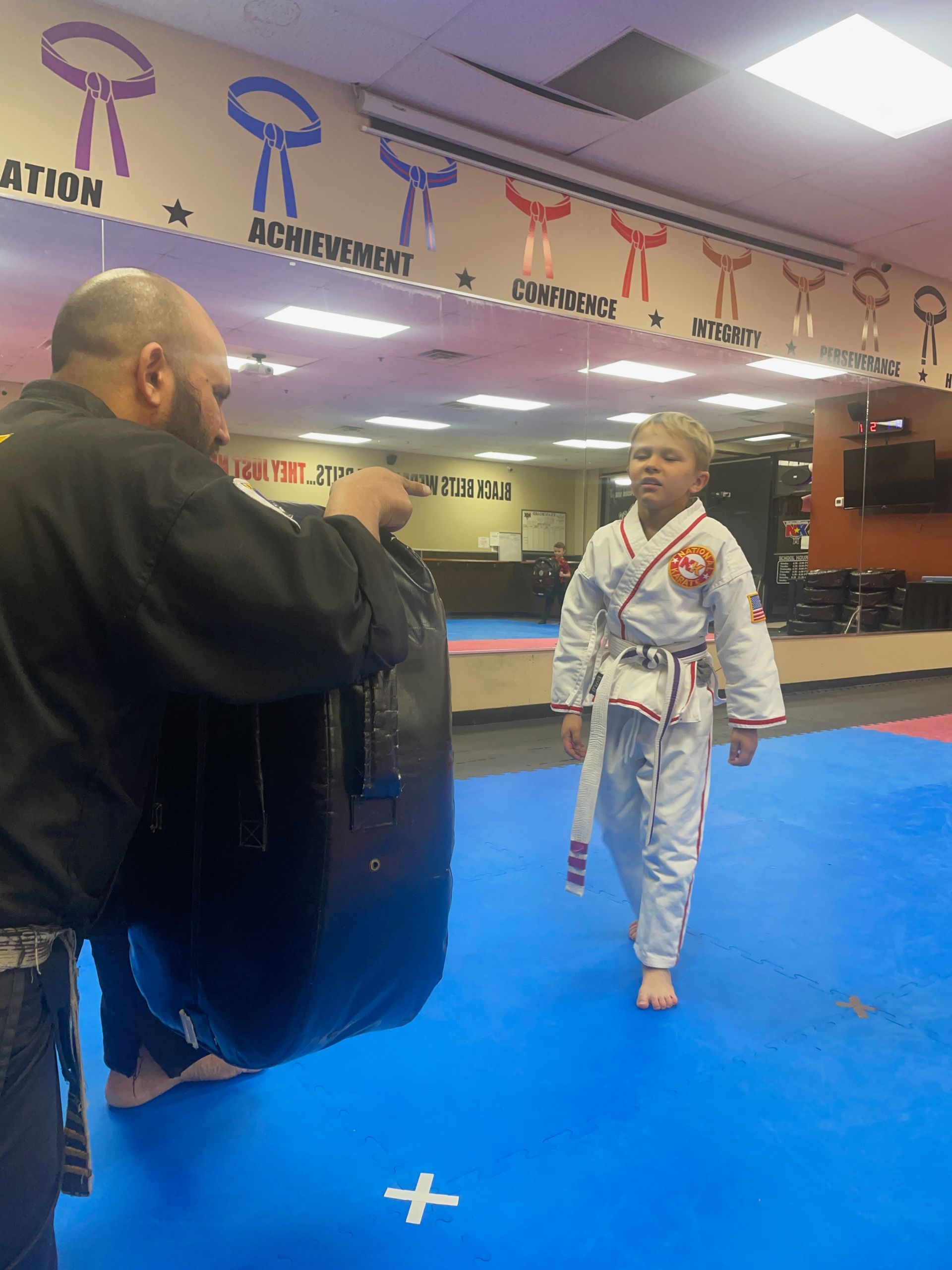
Kids are wired for learning movement. When training is consistent, coordination improvements can show up surprisingly fast. Parents often notice better posture, fewer clumsy moments, and more confidence in physical play. That is one reason Youth Karate in New Berlin is in such high demand, especially for ages around 6 to 12.
We keep youth classes safe, structured, and encouraging. Students learn how to stand in line, follow instructions, and focus on one task at a time. Those habits matter, because coordination is not only physical. It is attention plus movement. When a child can listen, watch, and then copy a skill, the brain-body connection grows.
We also pay attention to how kids develop at different speeds. Some children need extra time with balance drills. Some need help with left and right direction. Our instructors learn names quickly and give personal feedback so students feel seen, not lost in the group.
When families ask about Youth Martial Arts in New Berlin, we explain it simply: our goal is to build skill and character together. Balance and coordination are part of that, but so are discipline, respect, and steady confidence.
Adults and teens: balance training that carries into real life
For teens, coordination supports athletic performance and confidence during a stage of life where bodies change quickly. Karate gives teens a place to move with purpose, improve fitness, and build competence one technique at a time. We see teens benefit from the structure, especially when school and screen time pull attention in a dozen directions.
For adults, balance is closely tied to injury prevention and joint health. Better stability often means better mechanics in running, lifting, and everyday movement. Even if your goal is not competition, improved coordination can make you feel more capable in your body, which is a big deal.
Our adult students also appreciate that training is progressive. You are not thrown into advanced drills on day one. You build fundamentals, then add complexity. That approach helps you improve without feeling beat up.
Safety and confidence: how we keep training beginner-friendly
Balance training should challenge you, but it should not scare you. We prioritize safety through clear instruction, controlled drilling, and a positive training atmosphere. Beginners learn how to fall safely, how to control power, and how to respect training partners.
We also keep progression realistic. If a student cannot hold a stance well, we fix the stance before stacking on speed. If a kick is unstable, we slow it down until control is there. That is how coordination improves without unnecessary strain.
Parents often tell us they appreciate the patience in class, especially with younger students. That patience is not “soft.” It is smart coaching. When students feel supported, they try harder, and that leads to better results.
Scheduling, consistency, and what makes progress stick
Coordination and balance are skills, which means consistency matters more than intensity. Training twice a week for a month usually beats training once a week for three months, simply because your nervous system adapts faster with frequent repetition.
Our New Berlin schedule is built around real family life: evenings during the week and Saturday morning options. We operate from 4 to 9 PM Monday through Thursday and Friday, and 7:30 AM to 1 PM on Saturday. Many families appreciate that they can train after school and work without scrambling.
If you are coming from West Allis, Muskego, Brookfield, Milwaukee, Waukesha, Mukwonago, Greenfield, or Elm Grove, our location near Moorland Road is easy to reach. For busy parents, that accessibility is not a small detail. It is often what makes consistency possible.
Take the Next Step
Building better balance is not about being naturally coordinated, it is about training coordination until it becomes your normal. That is what we focus on every day at Wisconsin National Karate Kickboxing & Krav Maga, using progressive drills, hybrid techniques, and structured classes that help you feel steady on your feet and confident in your movement.
If you are exploring Karate for yourself or looking into Youth Karate in New Berlin for your child, we are ready to guide you step by step. A single class can show you a lot, especially when you feel how stances, footwork, and controlled kicks challenge your balance in a safe, encouraging way.
See firsthand what makes training at Wisconsin National Karate unique by joining a class today.