Karate for Focused Kids: Sharpening Attention and School Success in New Berlin

Better focus is not a personality trait, it is a trainable skill your child can practice every week.
When kids struggle to focus, it rarely looks like one problem. Sometimes it shows up as unfinished homework, constant reminders to stay on task, or big emotions over small frustrations. In New Berlin, we hear the same goal from families again and again: help my child concentrate, follow directions, and feel more confident at school. Karate gives us a practical way to train those skills, not just talk about them.
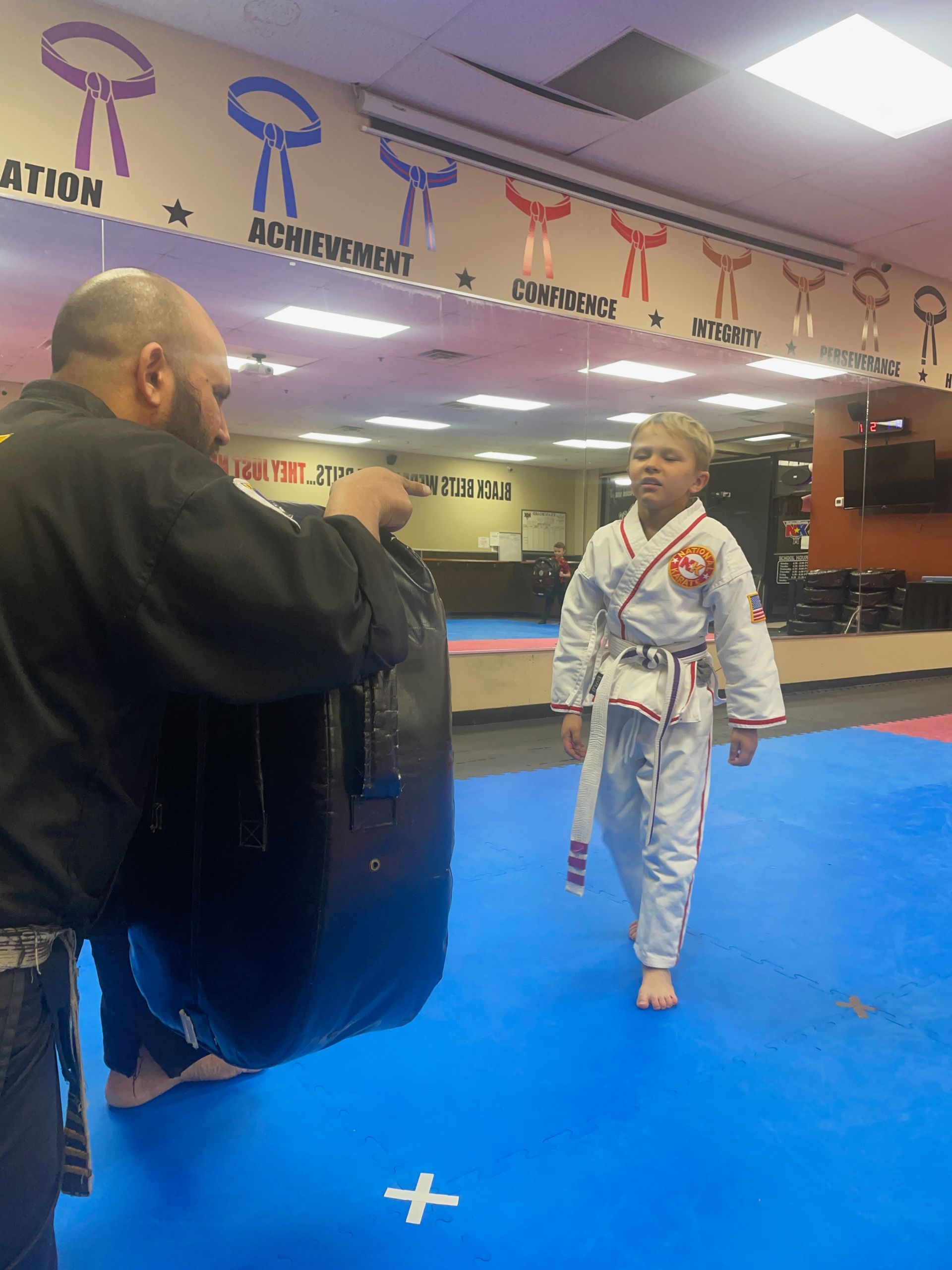
In our kids classes, focus is not a vague idea. We teach it through clear routines, consistent expectations, and short bursts of effort that add up over time. Your child learns to listen for a cue, move with control, and reset quickly when something feels challenging. Those habits translate surprisingly well to classrooms, homework tables, and even busy mornings.
Karate is also a place where kids can be kids while still learning discipline. We balance structure with encouragement, so students feel supported as they build attention, respect, and self-control. The best part is that progress is visible, week to week, in ways you can actually recognize at home.
Why focus is harder for kids right now in New Berlin
Modern childhood has plenty of good things in it, but it is also packed with distractions. Many kids bounce between screens, school demands, and nonstop stimulation, which can make sustained attention feel uncomfortable. That does not mean your child is lazy or incapable. It means attention needs training, like any other skill.
We also see that many kids have fewer chances to practice patient effort. When entertainment is instant and activities change quickly, waiting your turn or sticking with a difficult task can feel foreign. Karate creates a predictable environment where effort is expected, supported, and repeated. Your child does not have to guess what comes next, which reduces stress and makes focus more doable.
New Berlin families are busy, too. Between commutes, sports schedules, and homework, you want an activity that builds real-life skills without adding chaos. Our youth programs are designed to be consistent and easy to follow, with clear class structures that help kids settle in and engage.
How Karate trains the brain: attention, impulse control, and follow-through
Focus is part of a bigger set of skills often called executive function. This includes attention control, working memory, emotional regulation, and impulse control. In kid-friendly terms, it is the ability to pause, listen, choose the right action, and finish what you started.
Karate supports these skills because it is built on decision-making under gentle pressure. A student hears a command, processes it, and responds with the correct technique. If the timing is off, we correct it. If the stance is sloppy, we tighten it. That loop of feedback is powerful because it is immediate and clear.
We also train “resetting,” which matters a lot for school success. Kids make mistakes in class, forget directions, or get overwhelmed. In Karate, mistakes are normal and expected. Students learn to breathe, try again, and improve. Over time, that reduces the emotional spike that can derail learning.
The simple routine that builds big results
Class structure matters. When kids know what to expect, they can spend less energy worrying and more energy focusing. Our sessions typically include:
• A consistent opening routine that signals it is time to pay attention
• Skill practice in short segments so kids stay engaged
• Reminders to use respectful posture and listening skills
• Progress checks that reward effort and accuracy, not perfection
• A closing moment that reinforces self-control and positive behavior
This steady pattern helps kids practice attention in a way that feels natural, not forced.
What “focused kids” look like in class and at school
Focus is not always silent. A focused child might still be energetic, talkative, or wiggly. What changes is the ability to respond to instruction and stay with the activity. In our youth classes, we look for practical markers of growth.
In class, focused behavior shows up as better eye contact, quicker responses to simple cues, and improved control during movement. Kids begin to wait their turn without constant reminders. They listen for their name, follow a sequence, and remember corrections. It is not magic. It is repetition.
At school, families often notice improvements in:
• Starting homework with less resistance
• Finishing tasks with fewer breaks
• Following multi-step directions more accurately
• Handling frustration without melting down as quickly
• Raising a hand and waiting, instead of blurting out
Those are real-life wins, and they are exactly the kinds of skills Karate reinforces.
Karate and confidence: why success in small steps matters
Confidence is closely tied to attention. When kids believe they can succeed, they are more willing to try, and they stick with tasks longer. In Karate, we break skills down into manageable pieces so your child can experience progress without feeling overwhelmed.
A stance becomes stable. A punch becomes straighter. A kick becomes more controlled. These are small improvements, but they add up to a bigger identity shift: I can work hard and get better. That mindset supports school performance because it reduces avoidance. Kids stop thinking, I am bad at this, and start thinking, I am learning.
We also teach respect and self-discipline in a way that feels practical. Respect is not just saying “yes sir” or “yes ma’am.” It is listening when someone is speaking, taking correction calmly, and treating training partners with care. Those behaviors carry over into classrooms and friendships.
Youth Karate in New Berlin: what your child learns beyond the techniques
When families look for Youth Karate in New Berlin, they often want two things at the same time: a safe activity that burns energy, and a program that builds character. We treat those goals as connected.
Kids learn physical skills, of course, but we also focus on the habits that make those skills useful:
• Discipline, through consistent expectations and routines
• Respect, through structured communication and cooperation
• Self-defense awareness, through age-appropriate safety concepts
• Focus, through listening drills and technique sequences
• Patience, through repetition and steady improvement
Our job is to make these life skills feel achievable for your child right now, not someday.
A quick look at our youth options and how they support focus
If your child does best with consistency, group classes can be a great fit. If your child benefits from extra individual attention, private sessions can help build momentum.
Youth Martial Arts in New Berlin: why the environment matters as much as the curriculum
You can have a great curriculum, but if the environment feels chaotic, kids will not learn to focus. We work hard to keep our classes positive, structured, and supportive. That includes clear rules, predictable routines, and instructors who pay attention to how each student learns.
Families often tell us they appreciate that we learn kids’ names quickly and create a sense of belonging. That matters more than people realize. When a child feels seen, motivation goes up. When motivation goes up, attention improves. It is a simple chain reaction, but it is real.
We also keep safety and cleanliness in mind because comfort supports focus. When a space feels organized and well-run, kids settle in faster. Parents notice it, too, which makes it easier to stick with training long enough to see results.
Supporting kids with attention challenges: what we do differently
Some kids have a harder time with focus for reasons outside their control. That might include ADHD, anxiety, or sensory needs. We do not pretend Karate is a replacement for professional care, but we do know that structured movement, routine, and mindful breathing can support many kids.
We use practical strategies that help students succeed without being singled out. For example, we keep instructions clear and short, demonstrate techniques visually, and give frequent feedback. We also build “pause points” into training so kids can reset their bodies and return to the task.
How we help kids stay engaged without turning class into a lecture
1. We teach one step at a time, then connect steps into short combinations.
2. We use call-and-response cues so kids practice listening and reacting.
3. We reinforce effort quickly so kids know what “right” feels like.
4. We redirect behavior calmly and consistently, without shaming.
5. We celebrate progress in focus, not just athletic ability.
This approach helps kids who struggle with attention feel capable instead of discouraged.
What to expect in your child’s first few weeks
The first class can feel new and a little intimidating, but most kids adjust quickly once they understand the rhythm. We guide students through the basics and keep expectations age-appropriate. Your child does not need to be sporty, coordinated, or confident on day one.
In the first few weeks, we focus on foundational movement and classroom habits. That includes how to stand, how to listen, and how to respond to instructions. Kids also start learning basic strikes and blocks with control. We keep the tone encouraging while still maintaining structure, because both are needed for focus to develop.
Parents often notice a shift around the one-month mark, not because everything is suddenly perfect, but because routines start to stick. Your child knows what to do when an instructor speaks. Your child understands that effort leads to improvement. That is a big deal.
Building school success with consistent training
School success is not just about intelligence. It is about habits: showing up, paying attention, managing frustration, and completing work. Karate supports these habits through repetition and clear expectations. Each class is a small practice session for the skills your child needs in the classroom.
We also encourage students to set goals, which helps with motivation. Goals make effort feel meaningful. For kids, that might be earning a stripe, improving a kick, or remembering a sequence without help. The process teaches planning, persistence, and pride in steady growth.
If you want a simple way to connect training to school, try asking your child one question after class: What did you improve today? That builds reflection, and reflection is a powerful focus skill.
Take the Next Step
If you want your child to feel more confident, more organized, and more capable at school, Karate can be a steady, practical path forward. We built our youth programs to train focus through structure, encouragement, and clear progress, so improvements show up in everyday life, not just in class.
When you are ready, we would love to help you explore what training looks like at Wisconsin National Karate Kickboxing & Krav Maga in New Berlin. You can check the class schedule, ask questions, and choose a starting point that fits your family’s routine without making it complicated.
Build stronger fundamentals and sharpen your technique by joining a Karate class at Wisconsin National Karate.