How Youth Karate Teaches Problem-Solving Skills to New Berlin Kids
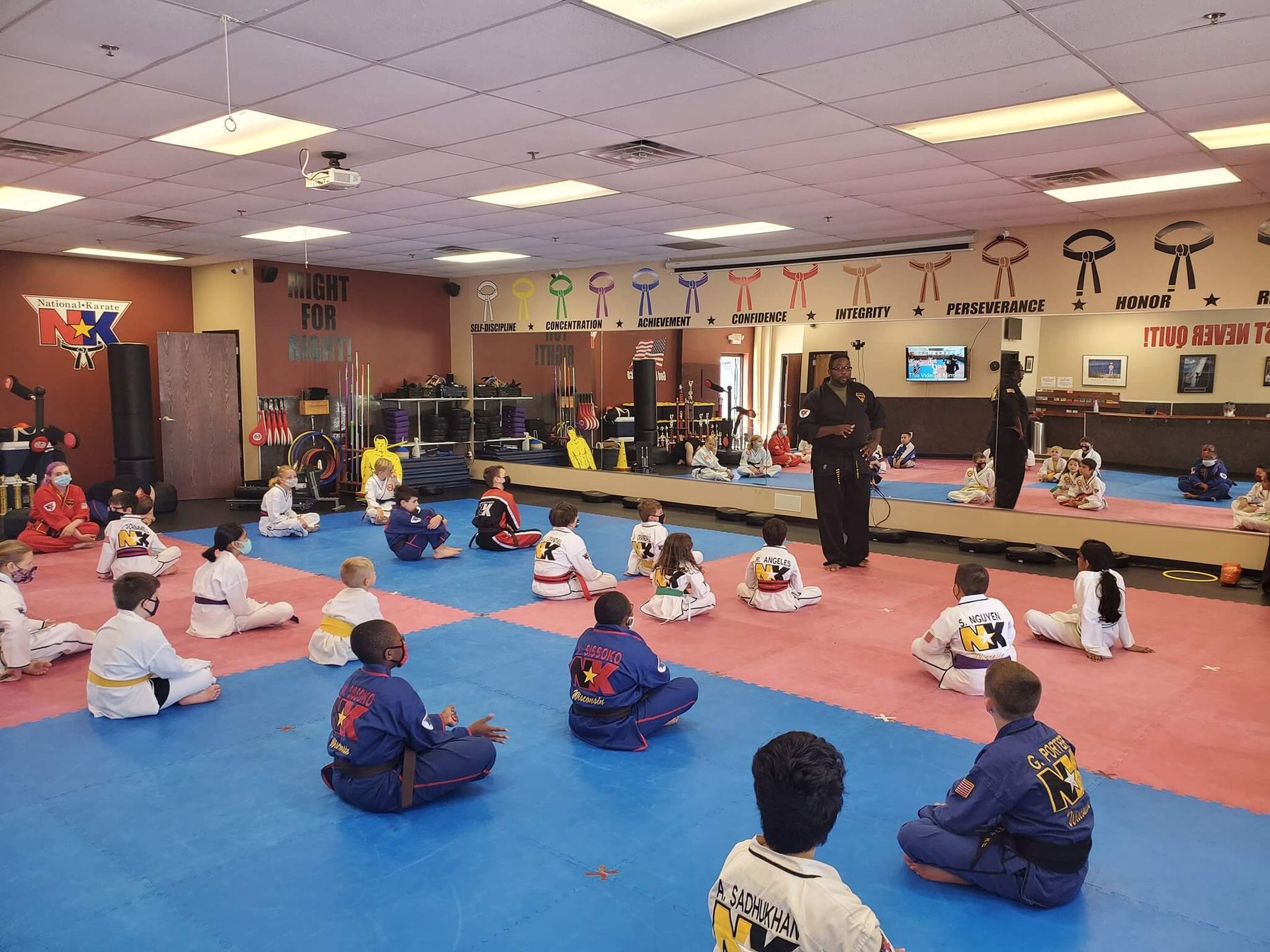
The best problem-solvers are trained to stay calm, notice details, and try again when the first idea fails.
In New Berlin, many parents tell us the same thing in different ways: your child is smart, but gets stuck. Maybe it shows up in homework frustration, social conflict, or freezing under pressure when something unexpected happens. Youth Karate can be a surprisingly effective answer because it teaches kids how to think through challenges, not just move through them.
Our Youth Karate classes are built around structured puzzles for the body and brain. Kids learn to follow a plan, adjust when the plan stops working, and keep going even when a skill feels tough at first. That loop - attempt, evaluate, refine - is problem-solving in its purest form.
When you look closely, karate is basically a language of decisions. Every stance is a choice. Every block has a timing question. Every combination asks, What comes next if this changes? And for kids in Youth Karate in New Berlin, those decision-making reps add up fast.
Why problem-solving is a real-life skill, not a school subject
Problem-solving is the skill behind other skills. It is how your child handles a hard math question, navigates a group project, or figures out what to do when a friend crosses a boundary. It also shows up in emotional moments, like dealing with disappointment without melting down, or speaking up without escalating.
We treat problem-solving as a trainable ability. Kids do not need to be naturally calm or naturally confident to learn it. What kids need is repeated exposure to safe challenges that are a little uncomfortable but not overwhelming, plus coaching that turns mistakes into information.
That is one reason Youth Martial Arts in New Berlin has become more than an after-school activity. Families are looking for something that builds focus, resilience, and better decision-making without relying on competition or constant comparison. Our approach fits that need because progress is personal, and every student can improve from day one.
How Youth Karate trains the brain to break big problems into smaller ones
When kids feel stuck, the problem is often size. The task feels too big, too fast, or too unclear. One of the most practical things Youth Karate teaches is how to chunk a challenge into steps.
We do this constantly in class. A new technique is not taught as one huge motion. We teach where to put the feet, where to place the hands, how to shift weight, and how to breathe through the movement. Kids learn to ask, What is the first step I can do correctly? That single question is a problem-solving superpower.
Over time, kids start applying the same thinking outside the dojo. Instead of saying, I cannot do this, we hear more of, I can do the first part, then the next part. It is not magic. It is practice.
Katas: memory, patterns, and smart adjustments
Katas are memorized movement patterns. To a parent watching from the lobby, a kata can look like a choreographed routine. But from a learning standpoint, katas are a mental gym.
What makes katas such strong problem-solving practice
A kata requires your child to:
- Remember a sequence while staying aware of details like stance length, hand position, and direction changes
- Fix mistakes in real time without stopping the entire routine
- Manage nerves when performing, even in low-pressure situations like testing practice
- Link movements together smoothly, which is basically planning ahead while executing the present step
Kids discover quickly that knowing the pattern is not the same as performing the pattern. If a foot lands slightly off line, the next move might feel wrong. So we teach kids to self-correct: adjust the stance, reset posture, and keep going. That mental flexibility transfers to schoolwork and sports, where a small mistake can either derail a child or become a quick fix.
Katas also build semantic memory through repetition, which supports attention and recall. When your child practices a form regularly, the brain strengthens pathways for sequencing, timing, and recall. Those are the same ingredients behind spelling, reading fluency, and following multi-step directions.
Sparring: decision-making under pressure, safely
Sparring gets misunderstood. In our Youth Karate program, sparring is controlled, coached, and designed to build calm problem-solving, not aggression. The goal is not to overpower someone. The goal is to apply skills responsibly while reading a changing situation.
Sparring teaches kids to process fast information:
- An opponent moves in a way you did not expect
- Distance changes by inches, which changes what is safe or effective
- You have to choose a response and commit, then reassess immediately
This is problem-solving in real time. And because we structure sparring with rules, supervision, and appropriate contact, kids learn something more important than winning: self-control. A child can feel adrenaline and still make a good choice. That is a life skill.
For kids who struggle with freezing, sparring often helps them practice action without panic. For kids who act impulsively, it teaches pause and restraint. Either way, the brain is learning, I can handle pressure and still think.
Scenario-based drills: practical thinking that feels like a game
A big trend in Youth Martial Arts in New Berlin is shifting from purely technical training to life-skill integrated training. We do that by adding scenario-based drills that force kids to think, communicate, and adapt.
We might run drills that involve:
- Listening for a cue and reacting with the correct technique
- Moving to a safe position while maintaining awareness
- Using a calm voice to set boundaries before physical techniques are even considered
- Choosing between options based on distance and timing, not guessing
Kids usually describe these drills as fun. Parents notice the deeper effect: better composure, clearer communication, and quicker recovery after mistakes. If your child tends to shut down when corrected, these drills teach that feedback is just part of the process. You try, you learn, you try again.
Belt progression: goal-setting without team pressure
One reason Youth Karate works for so many personality types is that progress is individual. Belt ranks provide clear milestones, but your child is not dependent on teammates to succeed. That matters for kids who feel overwhelmed in competitive environments or who hesitate to join group sports.
Belt progression builds problem-solving in a structured way. Your child learns:
1. How to set a goal that is specific, like improving a certain form or technique
2. How to practice consistently, even when motivation comes and goes
3. How to track progress using feedback from our instructors
4. How to handle testing nerves by preparing early and showing up anyway
5. How to respond when something does not go perfectly, then improve for next time
These are the same steps behind long-term success in academics. Kids learn that effort plus strategy creates results. That lesson tends to stick.
Confidence changes how kids solve problems
Confidence is not just feeling good. It changes behavior. A child who believes, I can figure this out, is more likely to attempt a solution, ask for help, or try a second approach. A child who lacks confidence often avoids, quits early, or acts out to escape embarrassment.
Youth Karate builds confidence through earned competence. When your child learns a new skill and sees real improvement, the brain gets proof. That proof becomes self-talk during hard moments: I have done hard things before.
We also keep the environment respectful and focused. Kids learn how to take turns, how to speak clearly, and how to listen. Those are problem-solving tools, too, especially in friendships and classroom group work.
Focus and attention: the hidden engine behind better decisions
If you want better problem-solving, you need better focus. Many New Berlin families are dealing with focus challenges tied to screen time, busy schedules, or simply the way kids are wired. Our classes give kids a place to practice sustained attention in a way that feels active, not boring.
Karate naturally trains focus because kids must:
- Watch demonstrations closely
- Remember sequences
- Time movements with partners
- Follow safety rules consistently
Even small improvements in attention can create big real-life changes. Homework takes less time. Directions get followed with fewer reminders. And kids learn that focus is something you practice, not something you either have or do not have.
Responsibility: small routines that create independent kids
Problem-solving is easier when kids are organized. We build responsibility into training in a simple, steady way. Kids learn to show up prepared, manage their own gear, and take ownership of improvement.
We might prompt your child to check:
- Do you have your uniform and belt ready before leaving the house?
- Do you know what you are working on this week?
- Are you listening for corrections and applying them right away?
- Are you being a good partner, meaning safe, respectful, and helpful?
These are small habits, but they stack. And when kids develop routines, they have fewer daily problems to solve in a crisis mode.
Bullying and conflict: solving the right problem first
Bullying prevention is not only about techniques. It is about recognizing situations early and choosing the safest response. In our Youth Karate in New Berlin community, we emphasize awareness, confident body language, and de-escalation skills alongside physical training.
We coach kids to solve the right problem first. The first problem is not How do I fight back? The first problem is How do I stay safe and get help? That includes:
- Using a strong voice to set boundaries
- Moving to safer spaces and staying near trusted adults
- Getting support quickly instead of handling it alone
- Knowing that physical self-defense is a last resort, not a first plan
This approach improves emotional health without promoting violence. Kids learn that strength includes restraint, and smart choices beat reckless ones.
Is Youth Karate helpful for kids with learning differences or low confidence?
Yes. Our structure supports kids who need more repetition, clearer boundaries, or a little extra time to warm up socially. Youth Karate is highly teachable because we can adjust the pace while still keeping expectations clear.
For many kids, the first wins come quickly: standing tall, following class routines, remembering a simple combination. Those wins matter because they create momentum. With consistent attendance, families often notice better focus and confidence within weeks, especially when kids practice a few minutes at home between classes.
If your child has big feelings when corrected, we also work on coachability. We normalize mistakes. We give specific feedback. We celebrate effort that is directed, not random. That is how problem-solvers are built.
Take the Next Step
Building problem-solving skills does not require a lecture or another worksheet. It requires the right kind of challenge, repeated often, with coaching that makes kids feel capable while still expecting growth. That is exactly what we aim for in every class, because we want your child to leave training more prepared for school, friendships, and everyday pressure.
If you are ready to see how our Youth Karate program works in New Berlin, we would love to help you find a starting point that fits your child’s age, personality, and goals. At Wisconsin National Karate Kickboxing & Krav Maga, we keep training practical, encouraging, and structured so your child can build real skills that last.
Support your child’s personal growth on and off the mats with training at Wisconsin National Karate.