How Youth Karate in New Berlin Helps Kids Thrive in a Digital World
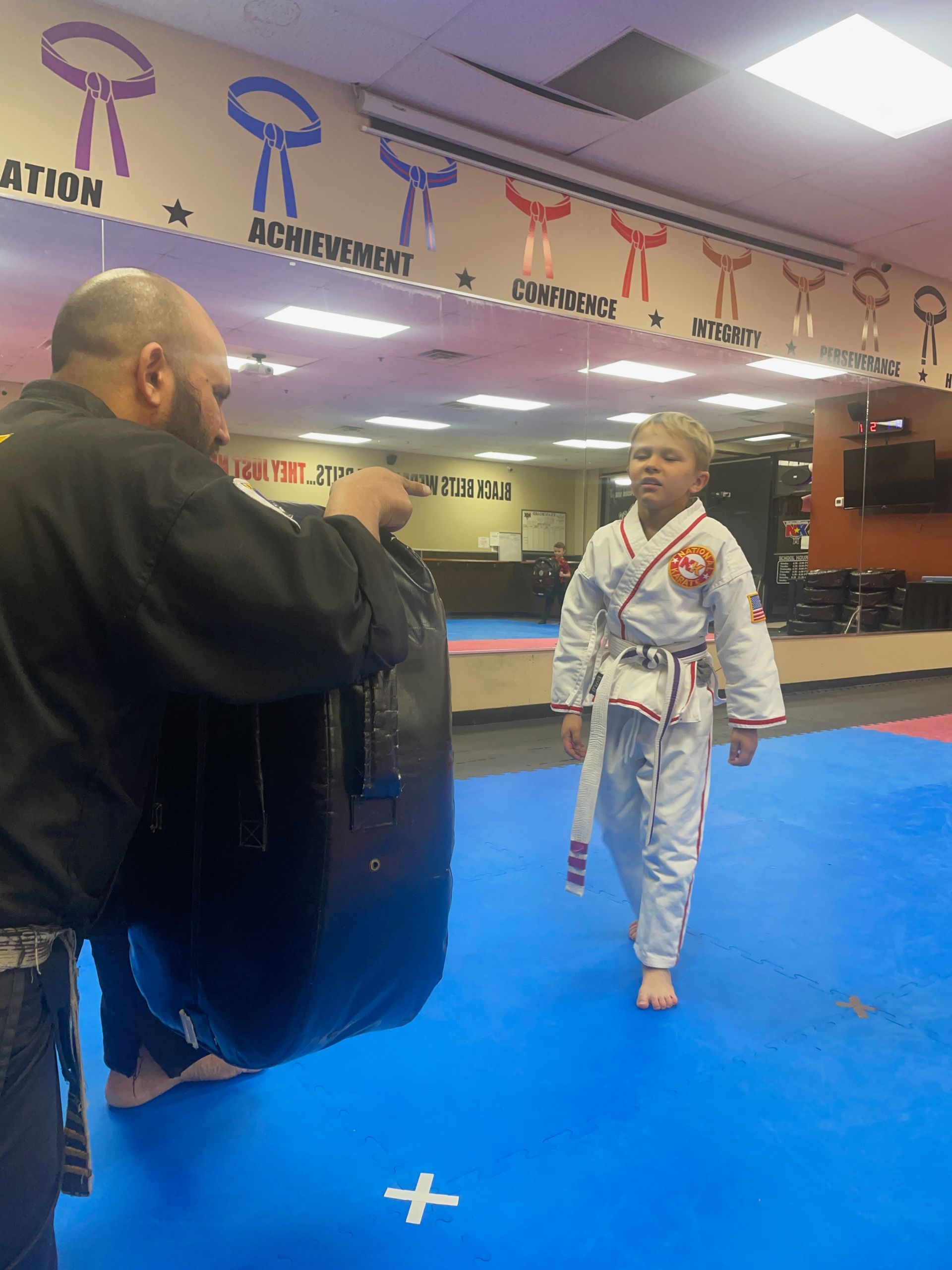
Youth Karate gives kids a real-world reset: move the body, focus the mind, and connect with people face to face.
If you’re parenting in 2026, you’ve probably noticed the same thing we see every week: kids can be incredibly bright and creative, but screens make it easy for energy, attention, and confidence to get stuck in one place. Youth Karate is one of the simplest ways to replace passive scrolling with an hour that has a beginning, a middle, and a clear win at the end.
In our youth classes, we focus on structure without being rigid and discipline without being harsh. Your child gets coaching that asks for effort, not perfection. And in a world full of notifications, that kind of steady, in-person practice matters.
New Berlin families also feel the bigger national trend: kids want activities that feel enjoyable and doable, and parents want something consistent that doesn’t take over the entire week. Martial arts fits that gap well, especially when your child can measure progress one skill at a time.
Why the digital world hits kids differently than it hits adults
Screens aren’t automatically “bad,” but the way kids use them often leans toward speed, novelty, and constant switching. That’s the opposite of what the developing brain needs for calm focus. When a child spends hours in fast feedback loops, schoolwork and chores can feel painfully slow, even if your child is fully capable.
Digital life can also make social confidence harder. A kid can “talk” all day online but still feel awkward reading tone, taking turns, or handling small conflicts in person. That gap shows up as frustration, shutdown, or the classic “I don’t know” when you ask how their day went.
Youth Martial Arts in New Berlin gives kids a simple, reliable format: show up, bow in, work, improve, bow out. It’s the same rhythm every time, and that predictability is actually soothing.
Youth Karate as a “digital detox protocol” that kids will actually do
A lot of detox ideas sound good in theory and fall apart in real life. Youth Karate works because it’s not a lecture about screens. It’s an experience that competes with screens by being physical, social, and immediate.
The key difference is feedback. On a screen, feedback is often abstract: likes, levels, streaks. In karate, feedback is tactile and specific. A stance feels stable or it doesn’t. A block is on time or it’s late. A kick lands with control or it drifts. Kids learn patience because the body can’t fake repetition.
Over time, we see many kids start to prefer the clean feeling of training: sweat, focus, clear expectations, and that satisfied tiredness that helps them sleep.
The biggest benefits we build into every class
Karate is sometimes misunderstood as “just fighting.” We teach it as a three-part system: self-defense concepts, rules-based training, and personal development. That blend is what makes Youth Karate in New Berlin so effective for modern challenges like anxiety, poor focus, and social isolation.
Here are the outcomes we design for, on purpose:
• Structured physical activity that channels energy into balance, coordination, and healthy fatigue, which helps screen-heavy kids feel better in their bodies
• Social skill development through partner drills, line work, and respectful listening, so kids practice eye contact, turn-taking, and encouragement
• Mental discipline through cues, forms, and progress goals that build frustration tolerance and follow-through
• Confidence built on proof, where your child earns skills step by step instead of “feeling confident” because someone told them to
• Safety education that includes awareness, boundaries, and controlled technique, aligning with research that validates karate as an effective tool for youth safety education
Kids don’t need to be naturally athletic to benefit. In fact, some of our most consistent students start out unsure, a little clumsy, or easily distracted. The structure helps them settle in.
Focus and school performance: what training really changes
Parents often ask if Youth Karate helps with focus in school. We can’t promise report-card miracles, but we can explain what changes mechanically.
Karate builds attention in short bursts that gradually lengthen. A child learns to watch, then do, then reset. That cycle trains listening under mild pressure, which is very similar to a classroom environment. It also trains “one thing at a time,” a skill screens can quietly erode.
We also use clear routines. When a child knows what comes next, the brain stops spending energy on uncertainty and can spend it on effort. Over weeks of training, many kids become easier to coach at home too, not because we “fixed” them, but because they practice responding to direction without taking it personally.
Anxiety, stress, and why martial arts helps
Anxiety in kids is complicated and personal, and we never treat training as a replacement for professional care when it’s needed. But martial arts has meaningful evidence behind it. A 2019 meta-analysis found martial arts programs were associated with significant reductions in anxiety symptoms, with an effect size of 0.48. That’s not hype, and it matches what many families report.
Why does it help? Training gives the nervous system a safe place to experience intensity and recover. A child learns to breathe, try again, and stay in the room when something is difficult. That’s emotional regulation in motion, not a worksheet.
We also keep the tone constructive. Corrections are part of learning, but we aim to deliver them in a way that builds capability rather than embarrassment. Kids already get enough of that online.
Social confidence: a real antidote to isolation
Digital communication can be loud and constant, but it can still feel lonely. Youth Karate creates face-to-face belonging without forcing kids to be extroverts. You can be quiet and still be part of the group because the structure does some of the social work for you.
Partner drills teach cooperation. Line drills teach shared rhythm. Learning etiquette teaches respect in a practical way, not a preachy way. Over time, many kids start speaking up more, not because we demand it, but because they feel safe being seen.
This is one reason kids ages 7 to 12 represent the largest segment of martial arts enrollments, making up 26% of the total U.S. market. Families are looking for environments that help kids grow in ways school and screens don’t always cover.
Is karate safe for my child?
Safety is central to how we teach. Good training is controlled training. Youth Karate is not a free-for-all, and we don’t throw kids into contact before they’re ready.
We use age-appropriate progressions, clear boundaries, and constant coaching on control. Kids learn how to move with awareness, how to stop, and how to respect partners. That self-control is part of the curriculum, not an afterthought.
If you’re worried about injuries, it may help to remember that our goal is skill development and personal growth, not chaos. We build coordination first, then complexity, then intensity, and we keep the environment structured so kids can learn safely.
What if my child quit other sports?
A lot of kids quit sports because it stops being fun. In fact, lack of enjoyment is the top reason youth quit sports, reported at 38%. If your child felt “not good enough” on a team, karate can be a refreshing reset because progress is individual and visible.
Your child doesn’t need to score points for a team to feel successful. Improvement can look like a cleaner stance, a stronger voice when counting, or simply staying focused for the whole class. Those wins are real, and they stack up.
New Berlin families also want activities that don’t require constant travel. With afterschool program demand outpacing supply, Youth Karate in New Berlin becomes a practical solution: consistent schedule, consistent coaching, and a clear pathway forward.
How we keep kids engaged in a competitive, screen-heavy era
The martial arts industry has grown fast. U.S. market revenue reached an estimated 19.4 billion in 2024, and the number of studios has nearly doubled since 2020, rising to 76,364 in 2026. That kind of growth creates a reality check: retention matters.
We take engagement seriously by keeping classes purposeful and progressive. Kids stick with training when they understand what they’re working on and can feel themselves improving. We also pay attention to modern learning styles. Hybrid models that combine in-person instruction with virtual support are increasing across the industry, and we use the website and class schedule information to help families stay consistent even when life gets busy.
We also see a steady rise in girls participating in martial arts, reaching 37% in 2024. In our youth program, we keep expectations high for every student and make sure everyone has the space to grow strong, capable, and confident.
What your child learns in the first 90 days
A common question is what progress actually looks like early on. We like the first 90 days because it’s long enough for habits to form, but short enough to feel tangible.
Here’s a realistic snapshot of what many kids develop:
1. Week 1 to 2: learning class etiquette, basic stances, and how to listen and respond quickly
2. Week 3 to 4: improved coordination through repeated drills, plus early confidence from small, visible wins
3. Month 2: better balance, stronger voice, and more consistent effort even when a skill is challenging
4. Month 3: clearer focus during instruction, more comfort working with partners, and pride in measurable progress
This is where Youth Karate becomes more than an activity. It becomes a routine that makes the rest of the week easier.
Youth Karate in New Berlin for real life, not just the mat
We love tournaments and goals, but the bigger win is what your child carries out the door. The discipline built in class shows up during homework, chores, and tough conversations. The confidence built through repetition shows up when your child tries something new without melting down.
Karate also supports safety in a modern sense. Kids learn situational awareness, boundary setting, and respectful assertiveness. That matters in hallways, at parks, and yes, even in the background of digital life where social pressure can spill into real-world stress.
When Youth Karate is taught with structure and care, it becomes a steady counterweight to the digital world: not anti-technology, just pro-human.
Take the Next Step
Building focus, confidence, and resilience is simpler when your child has a consistent place to practice it. At Wisconsin National Karate Kickboxing & Krav Maga, we design Youth Karate to feel structured, safe, and rewarding, so your child can step away from screens and into real progress.
If you’re looking for Youth Martial Arts in New Berlin that supports mental discipline, social growth, and practical safety skills, we’re ready to help you find a class rhythm that fits your family and keeps your child moving forward.
Help your child build confidence, discipline, and respect by enrolling them in a youth martial arts program at Wisconsin National Karate Kickboxing & Krav Maga.