How Youth Karate in New Berlin Nurtures Responsibility in Kids

Responsibility is not a lecture in our classes, it is a skill your child practices every single week.
If you are searching for Youth Karate in New Berlin, you are probably looking for more than kicks and punches. Most parents who reach out to us want help with follow through, better listening, calmer choices, and that hard to teach habit of doing the right thing even when nobody is watching. Responsibility sounds big, but for kids it is built in small moments, one rep at a time.
We see responsibility grow fastest when kids have clear expectations and a consistent place to practice them. That is why our Youth Karate structure is not random or seasonal. It is a steady rhythm of class, effort, correction, and progress, which matters a lot in New Berlin when winter weather can turn outdoor plans into a mess overnight.
This article breaks down how our Youth Karate program uses goal setting, belt progression, and everyday training habits to help your child carry responsibility into school, friendships, and home life.
Why responsibility sticks when it is trained, not just taught
Responsibility becomes real when kids connect actions to outcomes. In class, that might look like learning that showing up on time means you get the warm up, the partner work, and the chance to improve. If you arrive late, you miss pieces and you feel it. We do not shame kids for that, but we do let the natural cause and effect do its job.
Training also gives kids something many modern schedules lack: a place where expectations do not shift depending on mood. Our instructors correct technique the same way every time, and our students learn to accept feedback without collapsing into excuses. That mental muscle is responsibility in disguise.
Over time, kids start to internalize a simple message: I can do hard things, and I can do my part. That carries over to homework routines, chores, and even the way they handle conflict with siblings.
Youth Karate belt progression makes responsibility concrete
Kids often struggle with responsibility because it feels vague. “Be responsible” can sound like background noise. Our belt system makes the concept visible and measurable. Each rank has goals, skill checklists, and expectations for behavior and effort, so your child knows what to work on and what “better” looks like.
The white belt phase: building ownership of basics
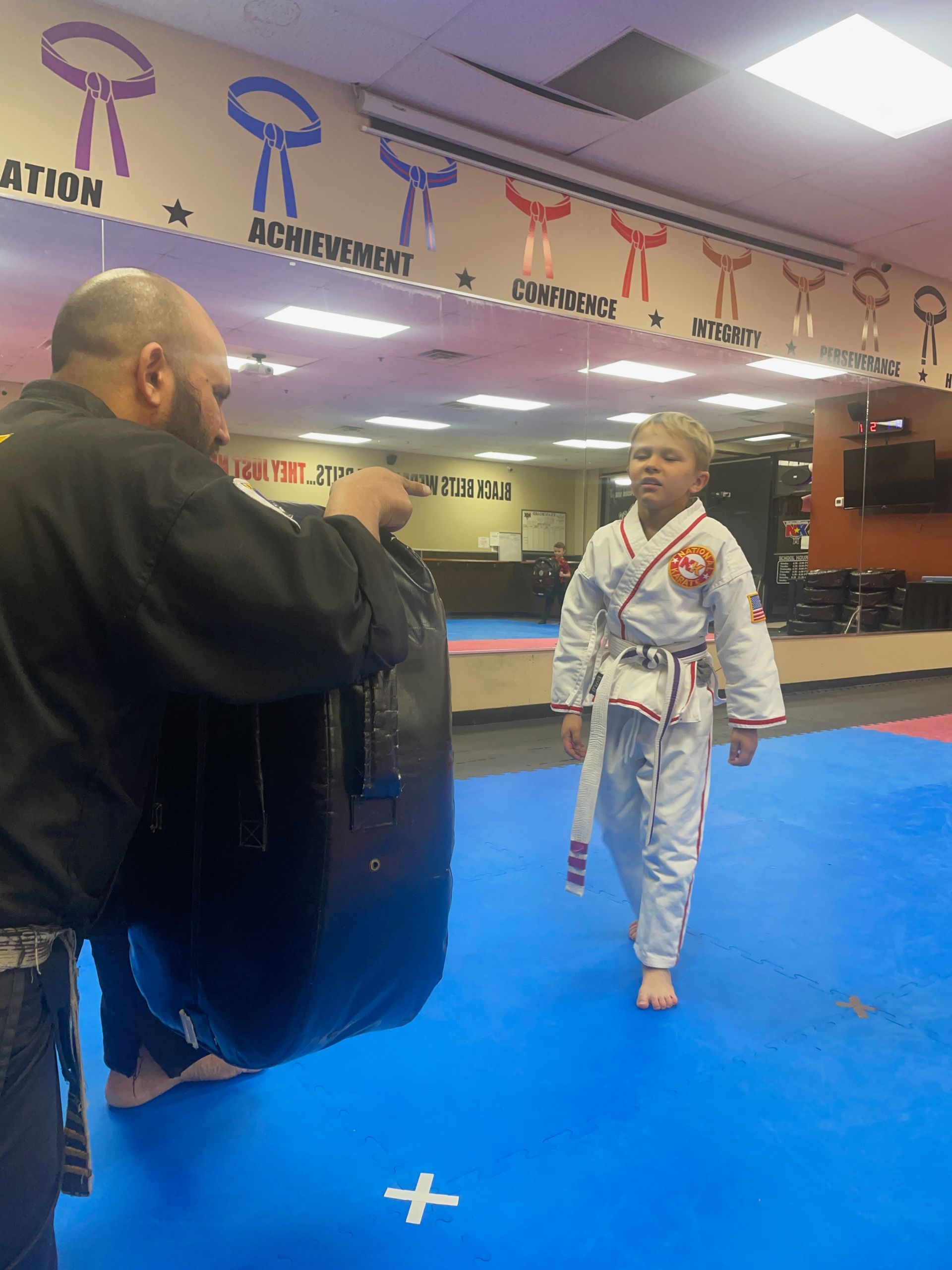
At the beginning, our focus is not perfection. It is participation and consistency. New students learn foundational stances, simple strikes, basic blocks, and safe movement. Just as important, we help kids learn how to line up, listen, and follow instructions without needing multiple reminders.
This stage is where we build the habit of bringing energy under control. Many kids come in excited, wiggly, maybe a little loud. We do not punish energy. We teach how to aim it. That is a responsibility skill most families want, especially after a long school day.
The middle ranks: responsibility shows up as effort and focus
As kids progress, we ask for more detail, more control, and more follow through. Technique gets sharper, and expectations around focus increase. Students learn that a higher belt is not just “more moves.” It is more responsibility for doing things correctly, safely, and respectfully.
We also see kids start to coach themselves. You will hear it in the way they adjust their stance without being told, or how they reset after a mistake instead of melting down. That ability to recover quickly is a big deal, and it is one of the quiet ways Youth Karate in New Berlin supports emotional responsibility.
Advanced ranks: leadership is responsibility with a spotlight on it
At higher levels, students often help set the tone in class by modeling good habits. We guide that carefully, because leadership can turn into showing off if it is not grounded. Our goal is humility with skill: a student who works hard, helps others, and still listens like a beginner when feedback is given.
For many kids, earning advanced ranks becomes the first long term project they complete largely through their own choices. That is a responsibility win that is hard to replicate in quick reward activities.
What responsibility looks like inside a typical class
Parents sometimes ask what we mean when we say a program builds responsibility. Here is what it looks like on the floor, in normal moments that repeat week after week.
• Showing respect when instructors speak, including stillness, eye contact, and listening without interrupting
• Taking care of gear and personal space, like keeping shoes where they belong and keeping hands to self during instruction
• Partner work done safely, which means controlling contact, following rules, and checking that a partner is comfortable
• Trying again after correction, because responsibility includes effort even when it is frustrating
• Staying consistent across seasons, especially during Wisconsin winters when motivation can dip and routines get weird
These are not dramatic lessons. That is the point. Responsibility becomes a habit because kids practice it in small, repeatable ways.
Responsibility grows faster with consistent scheduling in Wisconsin winters
New Berlin families know the winter reality: short days, snow, wind, and a calendar that suddenly fills with indoor everything. In that environment, kids can get restless, and parents can get stretched thin. Our year round indoor training solves a practical problem while also reinforcing responsibility.
When a child has a steady class schedule, the week feels more predictable. Predictability reduces stress, and lower stress makes responsible choices easier. This is one reason Youth Martial Arts in New Berlin can feel like a reset button for some families in January and February.
Consistency also teaches a simple but powerful lesson: we do not quit because the weather changed. We keep going. That mindset quietly becomes part of a child’s identity.
How our curriculum supports responsibility beyond the dojo
We love martial arts, but we are not pretending every child will grow up to compete. Our bigger mission is helping kids build life skills through martial arts training. Responsibility is one of the main ones, and it is supported by several other skills that develop alongside it.
Focus and attention control
Responsibility often fails when kids cannot slow down enough to think. Training builds the ability to pause, listen, and respond. Kids learn to wait for the count, watch a demonstration, and then apply it. That sequence is a practical focus skill that shows up later during tests, reading assignments, and classroom transitions.
Balance and coordination
Physical control connects to self control more than people expect. When kids improve balance and coordination, they also learn patience. They learn that a new movement feels awkward before it feels natural. That teaches responsibility for the process, not just the outcome.
Respectful communication
Our classes encourage kids to speak up appropriately. That includes saying “yes, sir” or “yes, ma’am” when required, asking for clarification respectfully, and interacting with partners safely. Responsibility in friendships often comes down to communication, and martial arts gives kids a structured place to practice it.
Confidence without entitlement
Confidence is not the same as swagger. We aim for a grounded kind of confidence that comes from doing hard work. When kids earn progress through consistent effort, they learn they are capable, but they also learn they are not owed anything. That is a mature, responsibility centered lesson.
Youth Karate helps busy families build routines that last
Packed schedules are normal here. School, homework, sports, church, family events, and the occasional day where dinner is just “whatever we can find” can make it hard to teach responsibility at home without turning everything into a power struggle.
We design our Youth Karate program to support routines instead of competing with them. The structure helps kids learn to prepare: showing up on time, staying engaged, and finishing what was started. For parents, it is also helpful because expectations are reinforced outside the home by a consistent training culture.
Here is a simple routine we often recommend families try, especially for new students:
1. Pick two class days and treat them like appointments that do not move unless necessary
2. Set one small home practice goal, like five minutes of basics on non class days
3. Use the belt checklist as a visual reminder of what “working toward something” looks like
4. Praise follow through more than talent, because responsibility is about choices
5. Keep the post class conversation specific: ask what your child improved today, not just “How was class”
None of this needs to be intense. Responsibility grows better when it is steady.
Common parent questions about responsibility and martial arts
Will my child be pressured to advance too fast?
We keep advancement tied to readiness and skill checklists, not rushing. Kids do best when progress feels earned but achievable. That balance supports responsibility because it teaches patience and sustained effort.
What if my child is shy or has trouble speaking up?
We work with both outgoing and quiet kids every week. Shy students often grow into responsibility through small leadership moments, like volunteering to demonstrate or simply answering confidently when asked. We do not force big performances. We build comfort gradually.
Is Youth Karate in New Berlin safe for energetic kids?
Yes, and “energetic” is common. Safety is built into how we teach: controlled contact, clear rules, and constant supervision. Kids learn that responsibility includes body control, especially around peers.
Does training help with school behavior?
We cannot promise specific outcomes for every child, but the skills that support school success are built into training: listening, persistence, following directions, and managing frustration. Many parents notice improvements because kids practice these behaviors repeatedly in a setting that makes sense to them.
Take the Next Step
Responsibility does not usually appear all at once. It builds through structure, feedback, and small wins that stack up over time, which is exactly what we focus on every day at Wisconsin National Karate Kickboxing & Krav Maga. If you want your child to gain real life habits, not just learn techniques, our Youth Karate approach gives you a clear path with consistent coaching and year round training.
When you are ready, we will help you match the program to your child’s age, personality, and goals, and we will show you how the belt progression works so you can track progress in a way that feels encouraging instead of stressful at Wisconsin National Karate Kickboxing & Krav Maga.
Turn what you learned here into hands-on training by joining a martial arts class at Wisconsin National Karate.