Karate for Stress Relief: Easy Techniques to Practice at Home in New Berlin
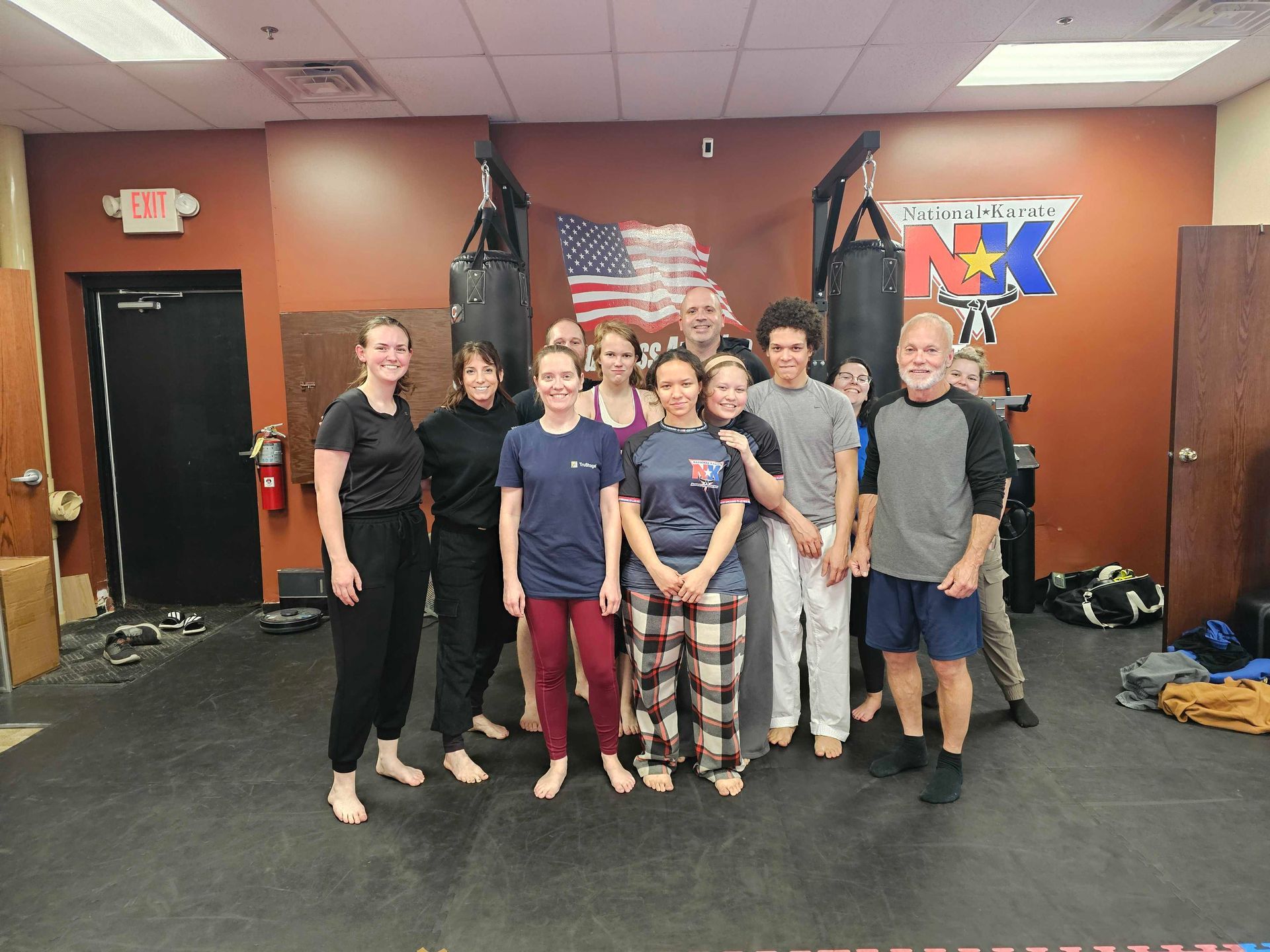
A few minutes of focused movement and breathing can turn a long day into a calmer night, and karate gives you a simple structure to do it.
Stress in New Berlin tends to look a lot like full calendars, long commutes, and the mental clutter that follows you home. We work with adults who want something practical for stress relief, not another complicated routine that requires tons of gear or an hour of setup. Karate fits because it is physical enough to discharge tension, but structured enough to settle your mind.
There is also real momentum behind it. Participation in martial arts has grown post-pandemic, and many adults report noticeably better stress management after about eight weeks of consistent practice. In our experience, the reason is straightforward: you move, you breathe on purpose, and you focus on a clear sequence instead of replaying your to-do list.
This guide gives you easy, beginner-friendly Karate techniques you can practice at home in New Berlin, even in a small living room. We will keep it safe, simple, and realistic for a busy week.
Why Karate works so well for stress relief
Stress is not just in your head. It sits in your shoulders, your jaw, your breathing pattern, and your posture. Karate helps because it addresses all of those at once: exertion, breath control, and mindfulness through forms called katas.
When you punch or step with intent, your body uses up stress hormones instead of letting them loop in the background. When you match movement to breathing, you shift your nervous system toward calm. And when you practice a kata, your attention narrows to the next step, the next turn, the next exhale. That is a quiet kind of focus that many adults in our Adult Karate in New Berlin programs say they rarely get elsewhere.
Over time, Karate becomes a dependable switch you can flip. The goal is not to become “zen” all day. The goal is to have a tool you can use after work, before dinner, or even between meetings when your brain feels loud.
Set up a calm, safe home practice space in New Berlin
You do not need a home gym to practice Karate in New Berlin. You need a small, consistent spot and a few safety habits. If you have enough room to take one step forward, one step back, and turn, you can do a lot.
Choose a space with stable footing. Hardwood or tile is fine if you are careful, but a yoga mat or a thin exercise mat can help with traction. Keep anything breakable out of range. Karate technique should feel precise, not chaotic.
A few practical pointers we recommend before you begin:
- Pick one “practice square” where you can extend your arms without hitting furniture
- Use a timer so you do not drift into endless reps when you are tired
- Keep water nearby and train in comfortable clothes that do not restrict your hips
- If you have knee or back issues, shorten stances and reduce impact while you learn
- Stop if sharp pain shows up, and switch to breathing work or lighter movement
This might sound basic, but consistency comes from making practice easy to start. The less friction, the more often you will actually do it.
The stress relief engine: breathing you can feel
Before technique, we start with breath. Many adults under stress breathe high in the chest, fast and shallow. Karate breathing is different: it is deliberate, often through the nose on the inhale, with a controlled exhale during effort.
Try this in a simple ready stance. Stand tall, feet about shoulder-width, knees soft, shoulders down. Inhale for a count of four. Exhale for a count of six. Do five rounds. That longer exhale matters because it cues your system to downshift.
When you add strikes, the exhale becomes your release valve. You are not “just punching.” You are coordinating muscle tension and then letting it go, on purpose, repeatedly. That rhythm is one reason Karate is so reliable for stress relief.
Easy home technique 1: horse stance for grounding
Horse stance is one of the most useful at-home Karate tools because it is simple, quiet, and surprisingly effective. It builds leg strength, but more importantly for stress, it trains steadiness. When your legs are working, your mind has less room to spiral.
How to do it:
1. Step your feet wider than shoulder-width
2. Turn your toes slightly out
3. Bend your knees and sink straight down, keeping your back tall
4. Keep your knees tracking over your toes, not collapsing inward
5. Hold while breathing slowly, shoulders relaxed
Start with 20 to 30 seconds. Rest. Repeat two or three times. If you feel shaky, that is normal at first. Stay controlled and come up before your form breaks down.
A small detail we like: imagine your feet rooting into the floor. It sounds a little poetic, but it works. Grounding imagery plus physical effort is a strong stress combo.
Easy home technique 2: oi-zuki punch series to release tension
Oi-zuki is a basic stepping punch that teaches coordination and timing. For stress relief at home, we often simplify it into a stationary series first. The point is clean mechanics and a strong exhale, not speed.
Try this series:
- Start in a front stance shape, one foot forward, one back, knees bent
- Chamber one fist at your hip, the other hand up as a guard
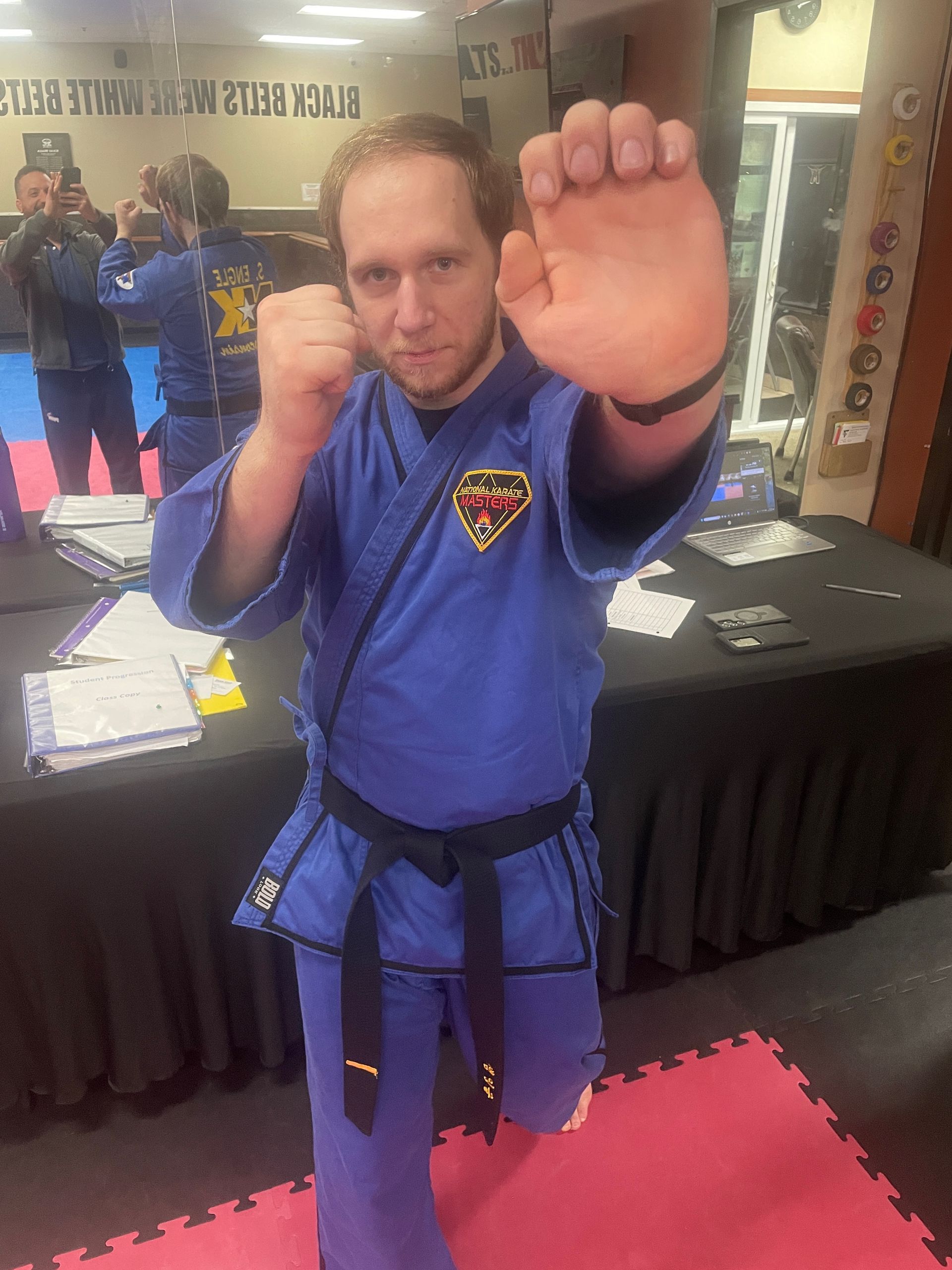
- Punch straight out, rotating the fist so the knuckles face up at the end
- Exhale through the strike, then reset without rushing
Do 10 punches with your left, then 10 with your right. Keep your jaw unclenched. Keep your shoulders down. If you notice your neck tensing, slow down and reduce power. Karate for stress relief should feel like controlled intensity, not frantic effort.
If you want to make it more “New Berlin evening friendly,” keep it quiet. No stomping. No slamming the floor. Just smooth stepping and crisp breathing.
Easy home technique 3: a short kata practice for mental clarity
Katas are pre-arranged forms, and they are one of the most underrated tools for stress relief. A kata gives you a script. When life feels messy, following a sequence can feel like brushing knots out of your mind.
A classic beginner form many people recognize is Heian Shodan. Even if you only know part of it, you can still use the concept at home: move through a set series of blocks, steps, and turns while matching your breath to each technique.
Here is how we recommend approaching kata for stress relief:
- Go slow enough that you can breathe smoothly through each movement
- Exhale on the technique, inhale on the reset or transition
- Keep your eyes focused on where the next technique “lands”
- Repeat a short section three times instead of forcing the full form
- End with one final clean run at a comfortable pace
If your mind wanders, that is not failure. That is the exercise. You notice it, then you return to the next move. Over time, kata becomes moving meditation that also happens to strengthen your body.
A simple 10 minute home routine you can repeat all week
You will get more stress relief from a routine you actually repeat than from a perfect session you do once. Here is a practical structure we use with busy adults who want Karate in New Berlin to fit real life.
1. Two minutes of breathing in ready stance with longer exhales
2. Two minutes horse stance holds, 20 to 30 seconds on, short rest, repeat
3. Three minutes oi-zuki punch series, 10 per side, repeat once if time allows
4. Two minutes of kata segments, slow and controlled, focus on exhale timing
5. One minute of quiet cooldown standing or kneeling, steady nasal breathing
That is it. Ten minutes. If you want to extend it, add another kata run or another punch series. If you are stressed and exhausted, keep it at ten and call it a win.
How often to practice for noticeable stress reduction
For most adults, we see the best results with three to four short sessions per week, about 20 to 30 minutes when possible. If that sounds like a lot, start smaller. Two sessions per week is still meaningful, especially if you are consistent.
Stress relief is partly about training your “reset response.” The more often you practice it, the faster your body learns the pattern: breathe, focus, move, release. Many adults report feeling some immediate calm after a session, but the bigger changes, like improved baseline mood and better sleep, often build over several weeks.
If you like measurable goals, commit to eight weeks. Put sessions on your calendar like appointments. Do not overthink it.
Common mistakes that can add stress instead of reducing it
Karate should leave you calmer, not more wound up. A few common pitfalls can accidentally do the opposite.
First, going too hard too soon. If you turn every home session into a max-effort workout, your body can interpret it as more stress. Keep intensity moderate and focus on breath.
Second, holding your breath. Breath holding is a sneaky stress amplifier. If you catch yourself doing it, slow down. Make the exhale obvious.
Third, chasing perfection. Home practice is not a performance. The goal is progress and regulation, not flawless technique. Clean enough is good enough, especially on a weekday night.
Finally, practicing when you are angry and letting technique become aggressive flailing. Karate is disciplined. If you are heated, start with two minutes of breathing first, then move.
How our Adult Karate in New Berlin classes reinforce home practice
Home practice works best when you have structure and feedback. In class, we correct stance alignment, timing, and breathing so your at-home training stays safe and effective. We also build skills progressively, so you are not guessing what to do next.
Our adult program emphasizes discipline and life skills alongside technique. That matters for stress because discipline is not about being strict with yourself. It is about being steady. When you learn to stay calm while moving with intention, you carry that into meetings, family life, and the everyday traffic and schedules that come with living near Milwaukee and Waukesha.
We also offer options that fit busy lives, including virtual training opportunities, so you can keep your routine intact even when the week gets weird.
Take the Next Step
If you want stress relief that is practical, repeatable, and honestly kind of satisfying, Karate is hard to beat. A few stances, a punch series, and a short kata can shift your breathing, posture, and mindset in less time than it takes to scroll your phone, and the benefits build when you practice consistently.
When you are ready for coaching, community, and a clear path forward, Wisconsin National Karate Kickboxing & Krav Maga in New Berlin is here to help you turn these at-home techniques into a skill set you can rely on. We will meet you at your current fitness level and help you train with focus, confidence, and calm.
Put these techniques into action by joining a martial arts program at Wisconsin National Karate.