How to Master Basic Karate Kicks for Self-Defense in New Berlin
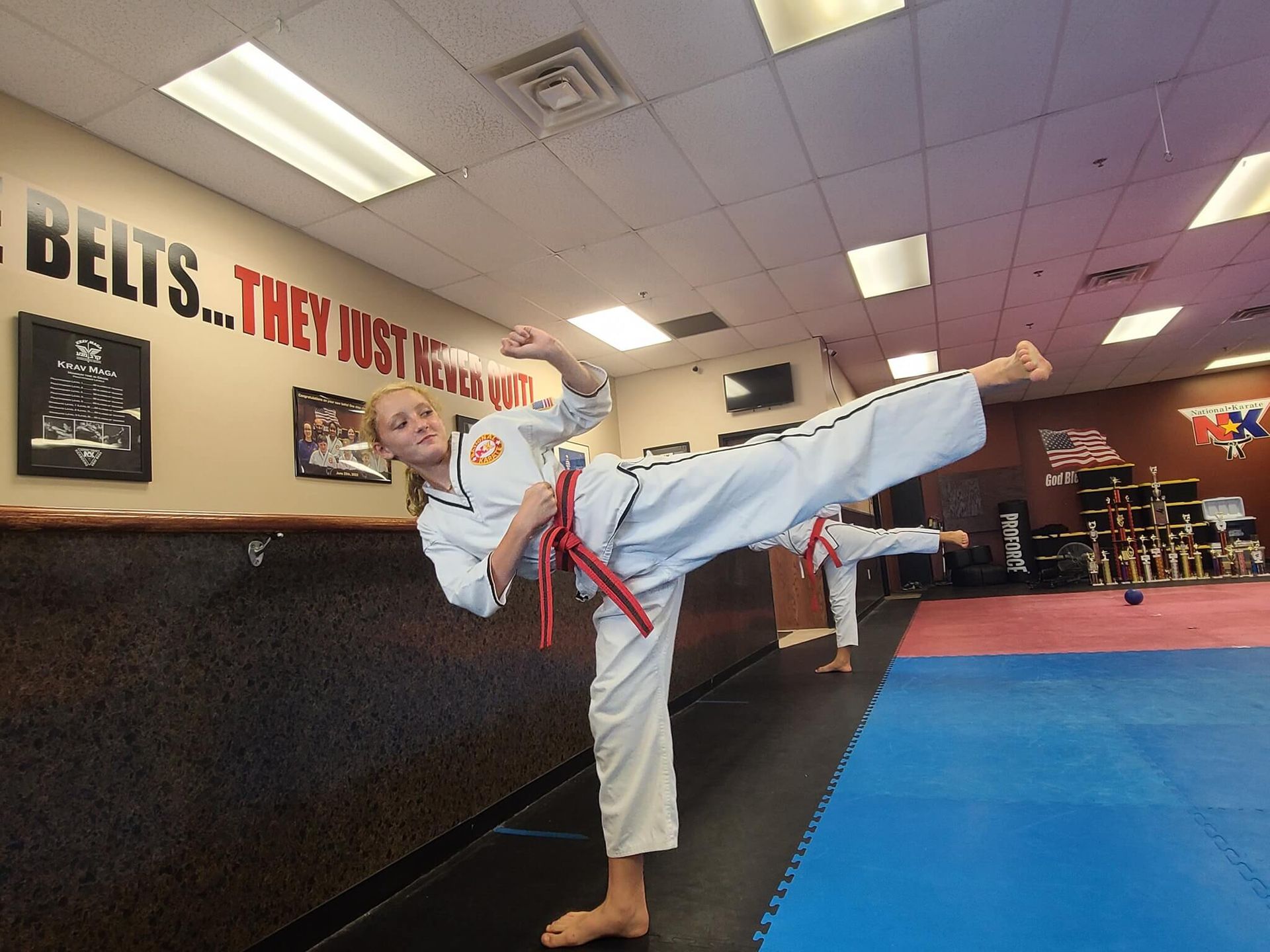
Strong Karate kicks are not about height or flash - they are about balance, timing, and control when you need space fast.
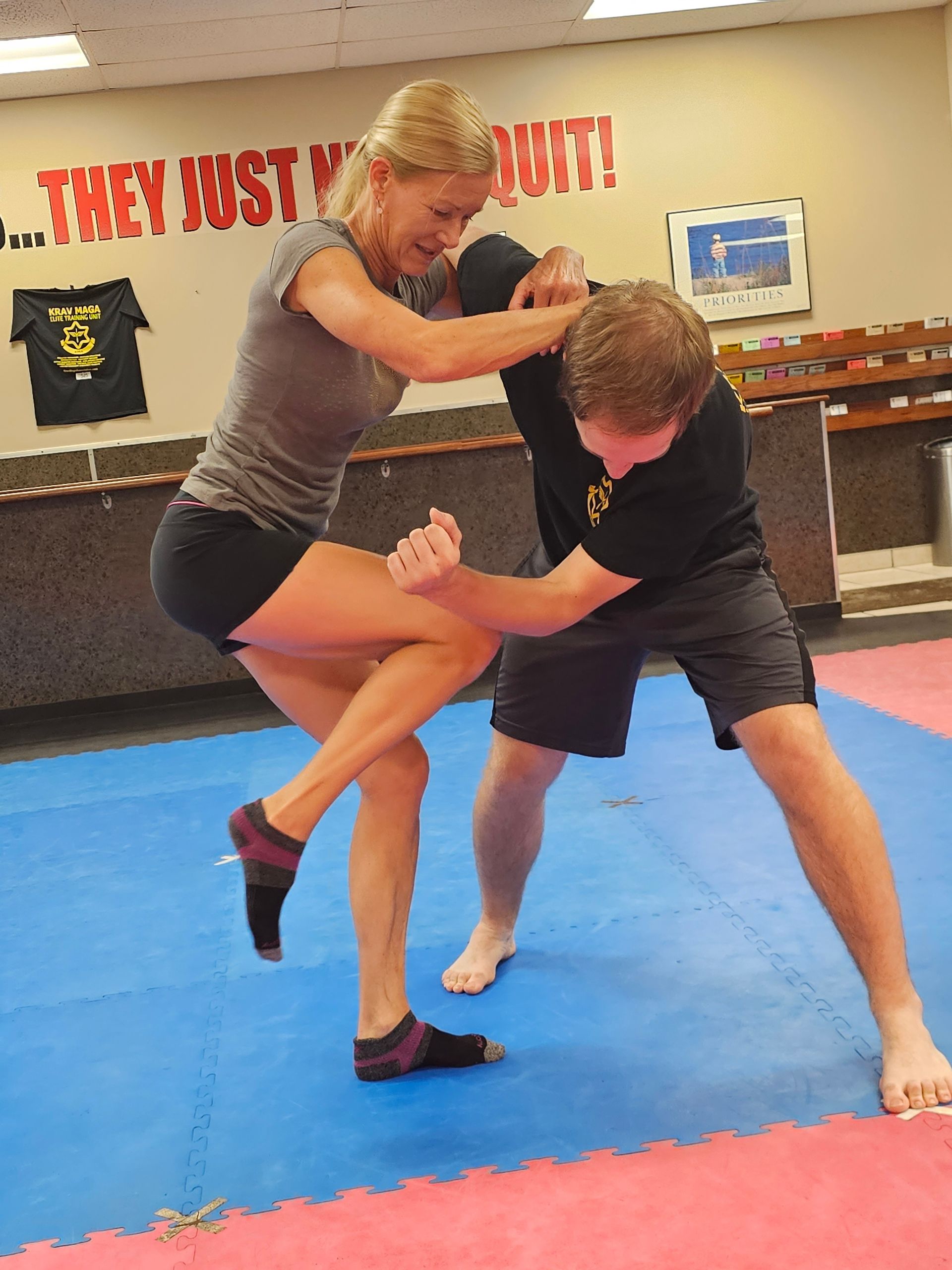
If you want practical self-defense skills in New Berlin, basic Karate kicks are a smart place to start. Kicks help you manage distance, create time to move, and stop a situation from getting closer than it needs to get. And the good news is you do not need to be naturally flexible or athletic to learn them well.
In our classes, we focus on fundamentals first: stance, chamber, extension, retraction, and getting back to a safe position. That structure matters because a kick that looks good in the air can fail under pressure if your base is unstable. We want you leaving training with kicks you can actually use, not just kicks you can demonstrate once.
New Berlin is a family-centered community, and most people training with us are not trying to become cage fighters. You might be a parent who wants more confidence on evening walks, a teen who wants anti-bullying tools, or an adult who simply wants a plan for those everyday moments like parking lots, sidewalks, and doorways. That is exactly where simple, well-trained kicks shine.
What makes a kick work for real self-defense
Self-defense is rarely about landing the perfect strike. It is about creating options: space, an escape line, and a moment to think clearly. A basic Karate kick is effective when it supports those goals, not when it chases a highlight moment.
Here is what we train into every kick so it holds up outside the classroom.
Balance before power
A kick starts at your feet. If your stance is narrow, if your heel is floating, or if your posture is leaning, your kick becomes a gamble. We teach you to feel grounded first, then move. That sounds almost too simple, but it is the difference between staying upright and slipping when it counts.
Chamber and retraction are the hidden skills
Most beginners focus on the extension, the part where your foot goes out. In Karate, the chamber and the snap back are just as important. Retraction protects you from grabs, helps you recover faster, and gets you back into guard. If you have ever felt wobbly after a kick, this is usually why.
Target selection keeps you safe
In self-defense, we prefer targets that are realistic and reduce risk. Midline and lower targets are often more reliable than high kicks, especially if the surface is uneven or you are wearing everyday clothes. We train you to adjust without overthinking it.
Your foundation: stance, guard, and footwork that supports Karate kicks
Before we talk about specific kicks, we build the platform those kicks stand on. When your base improves, everything else gets easier. Your hips turn cleaner, your timing sharpens, and your legs feel less heavy.
A simple stance checklist
We teach stances that give you mobility, not stiffness. A practical self-defense stance should let you move forward, backward, and sideways without resetting your feet every time.
A helpful mental checklist:
- Knees soft, not locked
- Chin slightly tucked
- Hands up in a natural guard
- Weight centered so you can lift either leg quickly
- Eyes forward, breathing steady
That last point matters more than people expect. If your breathing gets choppy, your timing and decision-making follow it.
Why footwork changes your kicking speed
Speed is not just muscle. It is positioning. When you learn to slide, pivot, and step at the right moment, your kick arrives with less effort. We spend time on this because it makes your kicks feel lighter and more automatic, especially for beginners and for Youth Martial Arts in New Berlin students who are still growing into coordination.
The three basic Karate kicks we teach first for self-defense
There are many kicks in Karate, but for self-defense we prioritize what is simple, repeatable, and adaptable. These are the three that give most students the fastest return on training time.
Front snap kick: the distance tool you will use the most
The front snap kick is often the first kick people learn, and it earns that spot. It is direct, quick, and excellent for creating space. In real-world terms, it helps you interrupt forward pressure.
Key points we coach:
- Lift the knee first, like you are stepping over something
- Keep your toes pulled back so you strike with the ball of the foot
- Snap out and snap back, then set down under control
- Keep your hands up the entire time
We often apply this kick to mid-level targets. It is practical, and it does not require perfect flexibility.
Side kick: the power kick that protects your centerline
The side kick is a favorite for self-defense because it can be strong without being wild. It also naturally bladed your body, which helps protect your torso and creates a narrower target.
When students struggle with the side kick, it is usually one of two issues: not turning the hips enough, or letting the upper body lean too far. We correct both early so you feel stable.
A strong side kick includes:
- A clear chamber with the knee up and across
- A hip turn that lines your heel to the target
- A thrust with the heel, not the toes
- A quick retraction back to chamber before you set down
If you train this kick patiently, you start to feel how your whole body supports it, not just the leg.
Roundhouse kick: the angle kick for ribs and openings
The roundhouse kick gives you an angle of attack. It can reach around a guard, and it helps you understand hip rotation. For self-defense, we keep it controlled and realistic, focusing on body-level targets that do not require a high risk, high flexibility approach.
We teach the pivot on the supporting foot so your knee stays safe and your hips can rotate. Without that pivot, people tend to force the kick with the lower leg, and it feels awkward and slow.
Step-by-step: our basic kick mechanics you can practice safely
If you want a clean way to practice at home between classes, use this simple sequence. It is not glamorous, but it works, and it builds the habits that show up under stress.
1. Start in a balanced stance with hands up and elbows in
2. Chamber the knee while staying tall through your spine
3. Extend the kick smoothly, without leaning or reaching
4. Retract the kick sharply back to chamber
5. Set the foot down under you, returning to stance and guard
This is how we build reliable Karate technique: repeatable steps, controlled speed, and consistent posture. If you rush step four, you will feel it immediately in your balance.
Self-defense scenarios in New Berlin where basic kicks matter
We train with real-life context because it helps you understand why a kick is being taught in the first place. You are not just memorizing moves. You are learning when to create distance and how to leave.
Parking lots and doorways
In tight spaces, you may not have room for big movements. A front snap kick can create a moment of space if someone crowds you. A side kick can help if you need to keep someone from closing distance while you move toward an exit line.
We also coach awareness skills: where your car is, where the curb is, where the lighting is. Self-defense is not only physical.
Trails, sidewalks, and uneven surfaces
New Berlin has plenty of walking paths and neighborhood routes. Uneven ground changes what is safe. We train you to keep kicks lower when needed, focus on balance, and avoid committing so hard that you cannot recover.
Youth situations: boundaries and anti-bullying
For Youth Karate in New Berlin, the goal is not to turn kids into aggressive fighters. The goal is to teach posture, voice, boundary setting, and simple movements that support getting away. Kicks can be part of that, but we pair them with self-control and decision-making. Parents often tell us they notice improved structure and respect at home, which is a nice bonus.
Common mistakes that keep Karate kicks from working
Most kicking problems are not strength problems. They are habit problems. The nice thing about habits is you can fix them quickly once you see them.
Dropping your hands
Beginners often let their hands drift down when they kick. We coach the opposite: hands stay up, chin stays protected, and your eyes stay forward. It takes repetition, but it becomes natural.
Leaning back or reaching
Leaning feels like it helps you kick higher, but it breaks your balance. For self-defense, we want your kick to be stable and recoverable, not stretched.
Not retracting the kick
A kick that stays out too long can be caught, or it can simply pull you off balance. Retraction is your safety net.
Overkicking in practice
If every practice kick is full power, your form often degrades. We train control first, then intensity. That is how you get better while staying healthy.
How we train kicks: safe progressions that build confidence fast
We take a progressive approach so you feel success early while still building serious skill. That is especially important for families and students new to Martial Arts training.
A typical progression looks like this:
- Slow, technical reps for balance and alignment
- Pad work for accuracy and contact confidence
- Light partner drills for timing and distance management
- Controlled combinations that connect footwork to kicking
- Optional sparring-style drills for students who are ready, with safety and respect as the priority
We also offer both in-person and virtual options, which helps when life gets busy. If you can keep your practice consistent, your kicks will improve much faster than you might expect.
Class schedule and what to expect when you start
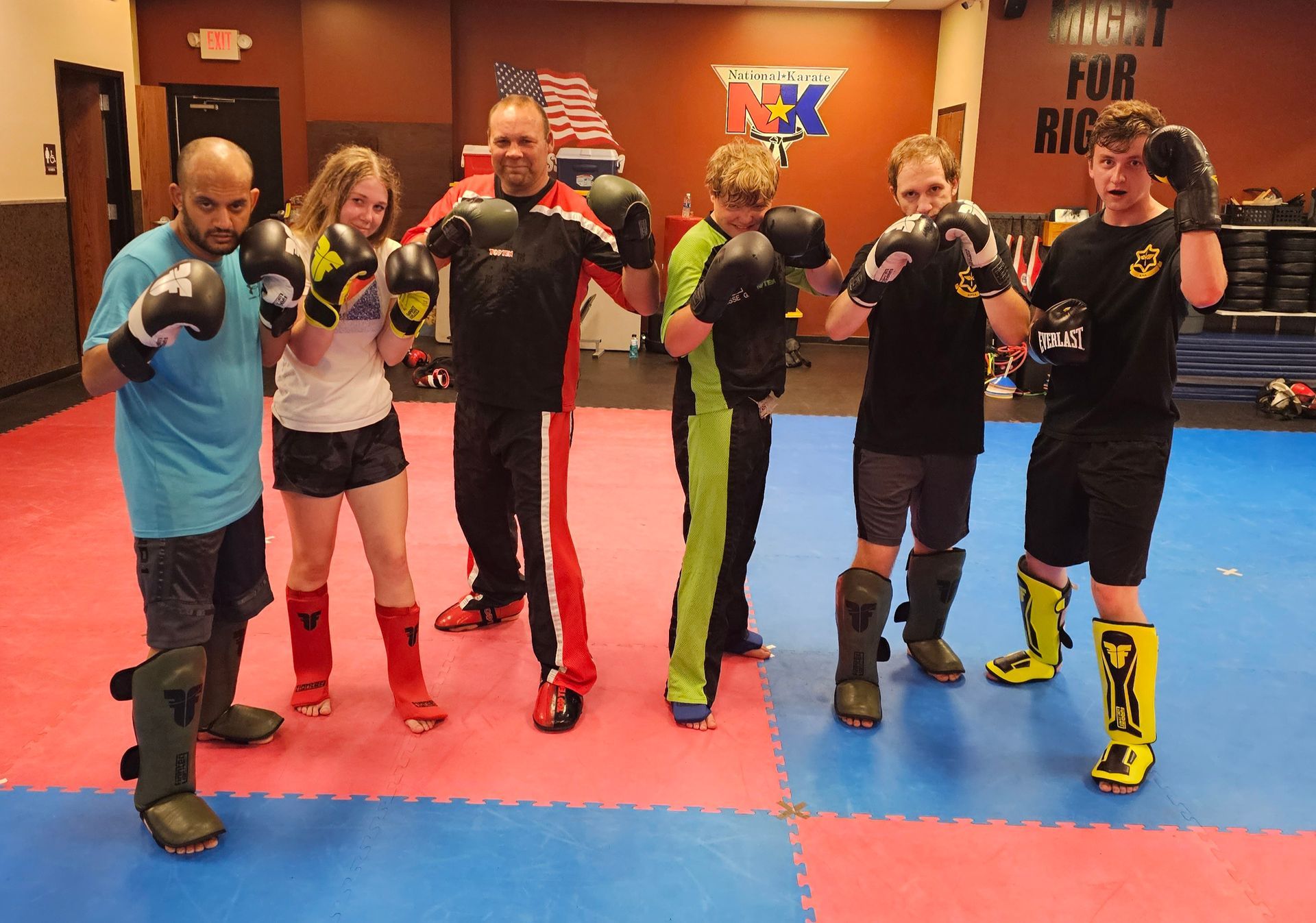
Our class schedule is designed for real life in New Berlin, with weekday evening training and Saturday morning options. We keep the environment positive, structured, and focused. You will get coaching, not just workouts, and we will meet you at your current ability level.
When you walk into your first session, expect to work on fundamentals. We will help you with stance, guard, and a few basic Karate kicks, and we will keep it safe. Many new students are surprised by how quickly they start feeling more coordinated and confident. It is not magic, it is just good instruction plus repetition.
Take the Next Step
Building reliable self-defense kicks takes a little time, but it is straightforward when you train with a plan and get real feedback on your form. At Wisconsin National Karate Kickboxing & Krav Maga, we coach Karate basics in a way that stays practical: strong stance, clean mechanics, and simple choices you can apply in everyday New Berlin settings.
If you are interested in Youth Martial Arts in New Berlin or you want adult training that blends self-defense skill with fitness and discipline, we will help you progress step by step. The best way to understand our approach is to experience a class and feel how the training is structured.
Train consistently and see measurable progress by joining a martial arts class at Wisconsin National Karate.