How Karate Empowers Kids to Overcome Bullying Challenges in New Berlin
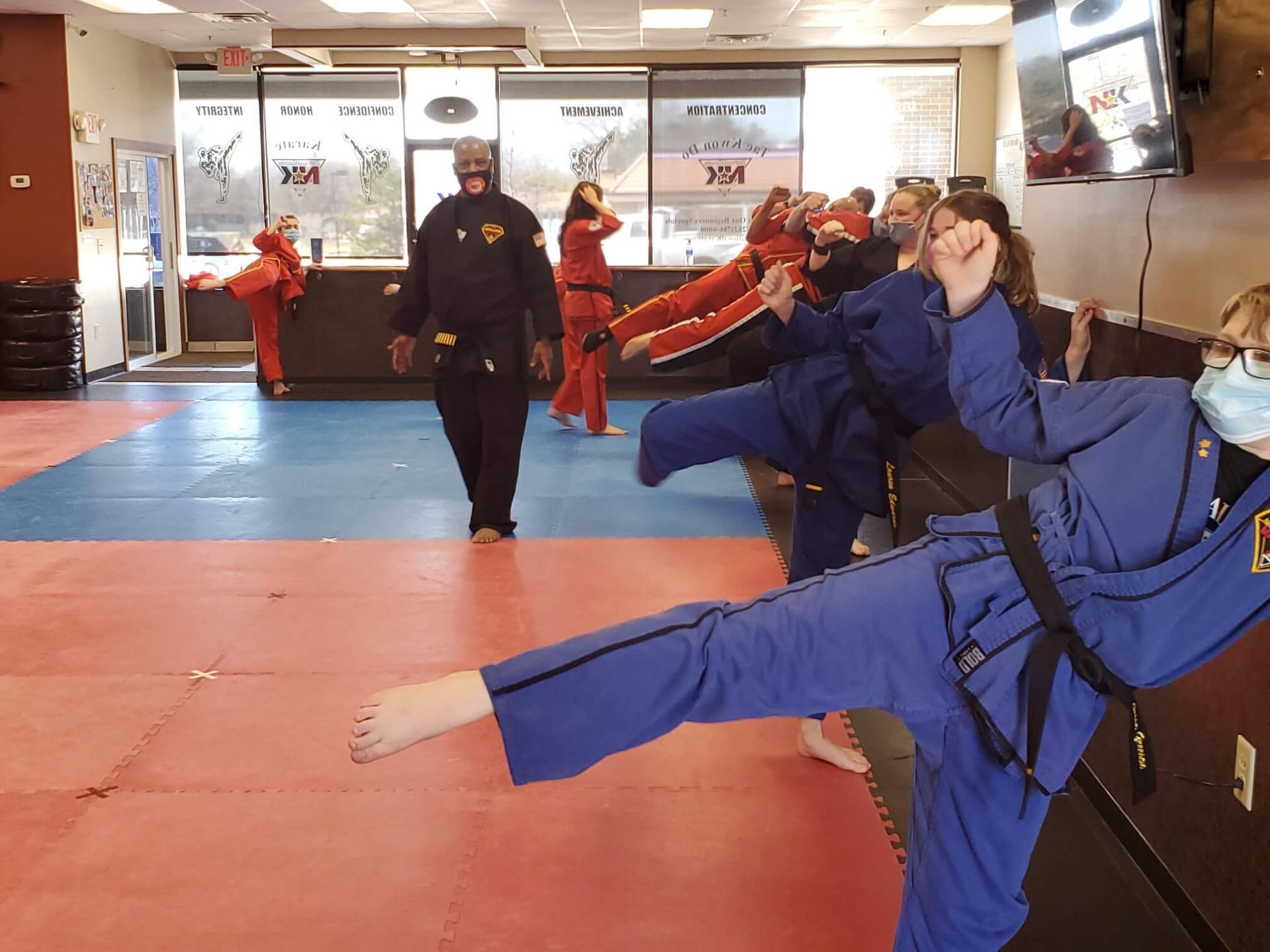
Karate gives kids a calm, confident presence that often stops bullying before it starts.
Bullying can feel confusing for families because it rarely looks the same two days in a row. One week it is name-calling in the hallway, the next it is group-chat drama, and sometimes it escalates into pushing or intimidation at recess. In New Berlin, we see the same patterns families across the country are dealing with, and the numbers back it up: about 1 in 5 students ages 12 to 18 experience bullying at school each year.
Karate is one of the most practical tools we use to help kids respond to bullying with confidence and control. Not because we want kids to fight, but because we want kids to carry themselves differently, speak differently, and think differently when pressure shows up. When a child looks and feels harder to shake, bullying dynamics often change quickly.
What makes this especially encouraging is that research consistently links martial arts training with lower bullying involvement. In one large finding, students who trained were less likely to be victims (17.7 percent vs. 21.4 percent) and less likely to act as aggressors (11.4 percent vs. 18.7 percent), with improved resilience to aggression as well. That combination matters: we want your child to feel safer and also to grow into someone who does not pass hurt along to others.
Why bullying hits hard in New Berlin and what kids actually need
New Berlin is a family-focused community with strong schools, active extracurriculars, and a lot of kids trying to find where they fit. That is a good thing, but it also means social status and peer pressure can carry more weight than many adults remember. After the pandemic years, we have also noticed more social friction, more anxiety, and more kids who are still rebuilding confidence in groups.
When families ask us what helps most, our answer is usually simple: kids need skills they can repeat under stress. A lecture on “be confident” rarely sticks when a child is facing a crowd, a camera phone, or a classmate who knows exactly which buttons to push. Training gives kids repeatable habits: posture, breathing, eye contact, voice tone, boundaries, and the ability to move away safely.
And yes, kids also need adults who take reports seriously. Our role is not to replace school policies or parent advocacy. Our role is to help your child walk into school with a stronger foundation, so your child is less likely to be chosen as a target and more able to respond with calm decision-making.
What the research says about Karate and bullying outcomes
We like motivation, but we also like measurable outcomes. Several studies point in the same direction: karate training tends to improve self-regulation, resilience, and well-being while reducing aggression and bullying likelihood. A 12-week Shotokan karate intervention with teens ages 14 to 16, for example, increased general resilience and well-being and emphasized respect, health promotion, and self-control.
This matters because bullying is often about power and reaction. Bullies test for emotional payoff. When a child can stay composed, set a boundary, and disengage without panic, the situation frequently de-escalates. Training is not magic armor, but it can lower the odds of repeated victimization and help kids recover faster when something does happen.
It is also important to be honest about limitations. Some newer research notes that athletes can still experience bullying or unethical behavior inside sport settings, especially in high-pressure competition environments. That is why we put such a strong emphasis on respectful culture, coach accountability, and the idea that rank is earned through character as much as technique.
The confidence shift that changes bullying dynamics
Parents often tell us the first noticeable change is not a new kick. It is a new presence.
Confidence, in the way we teach it, is not loud. It is steady. It shows up as shoulders back, eyes up, hands relaxed, and a calm face. That body language can remove the “easy target” signal some kids unintentionally broadcast when they feel anxious or unsure. Bullies tend to look for reactions that are quick and emotional. A confident child becomes a less rewarding option.
In class, we practice this in small, repeatable ways:
- Standing in a balanced stance without fidgeting
- Making respectful eye contact when speaking
- Using a clear voice for short boundary phrases
- Resetting breathing after a stressful moment
- Staying aware of space and exits instead of freezing
These are simple skills, but they stack. Over a few months, kids often stop shrinking in social situations. You may even notice it at home first, like your child speaking up at the dinner table or handling a sibling argument with less intensity.
Self-control is the real anti-bullying superpower
When bullying happens, kids usually feel a rush: embarrassment, anger, fear, or all three at once. Without training, that rush can trigger impulsive choices, including retaliation that gets your child in trouble. We focus on building a pause button.
Karate training, especially through kata practice and structured drills, teaches kids how to follow a sequence under pressure. That mental focus becomes emotional focus. Kids learn to notice what their body is doing and choose a response rather than reacting automatically.
This is one reason martial arts training is associated with lower aggression rates. The point is not to “toughen kids up” into being mean back. The point is to build discipline, so your child can protect dignity without becoming part of the problem.
Practical anti-bullying skills we build in Youth Martial Arts in New Berlin
“Anti-bullying” can sound vague until you break it into behaviors kids can actually use on a Wednesday afternoon at school. In our Youth Martial Arts in New Berlin programs, we aim for skills that work in real life, not just in a dojo.
Here are core areas we train that translate directly to bullying situations:
- Awareness and positioning: noticing who is around you and choosing distance early
- Voice and boundaries: short phrases that are confident, not insulting or escalating
- De-escalation habits: staying calm, not performing for the audience, and exiting
- Peer connection: building friendships that reduce isolation, which bullies often exploit
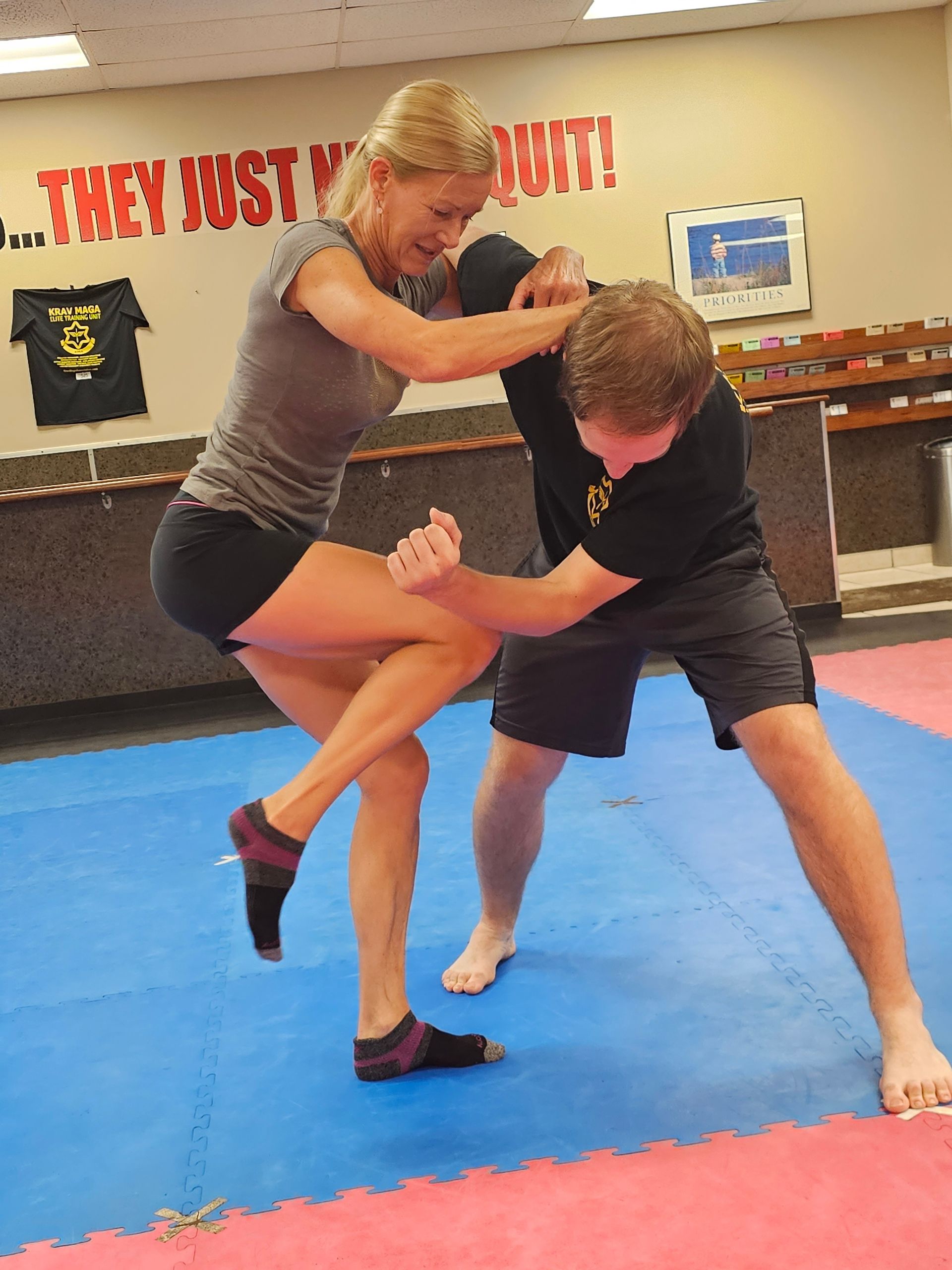
- Physical safety basics: how to protect space and escape if a situation turns physical
That mix is intentional. Most bullying is social and verbal, so we train social and emotional tools first. But we also respect reality: sometimes a child needs to know how to protect personal space and get away safely.
How our Youth Karate in New Berlin progresses over the first 12 weeks
A lot of parents want to know timelines. While every child is different, many families notice meaningful changes around the 8 to 12 week mark, especially when students attend consistently. Research also supports this window, with 12-week programs showing improvements in resilience and well-being.
Here is what a typical first 12 weeks can look like when your child trains twice per week:
1. Weeks 1 to 2: Comfort and routines
Your child learns how class works, how to line up, how to listen, and how to move with purpose without feeling singled out.
2. Weeks 3 to 5: Posture, voice, and simple technique
We build stance, balance, and basic strikes, paired with respectful eye contact and confident speaking in low-pressure drills.
3. Weeks 6 to 8: Stress practice and partner drills
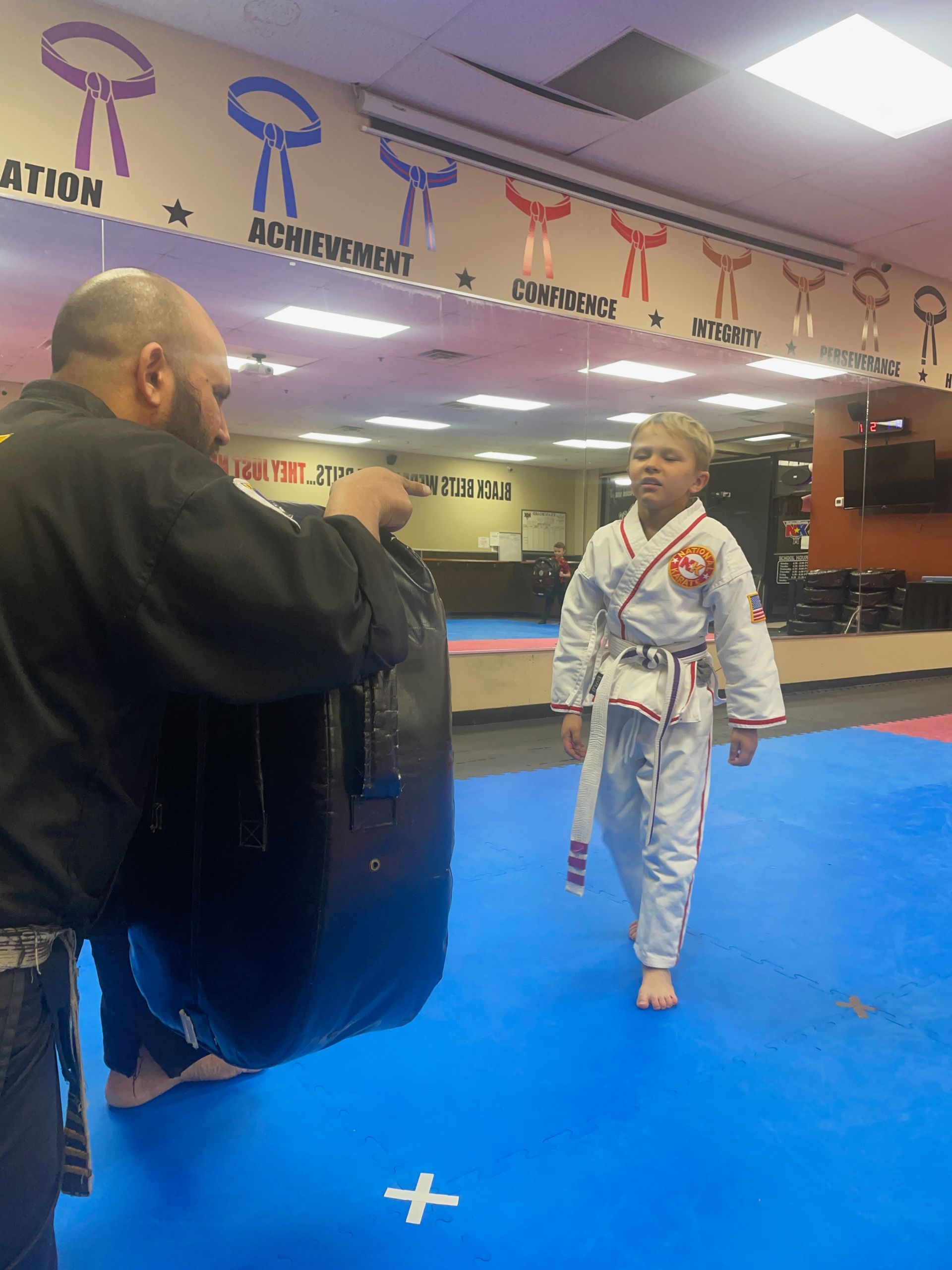
Kids start applying skills with partners in controlled ways, learning to stay calm when someone is close or loud.
4. Weeks 9 to 12: Resilience habits and real-world decision-making
We connect training back to school situations: choosing exits, using boundaries, and knowing when to get an adult, plus continued technical growth.
Consistency matters more than intensity. Two classes per week is a strong starting point for most families, and it keeps progress steady without burning kids out.
Belt progress, accountability, and why structure helps bullied kids
Kids dealing with bullying often feel like life is unpredictable. Training gives them a system where effort leads to progress. Belt advancement is not just a reward. It is a visible record of showing up, practicing, and improving.
Some recent findings suggest higher belt levels are associated with reduced bullying risk, which makes sense when you consider what belt progress represents: better posture, better boundaries, better self-control, and stronger peer relationships. It is also why we track fundamentals carefully. If a student is rushing but not building confidence and control, we slow down and reinforce the basics.
Accountability is part of this, too. When kids learn respect, they learn how to be strong without being cruel. That matters for the whole community, because bullying often grows where boundaries are unclear and discipline is missing.
Friends and belonging: the protective power of training partners
Bullying thrives on isolation. One of the quiet strengths of martial arts training is the social environment: kids practice together, struggle together, improve together. That shared effort builds bonds.
We see kids develop what you might call a protective peer network. Training partners notice when someone is down, encourage each other during hard drills, and celebrate small wins like remembering a form or speaking clearly. Over time, many kids stop feeling like they are facing school alone.
This is also where we teach leadership and bystander habits. Not every student will be the one who confronts a bully directly, and that is fine. But students can learn to include the isolated kid, speak up appropriately, and get an adult when needed. Those are skills that change school culture in small, real ways.
Safety and the myth that Karate teaches kids to fight at school
A common concern is whether training makes kids more aggressive. The data points we referenced earlier suggest the opposite: practitioners show lower aggressor rates and reduced aggression likelihood when training emphasizes respect and self-regulation.
In our classes, we frame physical techniques as a last resort for safety, not a tool for social dominance. We practice control, not chaos. Kids learn how to manage distance, how to use their voice, and how to leave a situation before it becomes physical. If a child is training because bullying has gotten physical already, we still keep the priority clear: get safe, get out, and involve trusted adults.
We also pay attention to emotional safety. Kids should not be bullied inside training spaces either. Respect is not negotiable, and students learn that strength includes how you treat people who cannot offer you anything in return.
How we help parents support progress at home and school
You do not need to turn your living room into a training floor to help your child. A few small habits can reinforce what we teach and help your child use skills when it counts.
We recommend:
- Ask specific questions: “When did you use your confident voice today?” works better than “How was school?”
- Track patterns: note where bullying happens, who is nearby, and what times are most stressful
- Practice one phrase: a calm, short boundary sentence your child can repeat without getting sarcastic
- Praise effort, not outcomes: confidence grows through repetition, not one heroic moment
- Coordinate with school staff: training helps your child respond, and school support helps change the environment
If you want a simple measure, watch for reduced shutdown, better eye contact, and quicker emotional recovery after a tough day. Those are real wins, even before the bullying situation fully resolves.
Take the Next Step
Building a bully-resistant mindset takes more than a pep talk. It takes posture, discipline, and practiced resilience, and that is exactly what we focus on every day at Wisconsin National Karate Kickboxing & Krav Maga. When kids train with us, we aim for a noticeable shift: calmer reactions, clearer boundaries, and the confidence to walk away without feeling powerless.
If you are exploring Youth Karate in New Berlin because bullying has become part of your family’s weekly stress, we are ready to help you create a plan that is practical and age-appropriate. Wisconsin National Karate Kickboxing & Krav Maga is here to support your child with structured training, a respectful culture, and a class schedule that fits real family life.
Put these techniques into action by joining a Karate program at Wisconsin National Karate.