From White Belt to Black Belt: Karate Progression Steps in New Berlin
Your belt journey is not a mystery when you know what to train, when to test, and how each rank changes the way you move.
If you have ever looked at a belt wall and wondered what actually happens between white belt and black belt, you are not alone. Karate can feel straightforward at first, then suddenly you realize there are layers: basics, timing, confidence, control, and the ability to stay calm when something gets messy.
In our New Berlin programs, we treat belt progression like a roadmap, not a guessing game. You will learn practical self-defense skills, build fitness, and earn rank through consistent training and measurable improvement, not just time spent showing up. And because life is busy, we also make the path realistic for adults, families, and students balancing school, work, and everything in between.
What belt progression really means in Karate
A belt is not just a color. In Karate, rank is a short-hand for what you can reliably do under pressure, with good form, and with the right mindset. Early on, that means learning how to stand, breathe, and move without overthinking every step. Later, it means making decisions faster, keeping your balance when you are tired, and applying technique with control.
We also use belt steps to structure goals. Instead of training aimlessly, you train with purpose: tighten a stance, sharpen a kick, clean up a combination, improve your reaction to a grab, and show you can do it safely with a partner. That is the real value of progression: it turns a big goal into a set of smaller wins you can actually track.
Our hybrid approach and why it matters for real progress
Not all Karate programs feel the same. Our training blends Tae Kwon Do and traditional Karate so you develop both crisp fundamentals and practical application. In plain language, you get the structure and discipline people expect from Karate, plus the athletic kicking and movement patterns that help many students feel more capable sooner.
This hybrid approach also keeps training from getting stuck in one lane. You will still practice forms and core technique, but you will also work on self-defense, partner drills, and controlled sparring as your level rises. That balance is important because it teaches you how to move well and how to use movement when it counts.
White belt: building the base (and breaking a few habits)
White belt is where everyone starts, and honestly, it is where the most important habits are formed. Most beginners arrive with a mix of enthusiasm and tension. Shoulders creep up, breathing gets shallow, feet cross without meaning to. We see it all the time, and it is normal.
At white belt, our focus is simple: posture, balance, basic strikes, and safe training etiquette. You learn how to make a fist correctly, how to move without losing your stance, and how to generate power from the ground instead of muscling everything with your arms. You also start learning situational awareness, because self-defense starts before contact.
In this stage, the win is consistency. Train regularly, ask questions, and let technique settle in. Karate rewards patience in a way that is hard to appreciate until you feel it in your body.
Yellow and orange belts: coordination, combinations, and confidence
Once the basics are in place, we start layering skill. Yellow and orange ranks are where students usually notice the first big shift: you stop thinking about every single step and start flowing.
You will work on combinations that connect hands and feet, plus footwork that gets you in and out safely. We also introduce more partner drills so you learn distance and timing with another person in front of you. This is where students begin to understand that speed is not the goal yet, clean technique is.
For many adults, this stage is also where fitness becomes obvious. Stamina improves, hips loosen, and your balance gets sharper. If you are doing Adult Karate in New Berlin for stress relief, this is where training starts to feel like a reset button after a long day.
Green belt: making techniques work with a partner
Green belt is a turning point. You have enough tools to train with intention, and you have enough experience to notice details. We expect more control here, not just more intensity.
In green belt training, we emphasize:
• Consistent basics under fatigue, because real skill shows up when you are tired
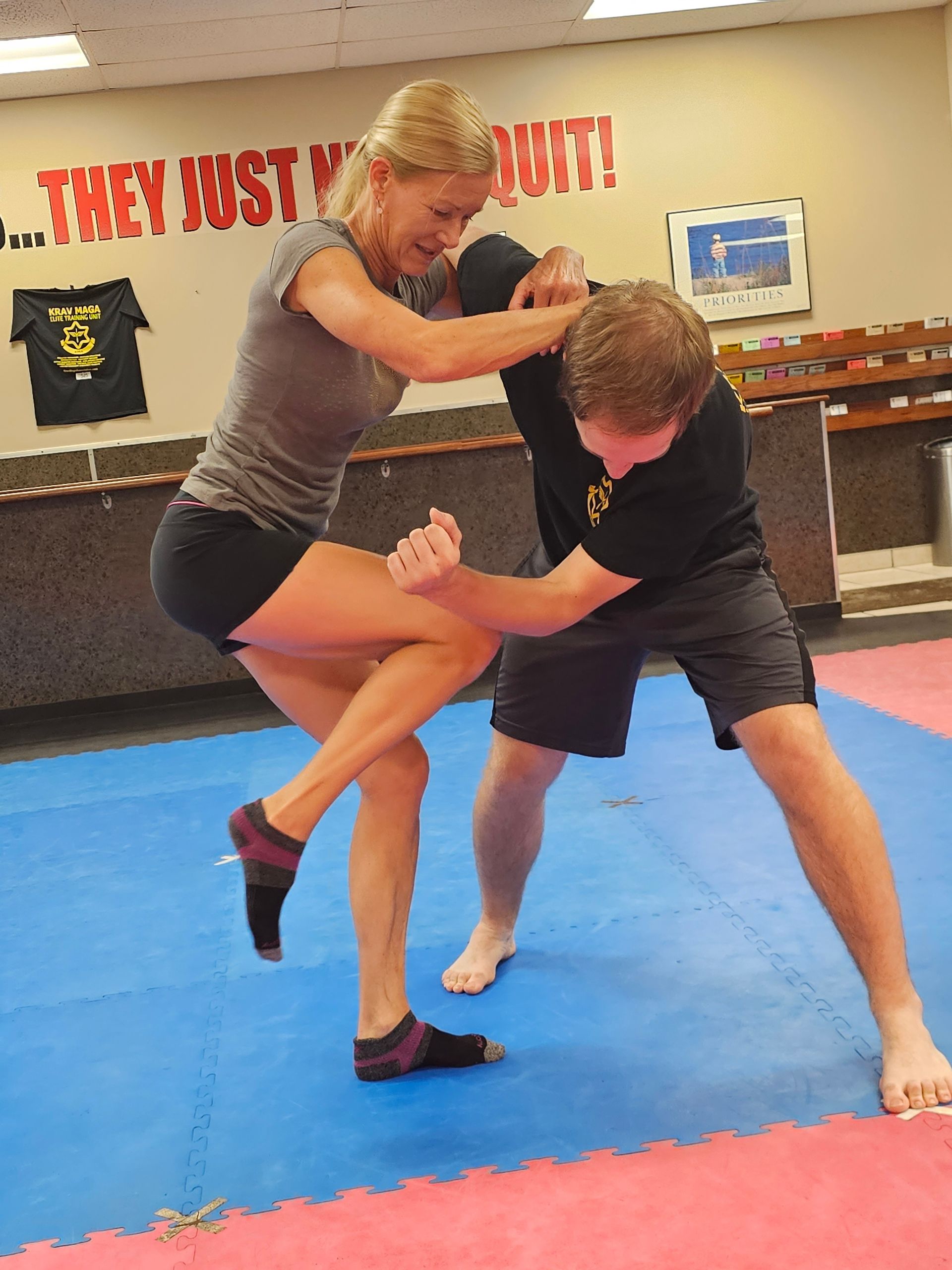
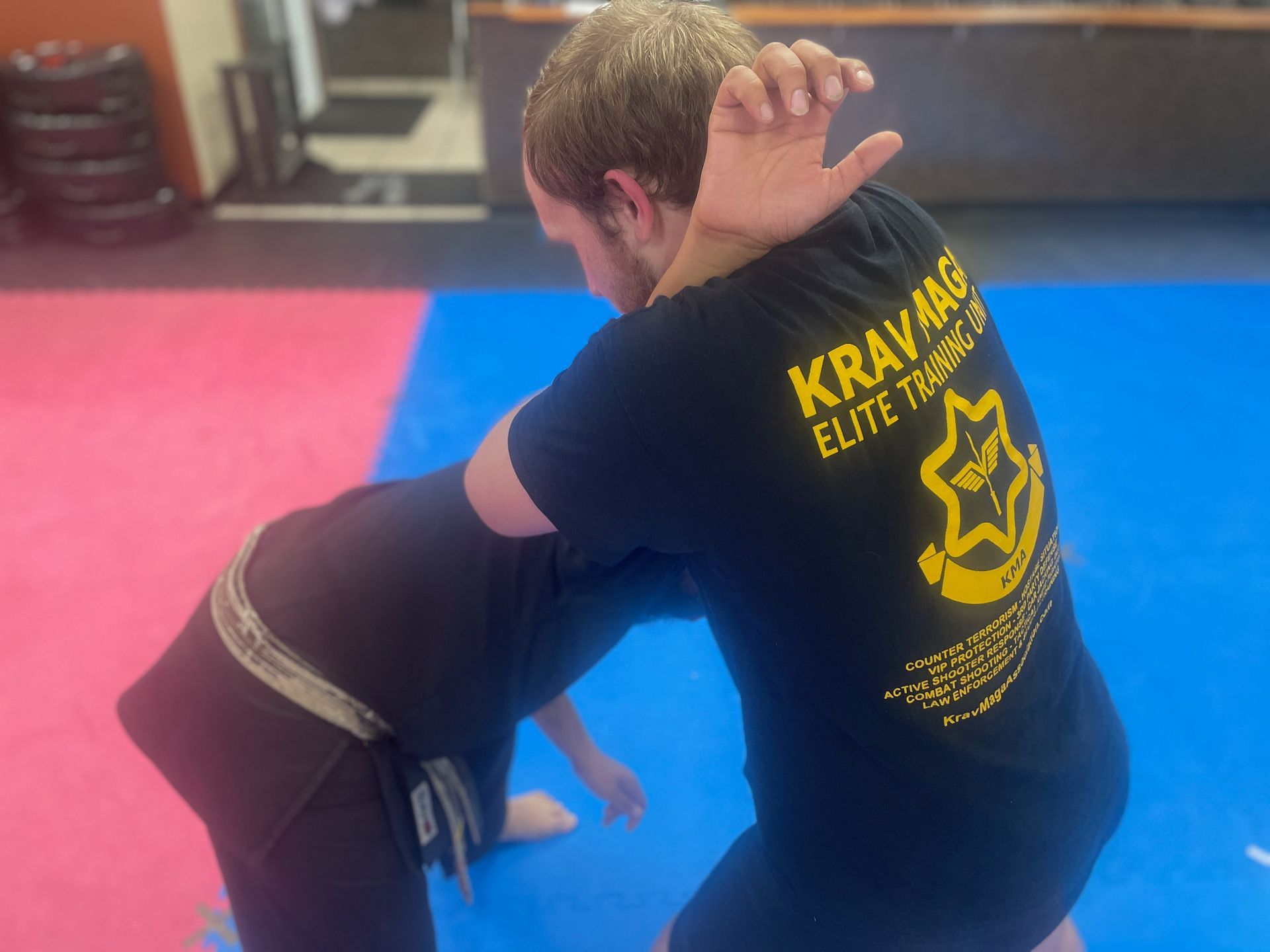
• Stronger partner drills, including responses to common grabs and close-range problems
• Cleaner forms and sharper transitions, so technique stays structured under pressure
• Controlled sparring progressions, where you learn composure, not chaos
• Safer contact habits, because training partners are how you improve long-term
Green belt students often start thinking differently about self-defense. Instead of collecting techniques, you begin understanding principles: angle, distance, timing, and when to disengage. That mindset is a major part of Karate in New Berlin that actually feels useful outside the studio.
Blue and purple belts: timing, strategy, and adaptability
At intermediate to advanced ranks, you stop measuring progress only by what you know and start measuring it by what you can adapt. Blue and purple belts are where timing becomes a big deal. The same kick can be average or excellent depending on setup, distance, and the moment you choose.
We also refine combinations so they are not just sequences, but solutions. You learn how to read an opponent’s movement, how to create openings, and how to stay balanced while changing direction. Sparring becomes more tactical, and partner drills become more realistic while still staying safe and controlled.
Adults sometimes say this stage feels like learning a new language. You already know words, now you are learning to speak. It is a satisfying shift, especially if you enjoy problem-solving.
Brown belt: leadership, polish, and responsibility
Brown belt is not “almost black belt” in a casual way. It is where we expect maturity in your training. You should be able to demonstrate techniques cleanly, apply them with control, and explain what you are doing and why.
Brown belt training often includes a stronger emphasis on:
• Precision in basics, because small errors get magnified at higher intensity
• Decision-making in sparring, including when not to engage
• Practical self-defense sequences, built around common real-world situations
• Conditioning that supports technique, not conditioning for its own sake
• Leadership habits, like being a steady partner and setting the tone in class
We also talk more directly about mindset here: staying calm, staying respectful, and staying consistent. The belt is earned, but it is also carried. Brown belt students tend to become anchors in the room, and that role matters.
Black belt: what it means in our program
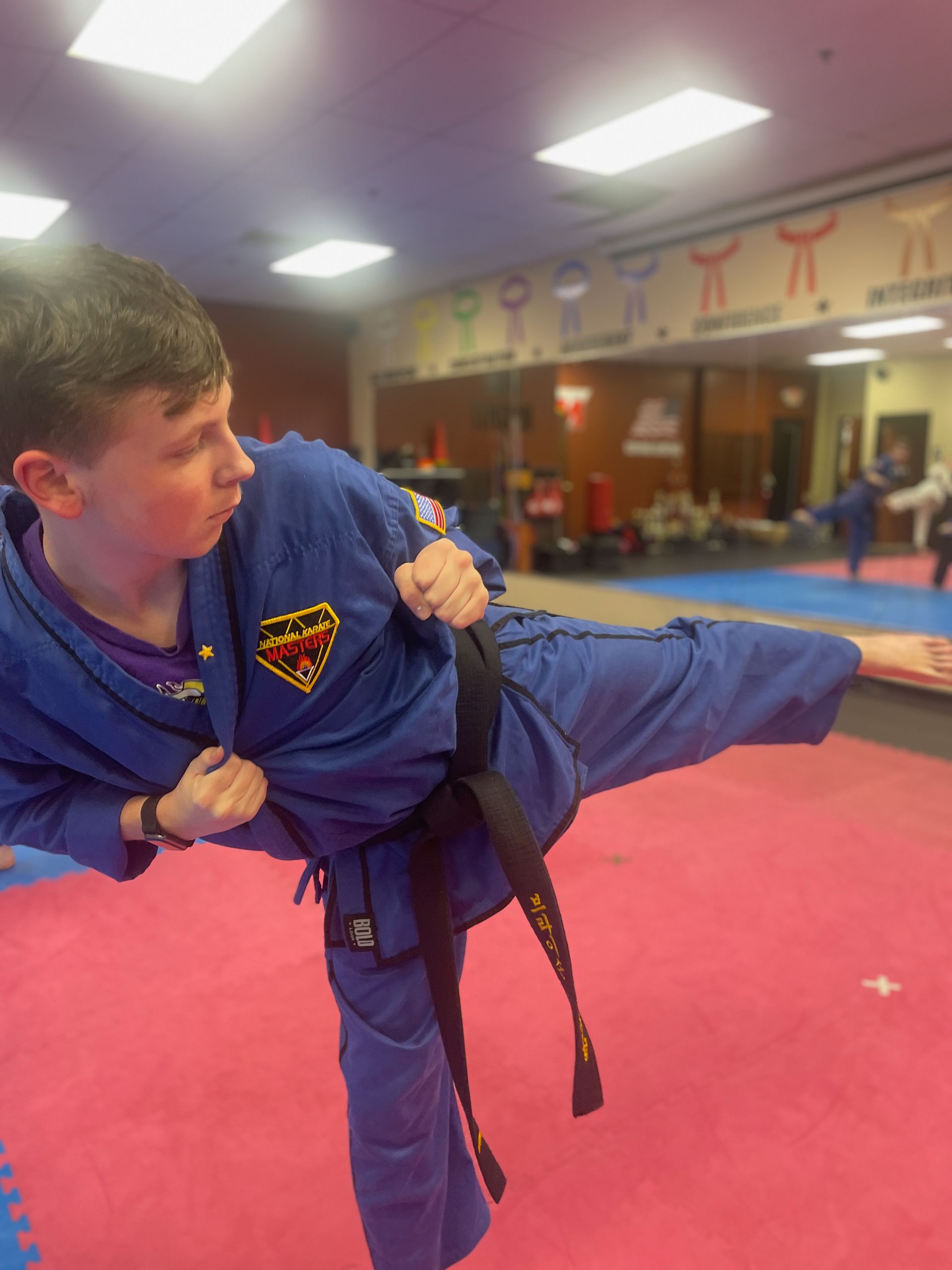
Black belt is not the finish line. It is a statement that you can demonstrate fundamentals, apply techniques under pressure with control, and keep learning with the right attitude. Black belt students have range: they can move fast, but they can also slow down and teach. They can hit hard, but they can also pull strikes and protect a partner.
In our program, earning a black belt means you have built:
• Strong fundamentals that hold up under stress
• Practical self-defense skills you can apply without freezing
• Composure in sparring and partner work
• Discipline and consistency that show up outside the mat
• A growth mindset that keeps you training past the milestone
That last point is easy to miss. The best black belts are not the ones who think they “arrived.” They are the ones who keep refining.
How long does it take to go from white belt to black belt?
This is one of the most common questions we get about Karate, and the honest answer is: it depends on consistency. For many students, a typical range is about 2 to 5 years. Adults training steadily a few times per week often progress more smoothly than students who train in bursts.
Progress is affected by attendance, effort, recovery, and how quickly you absorb corrections. We also care about quality. If you can do something once, that is nice. If you can do it reliably, with control, that is rank-worthy.
If you are trying to set a realistic pace, we usually recommend building a routine you can keep for a full year without burning out. Consistency beats intensity almost every time.
What testing looks like and how to prepare without overthinking it
Testing can make people nervous, especially adults who have not been “graded” in years. Our view is simple: testing should confirm what you already do in class. It should not be a surprise.
Preparation usually comes down to three things: show up, take notes mentally (or literally), and practice the pieces that feel awkward. Awkward usually means new coordination, and new coordination just needs repetition.
A practical approach to test prep is to focus on one small improvement each week: stance depth, guard position, clean chamber on kicks, sharper blocks, smoother transitions. Those small wins add up quickly, and you walk into testing feeling ready instead of hopeful.
Adult and youth progression: same belts, different coaching
We separate adult and youth classes because the learning style is different. Kids often need shorter explanations, more structure, and clear boundaries. Adults usually want context: why a technique works, where it fits in self-defense, and how to adjust for their body type or flexibility.
The belt progression is still a progression of skill, but our coaching changes so you can succeed at your stage of life. Youth training tends to emphasize listening, respect, and anti-bullying habits alongside technique. Adult training tends to emphasize practical application, stress management, and sustainable fitness.
Either way, you are never “too new” to start. We build you from the ground up and meet you where you are.
Training consistently in New Berlin: how to fit it into real life
Most people are juggling a lot. That is why we run classes in the evenings Monday through Friday, plus Saturday morning options. Our New Berlin location is at 3564 S Moorland Rd, and many of our students drive in from nearby communities because it is a straightforward route and the schedule is workable.
If you want steady progress, we suggest choosing two or three training days you can protect like appointments. Treat them as your non-negotiables. Over time, your belt progression becomes the side effect of a routine you actually enjoy.
Take the Next Step
If you want a clear path from white belt fundamentals to black belt-level composure, Wisconsin National Karate is built around exactly that kind of progression. We blend structure with practical training so you are not just learning Karate techniques, you are learning how to use them with confidence and control.
Whether your goal is self-defense, fitness, discipline, or just a challenge that feels real, we will guide you through the steps one belt at a time at Wisconsin National Karate, right here in New Berlin.
Experience firsthand what makes Wisconsin National Karate special by joining a free karate trial class today.