5 Karate Moves Everyone in New Berlin Should Know for Self-Defense

Practical Karate fundamentals can give you a clear, repeatable plan for staying safer in the everyday places you already go.
In New Berlin, most self-defense situations are close, fast, and inconveniently normal: a crowded parking lot, a hallway at school, the space between you and your car door. That is why we teach Karate as a practical skill set, not a performance. You do not need dozens of fancy techniques. You need a few dependable movements you can remember under stress.
Our Karate training is an Americanized hybrid rooted in Tae Kwon Do and real-world self-defense, with a strong focus on discipline, respect, and life skills. We work with kids, teens, and adults, and we keep the learning curve realistic: simple mechanics, good balance, smart targets, and clean escapes. When you practice the basics the right way, they stop feeling like “moves” and start feeling like options.
Below are five essential Karate techniques we want every New Berlin resident to recognize and understand. These are beginner-friendly, but they are not “beginner-only.” We still drill them because they show up everywhere, especially when you are dealing with common problems like grabs, bullying, and sudden aggression.
Before the moves: what makes Karate work for real self-defense?
Karate is effective when your fundamentals hold up under pressure. That means posture, base, timing, and the ability to act without freezing. In class, we build those pieces through repetition and coaching, not by tossing you into chaos. Over time, your reactions get cleaner and your confidence becomes quieter and more reliable.
We also train with a “local reality” mindset. New Berlin is suburban, but that does not mean you never need self-defense. Real incidents are often about distance management, quick disruption, and getting out safely, not standing toe-to-toe. So we emphasize strikes, blocks, and escapes that work in tight spaces and awkward angles.
A few principles we coach constantly (and you can start thinking about today):
• Create space first, then decide what to do next
• Protect your head and posture, because losing balance usually means losing the moment
• Use simple targets that do not require perfect athleticism
• Follow defense with a counter, even if it is just a push and exit
• Leave as soon as you have a safe opening
Those ideas show up in every Karate technique below.
Move 1: Front stance punch (Oi-Zuki)
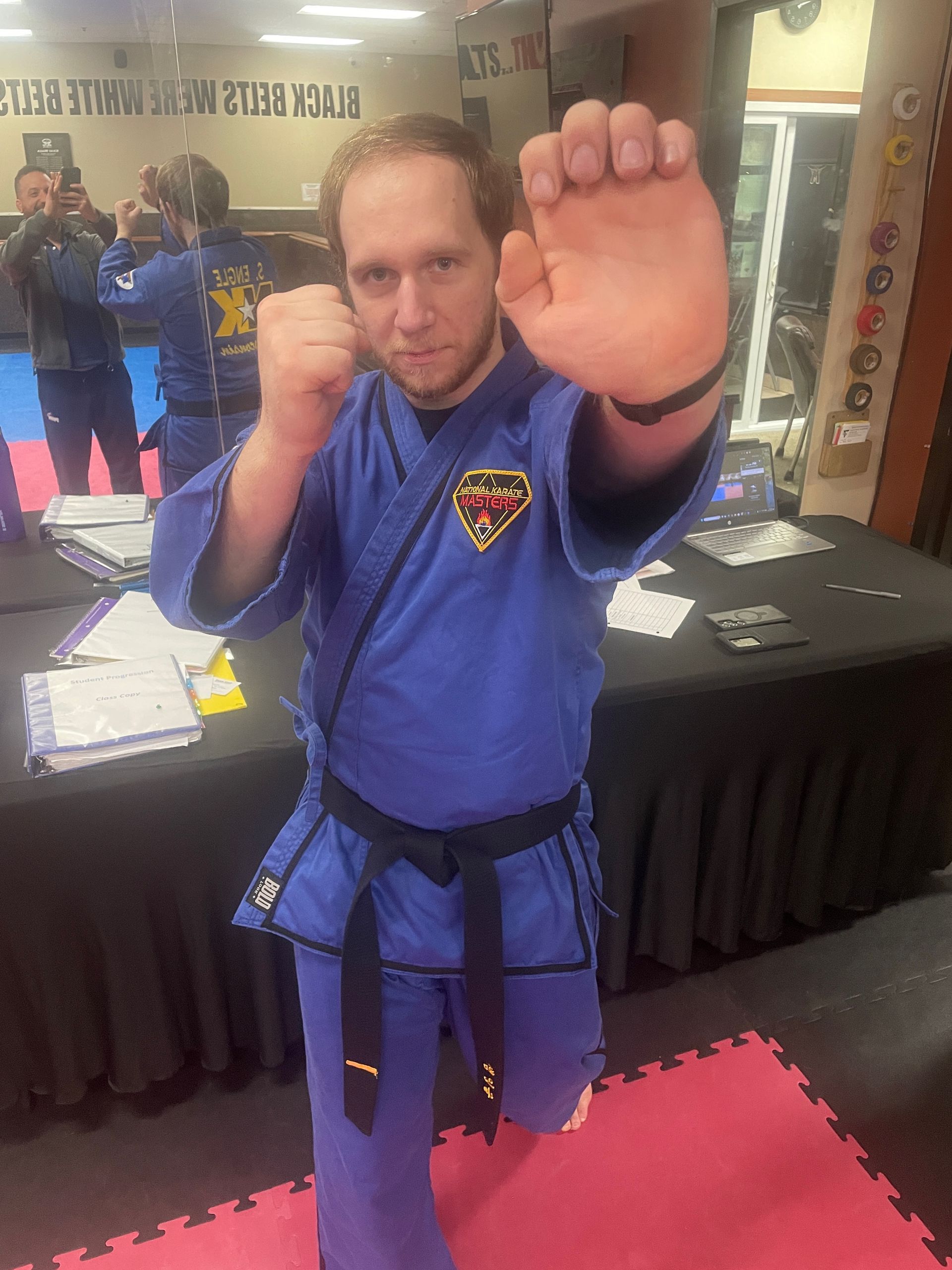
A straight punch sounds basic, and it is. That is exactly why we love it. The front stance punch, often called Oi-Zuki, teaches you how to put your body weight behind a direct line of force instead of just swinging an arm.
Why it matters in New Berlin scenarios
If someone steps into your space aggressively, a quick, committed punch can interrupt forward pressure and buy you the half-second you need to move. This is especially relevant in tight areas like a doorway, between cars, or when you are pinned close to a wall.
Key mechanics we focus on
We coach students to step into a stable front stance, keep the chin tucked, and drive from the floor. The punch travels straight, the other hand “checks” back to protect your centerline, and your hips help the strike land with structure. You are not trying to wind up. You are trying to arrive on time.
Common targets for self-defense practice
For self-defense training, we typically aim at large, accessible targets like the solar plexus area or the nose depending on distance and safety rules in training. The goal is not to trade punches. The goal is to disrupt, create space, and exit.
Move 2: Front kick (Mae-Geri)
Mae-Geri is a front kick that fits real life because it does not require a big windup or fancy flexibility. It is direct, fast, and it pairs well with stepping back to protect your space.
When we teach it as a “distance tool”
In many situations, you do not want to get closer. A front kick gives you a way to keep someone from rushing you or grabbing you, and it works even if you are smaller. For youth, this becomes a confidence-builder because it is one of the first techniques that clearly changes distance.
What we emphasize in training
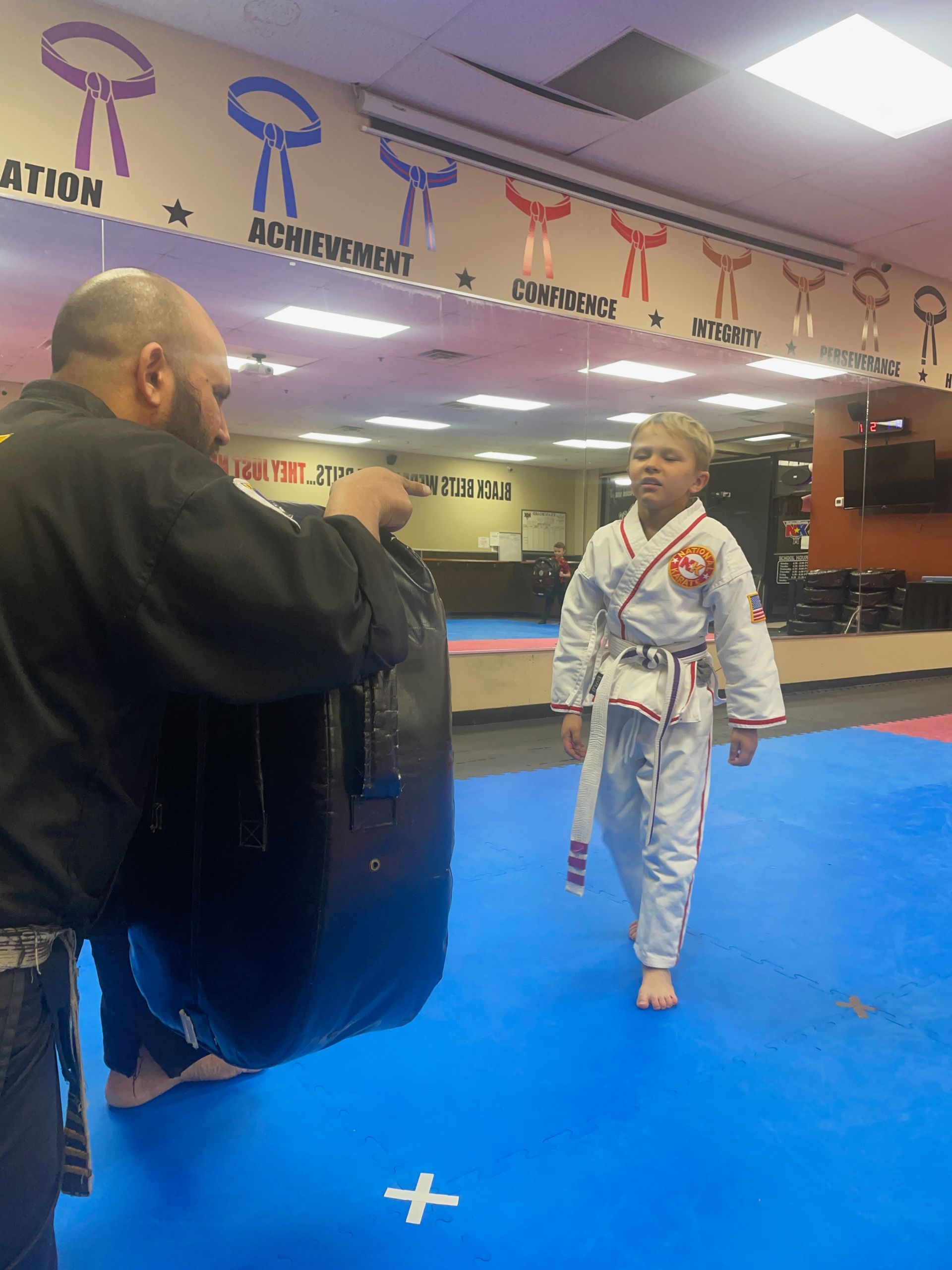
We teach a snap-style kick that chambers the knee up first, then extends and retracts quickly. That retraction matters. If you leave your leg out there, you can get off-balance or grabbed. We also coach students to keep their hands up while kicking, because a kick is not a magic shield.
Practical target choices
In self-defense context, we often discuss lower-line targets such as the groin or the knee area as options, because they can stop forward movement. In class, we practice safely with pads and controlled contact, but we still want you to understand why those targets matter.
Move 3: Outside rising block (Age-Uke)
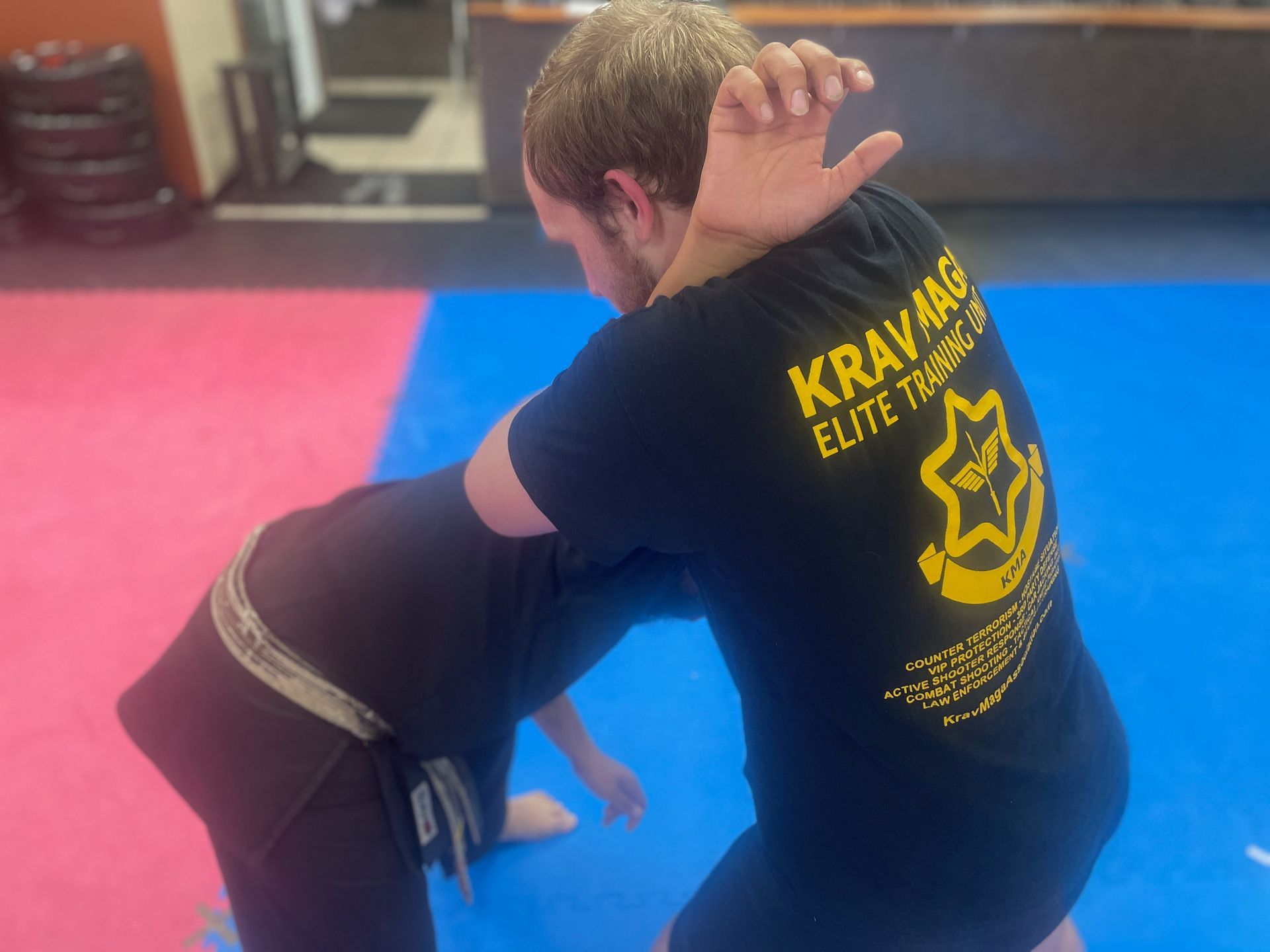
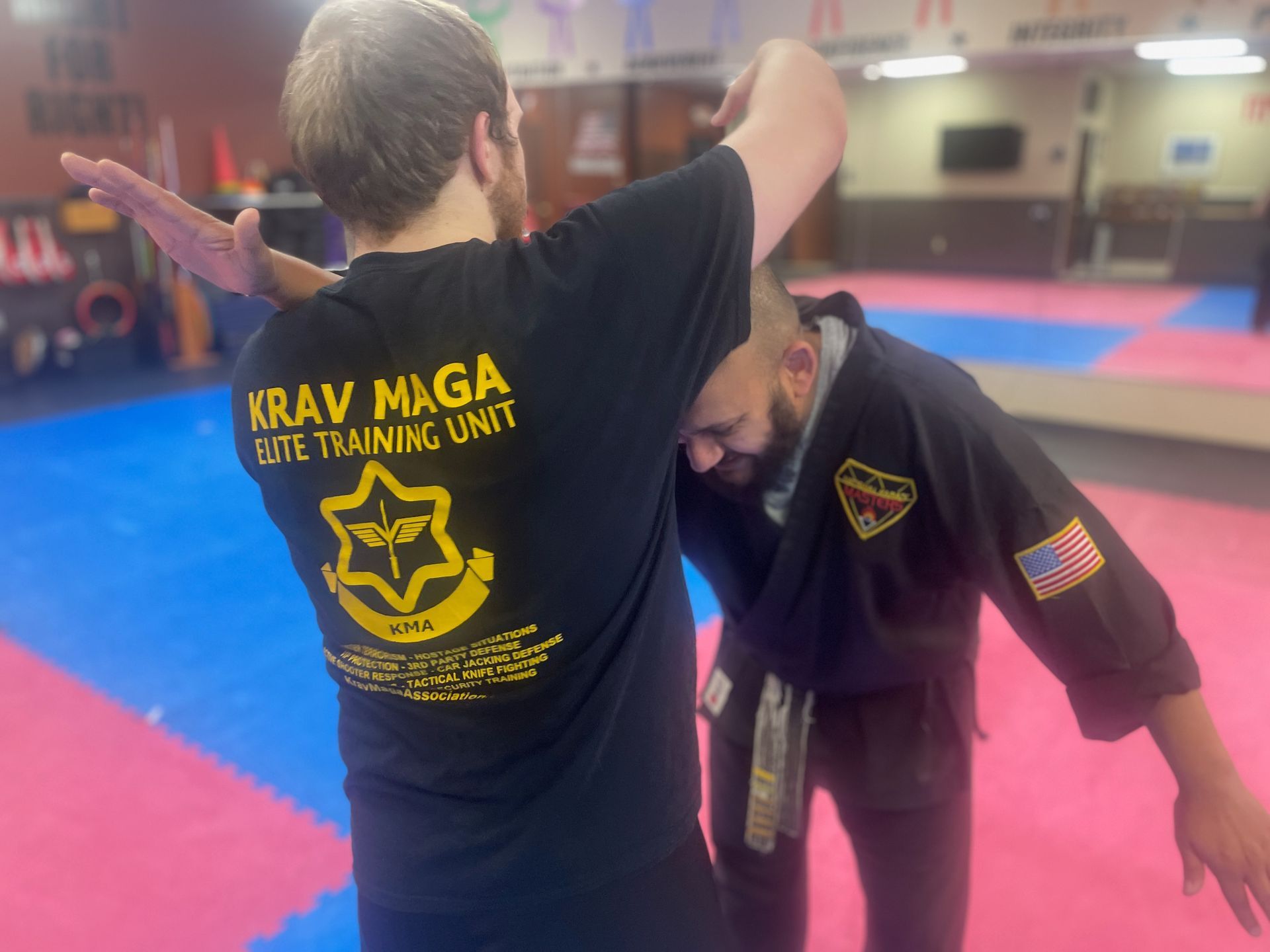
Age-Uke is commonly taught as an “upward” block, but we train it as a practical deflection and cover. In real scenarios, attacks are messy. The block has to work even when the incoming strike is not perfectly straight.
What the block is really teaching you
Age-Uke teaches you to protect your head while moving your body. We want your forearm to intercept and redirect, but we also want your footwork to help you get off the line. Defense without movement tends to become a collision.
How we connect it to follow-ups
A block is not the end of the moment. We train students to follow Age-Uke with a counter-strike, a push-off, or a quick exit. That mental habit is huge. It is one of the ways Karate builds “do something next” thinking instead of freezing.
A note for parents of youth students
For kids, this type of block is also a posture lesson. When shoulders slump and eyes drop, kids look uncertain. When posture improves and hands come up naturally, confidence shows. That confidence can reduce bullying attempts before anything physical even happens, which is a win we never get tired of seeing.
Move 4: Roundhouse kick (Mawashi-Geri)
Mawashi-Geri is the roundhouse kick, and it is a staple for a reason. It generates strong power through the hip and can strike around obstacles, which is helpful when the angle is not perfectly in front of you.
Where it fits in self-defense training
We do not treat the roundhouse as a flashy technique. We treat it as a powerful option when you have a clear lane and you need a quick stop. In everyday situations, that might mean an attacker is slightly off to the side or you are turning out of the way as you create distance.
How we keep it safe and realistic
We teach students to pivot properly, keep balance, and return to stance immediately. A roundhouse that lands but leaves you spun around is not helping you. We would rather see a controlled kick with good recovery than a wild swing.
Targets and context
For practical self-defense discussions, midsection targets are often the most realistic. Head-level kicks can happen, but they require timing and flexibility that not every person has on day one. Karate should meet you where you are, and we coach the technique to be useful at multiple heights.
Move 5: Escape from a wrist grab (Kote-Gaeshi)
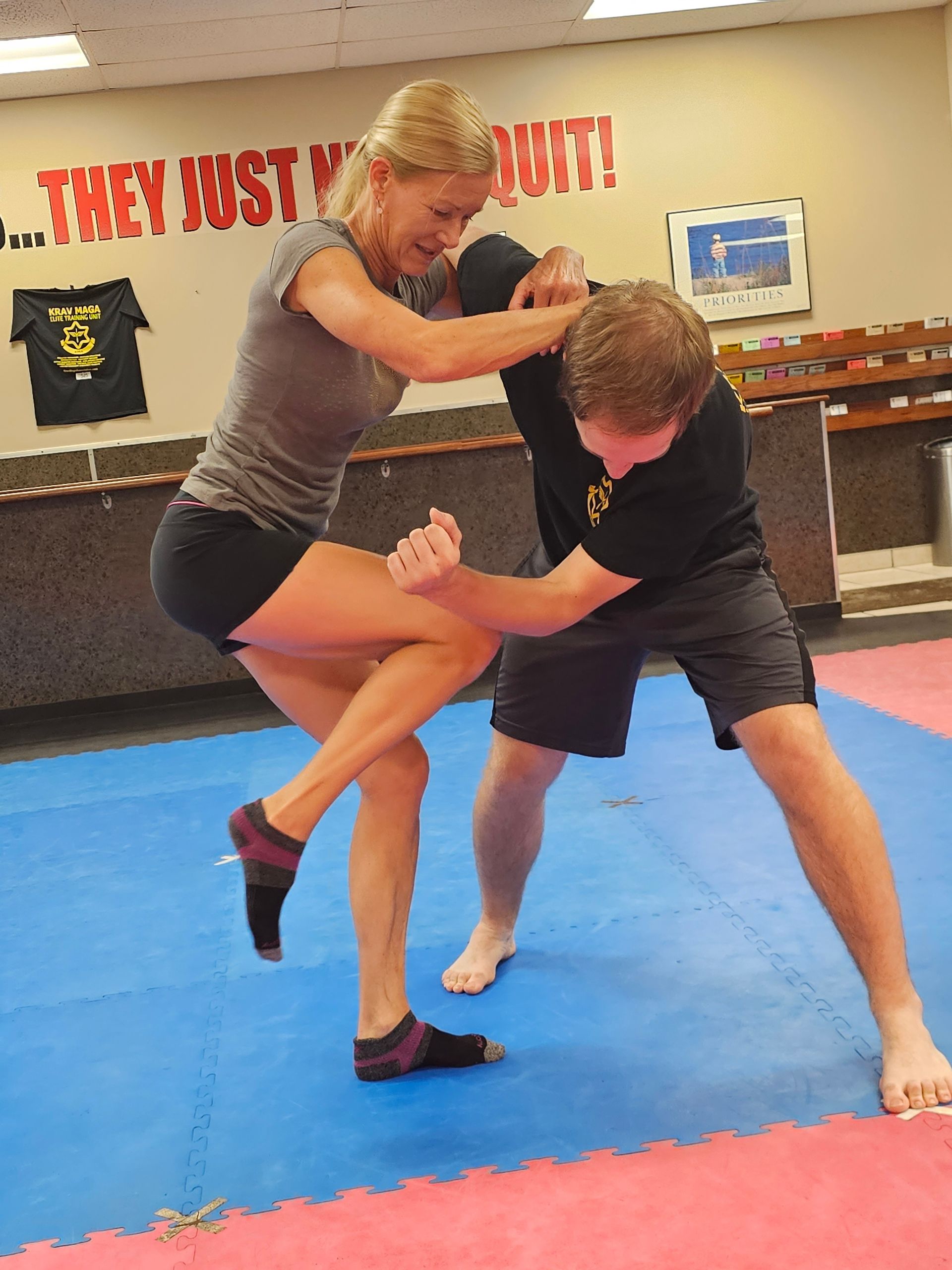
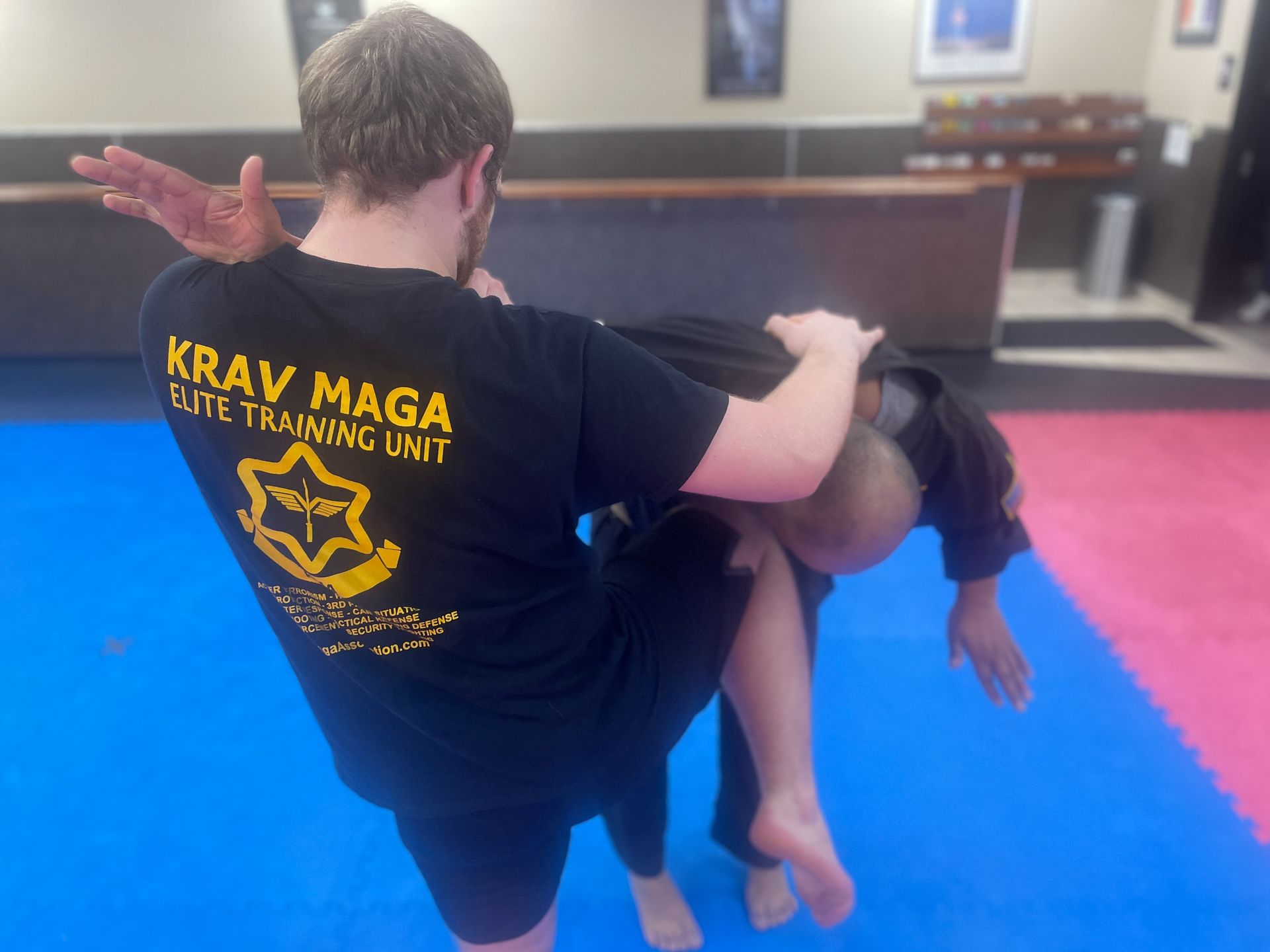
Grabs are common because they are easy to attempt. Someone can grab a wrist in a second, especially in arguments, bullying situations, or when a person tries to control where you go. Kote-Gaeshi, a wrist-turn escape, teaches leverage and angle rather than strength.
Why leverage beats “yanking away”
When people panic, they pull straight back. That often tightens the attacker’s grip. We teach you to turn the wrist along the weak line of the grip while stepping and rotating your body. Done properly, this can peel the hand off without a tug-of-war.
Where this helps youth and teens
This is one of the techniques that clicks quickly for Youth Karate in New Berlin because it is practical and relatable. Kids understand wrist grabs because they have seen them in bullying or rough play. Training the escape in a controlled environment gives them a plan and a calmer response.
The big coaching point
We coach students to pair the escape with movement. Do not just free the wrist and stay there. Step back, create distance, and get to safety. In self-defense, the best finish is leaving.
How we help you remember these moves when stress shows up
Knowing the names is nice, but self-defense is about recall under pressure. We build that through repetition, structured drills, and gradual resistance. You practice the same motion in different contexts so your brain stops treating it like trivia and starts treating it like a tool.
Here is the simple progression we use in our Karate classes:
1. Learn the mechanics slowly so your stance, guard, and alignment are correct
2. Add a partner or target pad so you feel real distance and timing
3. Practice common scenarios like pushes, grabs, and close-range pressure
4. Increase speed and decision-making while keeping control and safety
5. Repeat often enough that your body recognizes the pattern automatically
That is also why our hybrid approach matters. While Karate provides the base, we integrate practical self-defense ideas that reflect how situations actually unfold, especially for families training together.
What local families usually notice first (and why it matters)
Plenty of people start training for safety and stay for the life skills. For kids and teens, consistency tends to show up as better focus, better emotional control, and a little more pride in doing hard things well. For adults, it often shows up as improved fitness, steadier confidence, and a clearer sense of boundaries.
Martial arts participation has surged since 2020, and we have seen that locally too, especially in Youth Martial Arts in New Berlin. Families are looking for training that supports anti-bullying goals and mental resilience, not just exercise. The good news is that the basics do both: when you stand stronger, move with purpose, and practice respectful discipline, you carry yourself differently.
We keep our environment supportive and structured. You will work hard, but you will also know what you are working on and why. That clarity makes it easier to stick with training long enough for results to feel real.
Take the Next Step
If you want practical Karate that fits real life in New Berlin, we would love to show you how these five moves connect into a complete self-defense foundation. At Wisconsin National Karate Kickboxing & Krav Maga, our training blends traditional structure with an Americanized hybrid approach, so you build skills you can actually use while developing discipline and confidence along the way.
Whether you are looking for Youth Karate in New Berlin, adult training, or a family activity that builds real life skills, we will help you start at the right level and progress steadily. The easiest way to begin is to try a class, see how our instructors coach, and feel how quickly the basics start to click.
Take what you learned here to the mat by joining a Karate class at Wisconsin National Karate.